


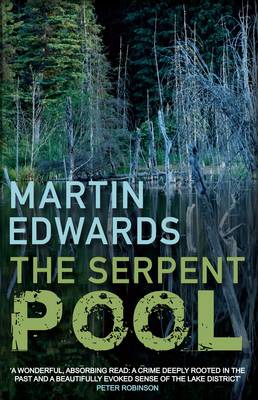
Martin Edwards is one of the UK's most respected crime novelists. He's also one of the genre's most knowledgeable writers, as anyone who has attended Crimefest can confirm. Martin has won the Mastermind contest so many times he is now being threatened with a ban...
Alongside his day job as a a successful solicitor, he has written 15 well-received novels, the latest being The Serpent Pool, the fourth of a cracking series set in the Lake District, which provides the theme for this fascinating blog. Find out more at www.martinedwardsbooks.com and http://www.doyouwriteunderyourownname.blogspot.com/
It' s a pleasure to contribute a guest blog to Murder is Everywhere,
especially having met several of the team a few weeks ago at Crimefest inBristol. When Dan asked me to write about the Lake District setting for my books, I never dreamed that within a matter of days, the setting for my stories of fictional mayhem would, in real life, see the most horrific spree killing in England for more than 20 years. Derrick Bird killed twelve people in peaceful Cumbria before turning his weapon on himself, crimes that have stunned the county and made me think long and hard - though not for the first time - about the responsibilities of a crime novelist.
Within days of the killing spree, I was told by crime-writing friends from the North of England that a series of events they were due to host in Cumbria were being cancelled because it was felt insensitive to talk about fictional crime in the wake of such a terrible real-life case. But my friends felt - and I agree - that there are crucially important distinctions between fact and fiction. The two should not be confused. More than that, the best crime fiction can, perhaps, help those of us who are baffled by behaviour such as Derrick Bird's, to have a clearer understanding of the strange forces that drive a person to commit terrible murders.
The Cumbrian shootings seemed all the more shocking because of the contrast between the brutality of the way in which Bird mowed down people he knew (including his twin brother, the family lawyer, and work colleagues) and complete strangers, and the beauty of the places where the killings occurred. He gunned down fellow taxi drivers in the quiet resort of Whitehaven, and ended his life in the picturesque woodland at Boot, a delightful place I visited when starting to research my first Lake District Mystery, The Coffin Trail. In all there were no fewer than 30 crime scenes.
I was reminded of Sherlock Holmes' remark at the start of an elegant and deservedly famous passage in 'The Copper Beeches':
'It is my belief, Watson, founded on experience, that the lowest and vilest alleys in London do not present a more dreadful record of sin than does the smiling and beautiful countryside.'

Conan Doyle was spot on. And I had this contrast of beauty and horror in mind when, after publishing seven novels set in Liverpool and one in London, I started writing about the Lake District. It's a small area, yet astonishingly rich in literary heritage (of course) and industrial heritage (more surprisingly - but a fictional arsenic mine was the backdrop for The Arsenic Labyrinth.) I was fascinated by the number of small communities, some of them inward-looking, some of them besieged every summer by foreign workers and countless tourists. I wanted to combine a picture of the Lakes in the present day with glances at the area's past. So my protagonists are Hannah Scarlett, a cold case cop, who digs into unsolved crimes, and Daniel Kind, a historian who believes that the study of history is a form of detective work. And although it's a resolutely contemporary series, there's quite a lot of history, whether in the collections of old books bought and sold by Hannah's partner, Marc, or in the literary figures whose ghosts stalk the pages - Beatrix Potter in The Cipher Garden, John Ruskin in The Arsenic Labyrinth, and Thomas De Quincey in The Serpent Pool.
The Lakes offer peace as well as beauty in abundance - but there are also plenty of simmering tensions in those small communities, and to my mind, a crime series is an excellent form for exploring them. I also wanted, over the course of the series, to present a personal picture of rural England at the start of the 21st century. In many ways, rural society is under intense pressure, and pressure may often lead to outbreaks of crime.
So I've imagined many mysterious deaths in the Lakes over the past few years. But I never imagined that real life would come up with a dozen killings that in many ways seem stranger and more shocking than any fiction. In the years I've been visiting and researching the Lakes, I've come to love the place with a passion, and Derrick Bird's killing spree shocked me deeply. His crimes are no reason to stop writing fiction about murder in Cumbria or anywhere else, but they are a sobering reminder of the fear and grief that murder can bring to even the loveliest part of the world. And a reminder too of the responsibility that I feel as a crime writer to make sure that, while entertaining my readers, and exploring the well-springs of murderous violence in as much depth and detail as I can, I never glorify that violence.
Best
Martin


