Search This Blog

Showing posts with label Presidential History. Show all posts

Monday, November 22, 2010

Andrew Johnson Sworn in as President

Heather Cox Richardson

It always surprises me how much I think I know about Civil War history that I really don’t.

What did it mean that Georgia was “remanded to military rule” in 1869? I always thought that phrase indicated that troops marched into the state and took control. That’s wrong. Actually, what being “remanded to military rule” meant was that Congress did not seat the elected representatives from Georgia that session.

What did it mean that President Rutherford B. Hayes “removed the troops from the South” in 1877? That always sounded to me like the soldiers packed up and moved out. That’s wrong, too. Actually, in April 1877, the president removed federal troops from around the South Carolina State House, permitting Wade Hampton’s men to take control of the government from Republican incumbent Daniel Chamberlain. (There were very few troops in the South at that point, in any case, since many had been moved to the northwest plains to fight the Lakota and Northern Cheyenne in 1876. More moved out in summer 1877 to combat the Great Railroad Strike.) Federal troops remained in the South for years after 1877, a nominal number, but enough to be a thorn in the side of Southern Democrats.

Knowing that much we “know” is wrong, I’ve always wondered if Andrew Johnson was actually president during Reconstruction, or if he was only acting president—a legal distinction, to be sure, but an important one.

It turns out that this is a story we’ve gotten right. Johnson did, indeed, take the oath of office and become president, not simply acting president, of the United States.

On Monday, April 17, 1865, the New York Times ran a stark account of the event, the very sparseness of the language conveying some of the reporter’s shock at what had transpired in the past two days.

Shortly after President Lincoln breathed his last at 7:22 on April 15, Attorney General James Speed visited Vice-President Johnson at his rooms in Kirkwood House on Pennsylvania Avenue. The newspaper reporter simply recorded that Speed delivered a message informing Johnson of Lincoln’s death and impressing upon him that “the emergency of the government” required that he take the oath of office immediately. What he did not say was that James Speed was the older brother of Lincoln’s best friend Joshua Speed, and that he was quite likely both in shock and in tears.

Johnson replied that he would take the oath at 10:00 in his rooms.

At that hour, eleven men arrived at Kirkwood House for the ceremony. Curiously, they presented a fair representation of Lincoln’s presidency.

Lincoln had close friends there from the early years in which he had learned his profession and built a political following. James Speed attended, undoubtedly remembering the younger Lincoln who had roomed with his brother and visited the older James at his law office in Kentucky to talk business. Two of Lincoln’s friends from his early days in Illinois also came: Senator Richard Yates, with whom a young Lincoln had plotted for political advancement, and General John F. Farnsworth, who was a fan of the off-color jokes Lincoln used to appeal to rural voters.
There were wartime political rivals like Salmon P. Chase, whom Lincoln had recently neutralized by appointing him Chief Justice of the Supreme Court, who arrived to administer the oath of office to Lincoln’s successor.

There were political associates who understood the difficulties Lincoln had suffered under for the past four years, and who had wished him well. Frank and Montgomery Blair, father and son, former Democrats and strong Lincoln supporters from border regions had come; hot-tempered Montgomery had been Lincoln’s Postmaster General for three years. Also there was Secretary of the Treasury, Hugh McCulloch, who had seen Lincoln the morning of the assassination and was relieved to see that that war-weary president seemed happier and more cheerful than McCulloch had ever seen him.

Solomon Foot, president pro tem of the recently adjourned Senate, and Senator Alexander Ramsey of Minnesota, who was not especially close to the president, lent the gravitas of the party organization to the occasion.

Newcomers eager to underline their connection to the famous president were represented by Senator William M. Stewart, of Nevada, who had shaken Lincoln’s hand the night before outside his carriage as he left for the theater, and who later claimed to have received the very last lines Lincoln ever wrote: a note inviting Stewart to bring a friend to meet the president the next morning, a memo whose significance Stewart could not anticipate, and that he threw away as soon as he had read it.

Finally, staunch Republican Senator John P. Hale of New Hampshire was there, an unhappy symbol of Lincoln’s assassination. Hale’s daughter Lucy was a Washington belle, and was romantically involved in some fashion with John Wilkes Booth—possibly secretly engaged to the famous actor.

The eleven men gathered in Johnson’s rooms. Chief Justice Chase read the oath of office, and Johnson repeated it. Chase declared Johnson president, and those gathered gave him their best wishes.

“All were deeply impressed by the solemnity of the occasion,” the New York Times reporter wrote.

Indeed.

Monday, October 4, 2010

From the “Yet Another Good Reason Not To Throw Anything Away” Department

Heather Cox Richardson

When President Warren G. Harding died suddenly of a heart attack on a goodwill tour of the country, his vice-president Calvin Coolidge was visiting his family homestead in Plymouth Notch, Vermont. Early in the morning of the next day, August 3, 1923, Coolidge’s father, a notary public, administered the oath of office to his son, making him the nation’s 30th president. (This is the only time, incidentally, that a father has administered the presidential oath to his child.)

This dramatic scene caught the popular imagination. In an era of glitz and glamor, graft and corruption, the vision of Coolidge taking the oath of office beside his aged father in the glow of a kerosene lamp seemed to embody Yankee simplicity and old-fashioned values.

The family home, where this dramatic scene took place, is now a museum. The curators there have just made a startling discovery:

“Historians at the President Calvin Coolidge State Historic Site in Plymouth Notch, Vt., which houses the president’s collection, are trumpeting the discovery of the tablecloth that was used during Silent Cal's makeshift swearing-in ceremony, site officials announced Wednesday . . .”

For years, the brown-and-white cloth tucked at the end of a daybed was thought to be a shawl, and an embroidered green cloth dressing the table was believed to be the original table covering. . . .”

When a historian recently opened the cloth to catalog it, a note fell out. Over the initials G. C. (probably Coolidge’s wife, Grace), the note read:

“‘Cover which was on the mahogany-topped table in the sitting room of father Coolidge’s house in Plymouth, Vermont on the night of August 3rd, 1923.’

That cloth ‘had always been there, but it was never really unfolded and carefully looked at,’ [the site administrator] said.”

Wednesday, June 16, 2010

A Crosspost on Presidential Speeches on Energy from the Miller Center of Public Affairs

Lauren Dunsmore
University of Virginia’s Miller Center of Public Affairs

President Obama addressed the nation yesterday about the oil spill in the Gulf of Mexico. He also talked about reducing America’s dependence on foreign oil and fossil fuels, a theme in many presidential remarks.

In a 1977 speech on energy, Carter says we will have to drill more offshore wells if we don't conserve.

Ford had similar remarks on May 27, 1975. Check out this clip in which he says Congress has done little or nothing to decrease America’s dependence on foreign oil.

Click here to see how past presidents—from JFK to Reagan—addressed domestic crises during their administrations.

Wednesday, April 28, 2010

Eric Arnesen on Brinkley's FDR

Randall Stephens

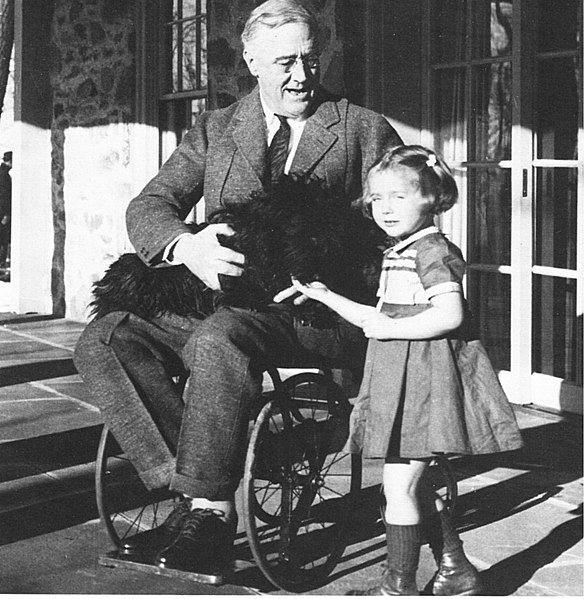
Franklin D. Roosevelt was stricken with polio in 1921. From then on he could only walk with the help of others or the use of crutches. That did not keep him from thinking about feet and walking in politically metaphorical terms. "A radical is a man with both feet firmly planted—in the air," he told a radio audience in the desperate year of 1939. "A conservative is a man with two perfectly good legs who, however, has never learned to walk forward. A reactionary is a somnambulist walking backwards. A liberal is a man who uses his legs and his hands at the behest . . . of his head." Critics howled with disbelief. The federal government was treading all over regular Americans, walking up one side of the common man and down the other.

Eric Arnesen reviews Alan Brinley's biography of FDR over at the Chicago Tribune. He begins with the words of one vociferous critic, who worries that Big Government boots are going to walk all over liberty.

Eric Arnesen, Franklin Delano Roosevelt
By Alan Brinkley
Oxford University Press, 2009, $12.95, 129 pages

At a time of crisis in the American economy, one critic of federal programs charges the administration with stumbling “into philosophies which lead to the surrender of freedom.” It is a “false Liberalism that interprets itself into government dictation,” poisoning “political equality” and “equality of opportunity.” The policies pursed by the administration constitute “the road not to liberty but to less liberty.” What is needed is the “release of the dynamic forces in initiative and enterprise” which “are alone the methods by which these solutions can be found and the purpose of American life assured.”

What had so exercised this critic? The rescue of AIG, the financial sector, and the domestic auto industry? The health care bill that recently emerged triumphant by the narrowest of legislative margins? President Barack Obama’s recess appointments? And just who was so exercised? The Republican National Committee chairman Michael Steele? Former Alaska governor Sarah Palin? A libertarian activist? A tea party-er?

This time, President Obama is off the hook. The contemporary ring of the attack notwithstanding, this denunciation of liberalism and federal authority and celebration of free enterprise is over seventy-five years old. The critic was former President Herbert Hoover; the year 1934. And what so agitated him was President Franklin D. Roosevelt and his New Deal. Just as Obama has his political enemies to the Right, so too did Roosevelt.

Along with Washington and Lincoln, political historian Alan Brinkley observes, Franklin Roosevelt remains for most Americans “part of the triumvirate of our greatest leaders.” The only political figure to be elected president four times, FDR had his work cut out for him: he not only presided over the nation’s most severe economic crisis ever but he successfully led the United States to victory in a bloody world war that threatened to extinguish democracy around the globe. His legacy during “dark and dangerous years” was “extraordinary,” Brinkley reminds us. “No president since the nation’s founding has done more to shape the character of American government.”

Not surprisingly, then, FDR has attracted considerable attention from historians over the decades. From Arthur M. Schlesinger and James McGregor Burns in the 1950s to Conrad Black, Jean Edward Smith, and H.W. Brands in the early 21st century, the 32nd president has been the subject of numerous biographies, some multi-volume and many extremely long. For all of the thousands of pages – tens of thousands, actually – devoted to exploring his life, Roosevelt remains, Brinkley argues, an “enigmatic man” who has “defied the efforts of so many people who have hoped to understand him fully.” read more >>>

Sunday, March 21, 2010

Some Historical Perspectives on National Healthcare

Randall Stephens

Teddy Roosevelt campaigned on health care in his 1912 Progressive Party bid for the presidency. Makes sense. He needed a little medical assistance after surviving a gunshot wound/assassination attempt in Milwaukee: "Friends, I shall ask you to be as quiet as possible. I don't know whether you fully understand that I have just been shot; but it takes more than that to kill a Bull Moose. . . . The bullet is in me now, so that I cannot make a very long speech, but I will try my best."

The Progressive Party platform of 1912 declared: "We favor the union of all the existing agencies of the Federal Government dealing with the public health into a single National health service without discrimination against or for any one set of therapeutic methods, school of medicine, or school of healing with such additional powers as may be necessary to enable it to perform efficiently such duties in the protection of the public from preventable diseases as may be properly undertaken by the Federal authorities . . ."

Two decades later FDR seemed to have thought a national health bill was one bill too many for his already ambitious alphabet soup initiatives.

It then fell to FDR's accidental successor to give it a go. "In my message to the Congress of September 6, 1945, there were enumerated in a proposed Economic Bill of Rights certain rights which ought to be assured to every American citizen." So began President Harry Truman's address to Congress on November 19, 1945.

One of them was: "The right to adequate medical care and the opportunity to achieve and enjoy good health." Another was the "right to adequate protection from the economic fears of . .. sickness ...."

Millions of our citizens do not now have a full measure of opportunity to achieve and enjoy good health. Millions do not now have protection or security against the economic effects of sickness. The time has arrived for action to help them attain that opportunity and that protection. . . .

Our programs for public health and related services should be enlarged and strengthened. The present Federal-State cooperative health programs deal with general public health work, tuberculosis and venereal disease control, maternal and child health services, and services for crippled children. >>>

Didn't work out. Some Republicans equated it with communism and the American Medical Association came out against it.

Indeed, longstanding opposition to federal involvement in health care squelched most efforts. The American Medical Association again stood firm against Lyndon Johnson's landmark 1965 health insurance program. The AMA's chief players backed Barry Goldwater's 1964 campaign, making their criticism loud and clear. The AMA fiercely opposed Medicare. And in the early 1960s, Ronald Reagan warned that after the passage of such a national program, "We will awake to find that we have socialism."

Calvin Woodward offers some useful historical context on the current battle in the Sunday LA Times.

To history, it is likely to be judged alongside the boldest acts of presidents and Congress in the pantheon of domestic affairs. Think of the guaranteed federal pensions of Social Security, socialized medicine for the old and poor, the civil rights remedies to inequality.

Change is coming, it now appears, but in steps, not overnight. . . .

In contrast, on June 30, 1966, after a titanic struggle capped by the bill signing a year earlier, President Lyndon Johnson launched government health insurance for the elderly with three simple words, as if flicking a switch: "Medicare begins tomorrow." >>>

See also: the Boston Globe's (Associated Press) rather interesting timeline of health care legislation; A PBS timeline from Healthcare Crisis; and Jonathan Chait, "Health Care Reform And History," TNR, March 19, 2010.

Sunday, March 7, 2010

Rescuing Woodrow Wilson's Reputation

Former president of the Historical Society Eric Arnesen reviews John Milton Cooper's book on Woodrow Wilson in the Chicago Tribune. "Cooper’s strengths," Arnesen observes, "lie in his bringing his subject to life and portraying the world through his eyes. As a study of Wilson’s personal and political life, the meticulously researched 'Woodrow Wilson: A Biography' is unlikely to be surpassed any time soon."

Eric Arnesen's review of Woodrow Wilson: A Biography by John Milton Cooper Jr., Chicago Tribune, March 6, 2010.

Wilson President Woodrow Wilson, a confidant confided in his diary shortly after World War I, “will probably go down in history as the greatest figure of his time, and I hope, of all time.” As it turned out, such a prediction could hardly be farther off the mark. Even before the Armistice, Wilson’s political fortunes faltered. The 1918 elections delivered a severe blow, resulting in a Republican sweep. And American participation in his cherished League of Nations – his hope to prevent future wars through collaboration among nations – perished at the hands of Senatorial opponents. Wilsonian internationalism quickly gave way to an intense isolationism that viewed U.S. involvement in World War I as a grave mistake and sought to keep the nation out of the next European war. Wilson’s final years – in office and in retirement – were bitter ones for a man whose grandiose dreams had been utterly dashed.

John Milton Cooper, Jr., a presidential scholar and author of a monumental new biography of the 28th president, seeks to rescue Wilson’s reputation and restore him to his place as one of America’s finest leaders. Wilson was a bold, sophisticated idealist who could be “hardheaded” and pragmatic, he argues; his domestic record in office makes him “one of the greatest legislative leaders ever to occupy the White House.” A man who had given little thought to world affairs became a resolute wartime president whose shortening of the Great War meant that “hundreds of thousands, perhaps millions, of people owed their lives to him.” >>>