Search This Blog

Showing posts with label reviews. Show all posts

Wednesday, September 8, 2010

The Roots of Contemporary American Political and Religious Conflict

Randall Stephens

Last year I used Rick Perlstein’s lively, entertaining, and insightful Nixonland: The Rise of a President and the Fracturing of America for a course I teach on America in the 1960s. The students loved it. Perlstein’s dramatic narrative pulled us in.

At the outset Perlstein observes that by 1972 a sharp division existed between "'people who identified with what Richard Nixon stood for' and 'people who despised what Richard Nixon stood for' . . . Richard Nixon, now, is long dead. But these sides have hardly changed. We now call them 'red' or 'blue' America, and whether one or the other wins the temporary allegiances of 50 percent plus one of the electorate--or 40 percent of the electorate, or 60 percent of the electorate--has been the narrative of every election since." The book is compelling on a number of levels. Yet it lacks an appreciation for ways that America had been deeply divided in other eras.

Is the culture war that feeds our current political debates all that new? Hasn't America been split between warring factions for eons? Enter Barry Hankins. His new book Jesus and Gin: Evangelicalism, the Roaring Twenties, and Today's Culture Wars, spans over that rowdy decade and offers insight into ongoing political and religious conflicts.

The era from the 1930s to the 1980s, an era of relative religious stability, Hankins suggests, may have been the aberration. The pitched battles over immigration, alcohol, Darwinian evolution, obscenity laws, and public morality that riled Americans in the 20s "were a prologue to our own age," says Hankins. Like our era that period was "a time when religion was culturally central, participating fully in politics, media, stardom, social life, and scandal." Sister Aimee Semple McPherson, Daddy Grace, and Father Divine elbowed Charlie Chaplin, Al Joslon, and Clara Bow for newspaper headline space.

Hankins leads off with Warren Harding’s moral failings, "more repulsive than evil" in the words of a biographer. "There is a sense in which Harding’s story is the story of America during the Roaring Twenties," he remarks. The baptist president's religious life was thin, to put it mildly. His administration’s contempt for law, its moral degeneration, and the scandal that swirled around it defined the nation as well. Hankins similar treatment of moral crusades, scandalous religious leaders, and heated contests between liberals and conservatives has a contemporary ring to it.

History written through the eyes of the present, I’ve noticed, draws students in to the debates. Hankins does this well throughout Jesus and Gin. Hence, he notes that Edward J. Larson’s account of the Scopes Trial, "Summer for the Gods could not have been written between 1930 and 1980 for in that period the Scopes legend was taken for granted." In many ways the book is a comparative history that moves with ease between the Christian Right of the Reagan years and the late-Victorian moralizers of the 20s. (Though Hankins does note that there is no simple liberal-conservative split in the age of flappers and speakeasies.)

Hankins fittingly ends his with a rumination on "How the Roaring Twenties Set the Stage for the Culture Wars of Our Own Time." The major struggles of our era have roots that go back decades.

Like Perlstein’s sweeping history, Hankin’s book draws attention to the deeper political and religious clashes that shape current debates.

Wednesday, July 28, 2010

History Book Reviews Reviewed, July/August 2010 edition

Chris Beneke

What follows is the first installment of a semi-regular update on historical reviews in the London Review of Books, The New Republic, The New York Review of Books, and other places that we bothered to look.

Jeffrey Rosen, “Why Brandeis Matters: The Constitution and the Crash” (TNR, July 22) Review of Melvin I. Urofsky, Louis D. Brandeis: A Life (Pantheon)

Writing admiringly of both book and subject, Rosen says that Urofsky’s “definitive,” “masterful” biography of the great supreme court justice is timely given Elena Kagan’s nomination to Brandeis’s Supreme Court seat and the rediscovery by progressives of “the virtues of judicial restraint.” Rosen is confident that Brandeis “would have predicted the crash of 2008.” (The bearish justice would have no doubt still preferred bonds, as he did in the 1920s, rather than credit default swaps on mortgage backed securities.) Rosen details Brandeis’s long-standing critique of concentrated financial power (“the curse of bigness”), his commitment to judicial restraint on most matters but “judicial vigilance” on the especially urgent matter of civil liberties, and his support for Zionism as both a complement to nationalism and a source of intra-national cultural vitality. The 2008 financial crisis figures centrally in this piece and Rosen builds on a distinction of Paul Krugman’s, positing the existence of two historically-informed schools of thought on financial reform: “the Jeffersonian-Brandeisians, who want to break up the big banks and prevent them from engaging in risky behavior, and the Hamiltonian neo-New Dealers, who prefer top-down government regulation.” Rosen suggests that the Jeffersonian-Brandeisians (like Paul Volcker) have gotten it right, but the Hamiltonian-New Dealers (like Lawrence Summers and Timothy Geithner) have gotten the votes. Urofsky’s biography is itself quite big. Given its hefty 955 page count, you might want to read Rosen’s longish review before taking the plunge. Or maybe even wait for Rosen’s own forthcoming book on Brandeis.

Anthony Grafton, “A Jewel of a Thousand Facets” (NYRB, June 24) Review of Lynn Hunt, Margaret C. Jacob, and Wijnand Mijnhardt, The Book That Changed Europe: Picart and Bernard’s Religious Ceremonies of the World (Belknap/Harvard); and, Hunt, Jacob, and Mijnhardt, eds., Bernard Picart and the First Global Vision of Religion (Getty Research Institute)

The two books reviewed here might be a good complement to Stephen Prothero’s hot-selling God is Not One (not mentioned by Grafton). Prothero’s conclusion that the world’s religion’s do not much converge is today’s contrarian position. That wasn’t the case in Bernard and Picart’s time. Grafton observes that the emphasis on the similarity of the world’s faiths was a subversive stance in the late seventeenth and early eighteenth centuries. Also subversive in that period: dense, weighty compilations of global knowledge like Religious Ceremonies of the World, and chatty, “ironic” footnote commentary on “orthodox inanities.” By detailing (in both print and image) the nuances of religions across the globe and by comparing the common forces underlying their different practices, Bernard and Picart injected sociological and anthropological substance into enlightened appeals for toleration. Though wondering what contemporary readers thought of Bernard and Picart’s Religious Ceremonies, Grafton is impressed by the collaborative, interdisciplinary effort that went into this two-volume project. He concludes that the authors “have done justice to a great work of eighteenth-century humanistic learning. And they have shown us some of the directions in which humanistic scholarship should move in generations to come: not only away from older narratives of intellectual change, but toward new models in which books and digital media, grand accounts and detailed inquiries shed light on one another.”

Bee Wilson, “Stuck with Your Own Face” (LRB, July 8) Review of Geoffrey Jones, Beauty Imagined: A History of the Global Beauty Industry (Oxford)

Beauty trends may rise and fall, but the beauty industry only rises. In 1916, roughly “four fifths of Americans used neither toothpaste nor shampoo, never mind mosturiser or deodorant, lipstick or hair gel.” Today, “[c]onsumers around the world spend ‘$330 billion a year on fragrances, cosmetics and toiletries’.” Scent was the first sense to be addressed by the broadly conceived category of beauty products. Salvaging the body from early modern street odors was not an easy job. Perfume helped. By the mid-nineteenth century, this early beauty product was sold in mass, factory-produced quantities, along with “‘the first factory-made, non-toxic mascara’.” Over time, manufacturers moved away from beauty products that poisoned their users and toward products adapted to the visual revelations of electric light. They also went global with products, such as skin-lightening creams, that changed or reinforced prevailing conceptions of race and personal attractiveness. The greatest of the beauty industry’s innovations, according to Wilson, may have been lipstick. It’s legitimation “over just a few decades [in the twentieth century] must have brought about one of the biggest changes to the appearance of the Western female body in history.” Wilson is generally pleased with the data that Jones offers. She is less impressed with his grasp of the “artifice” that has gone into the sale of these high-margin products with often questionable claims to effectiveness.

Sunday, July 25, 2010

American Character?

Sarah E. Igo reviews Claude S. Fischer's book Made in America in American Prospect, July 15, 2010. "A half-century ago," says Igo, "writing in the crucible of the early Cold War, American historians were convinced that something ran deep among U.S. citizens linking them to one another--a national personality or fundamental essence that made Americans American. . . ."

Igo isn't quite convinced. "Concerned as it is with the contours of American character as well as culture, it is hard to read Fischer's book as other than an argument for consensus history." Still she finds quite a bit to praise in this sprawling book.

Wednesday, April 28, 2010

Eric Arnesen on Brinkley's FDR

Randall Stephens

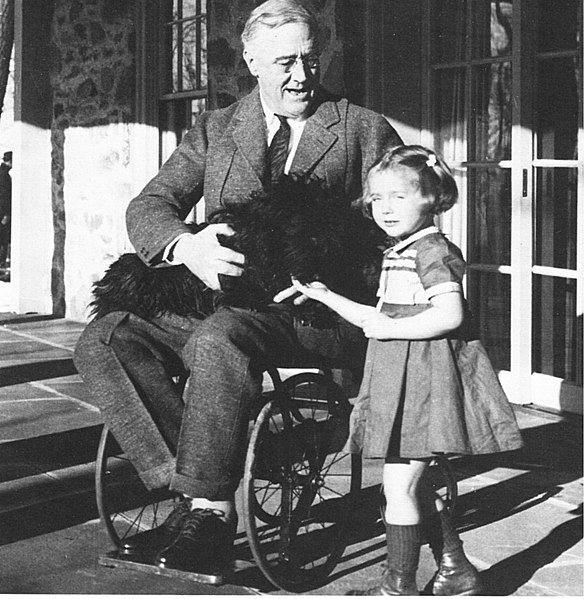
Franklin D. Roosevelt was stricken with polio in 1921. From then on he could only walk with the help of others or the use of crutches. That did not keep him from thinking about feet and walking in politically metaphorical terms. "A radical is a man with both feet firmly planted—in the air," he told a radio audience in the desperate year of 1939. "A conservative is a man with two perfectly good legs who, however, has never learned to walk forward. A reactionary is a somnambulist walking backwards. A liberal is a man who uses his legs and his hands at the behest . . . of his head." Critics howled with disbelief. The federal government was treading all over regular Americans, walking up one side of the common man and down the other.

Eric Arnesen reviews Alan Brinley's biography of FDR over at the Chicago Tribune. He begins with the words of one vociferous critic, who worries that Big Government boots are going to walk all over liberty.

Eric Arnesen, Franklin Delano Roosevelt
By Alan Brinkley
Oxford University Press, 2009, $12.95, 129 pages

At a time of crisis in the American economy, one critic of federal programs charges the administration with stumbling “into philosophies which lead to the surrender of freedom.” It is a “false Liberalism that interprets itself into government dictation,” poisoning “political equality” and “equality of opportunity.” The policies pursed by the administration constitute “the road not to liberty but to less liberty.” What is needed is the “release of the dynamic forces in initiative and enterprise” which “are alone the methods by which these solutions can be found and the purpose of American life assured.”

What had so exercised this critic? The rescue of AIG, the financial sector, and the domestic auto industry? The health care bill that recently emerged triumphant by the narrowest of legislative margins? President Barack Obama’s recess appointments? And just who was so exercised? The Republican National Committee chairman Michael Steele? Former Alaska governor Sarah Palin? A libertarian activist? A tea party-er?

This time, President Obama is off the hook. The contemporary ring of the attack notwithstanding, this denunciation of liberalism and federal authority and celebration of free enterprise is over seventy-five years old. The critic was former President Herbert Hoover; the year 1934. And what so agitated him was President Franklin D. Roosevelt and his New Deal. Just as Obama has his political enemies to the Right, so too did Roosevelt.

Along with Washington and Lincoln, political historian Alan Brinkley observes, Franklin Roosevelt remains for most Americans “part of the triumvirate of our greatest leaders.” The only political figure to be elected president four times, FDR had his work cut out for him: he not only presided over the nation’s most severe economic crisis ever but he successfully led the United States to victory in a bloody world war that threatened to extinguish democracy around the globe. His legacy during “dark and dangerous years” was “extraordinary,” Brinkley reminds us. “No president since the nation’s founding has done more to shape the character of American government.”

Not surprisingly, then, FDR has attracted considerable attention from historians over the decades. From Arthur M. Schlesinger and James McGregor Burns in the 1950s to Conrad Black, Jean Edward Smith, and H.W. Brands in the early 21st century, the 32nd president has been the subject of numerous biographies, some multi-volume and many extremely long. For all of the thousands of pages – tens of thousands, actually – devoted to exploring his life, Roosevelt remains, Brinkley argues, an “enigmatic man” who has “defied the efforts of so many people who have hoped to understand him fully.” read more >>>

Sunday, March 7, 2010

Rescuing Woodrow Wilson's Reputation

Former president of the Historical Society Eric Arnesen reviews John Milton Cooper's book on Woodrow Wilson in the Chicago Tribune. "Cooper’s strengths," Arnesen observes, "lie in his bringing his subject to life and portraying the world through his eyes. As a study of Wilson’s personal and political life, the meticulously researched 'Woodrow Wilson: A Biography' is unlikely to be surpassed any time soon."

Eric Arnesen's review of Woodrow Wilson: A Biography by John Milton Cooper Jr., Chicago Tribune, March 6, 2010.

Wilson President Woodrow Wilson, a confidant confided in his diary shortly after World War I, “will probably go down in history as the greatest figure of his time, and I hope, of all time.” As it turned out, such a prediction could hardly be farther off the mark. Even before the Armistice, Wilson’s political fortunes faltered. The 1918 elections delivered a severe blow, resulting in a Republican sweep. And American participation in his cherished League of Nations – his hope to prevent future wars through collaboration among nations – perished at the hands of Senatorial opponents. Wilsonian internationalism quickly gave way to an intense isolationism that viewed U.S. involvement in World War I as a grave mistake and sought to keep the nation out of the next European war. Wilson’s final years – in office and in retirement – were bitter ones for a man whose grandiose dreams had been utterly dashed.

John Milton Cooper, Jr., a presidential scholar and author of a monumental new biography of the 28th president, seeks to rescue Wilson’s reputation and restore him to his place as one of America’s finest leaders. Wilson was a bold, sophisticated idealist who could be “hardheaded” and pragmatic, he argues; his domestic record in office makes him “one of the greatest legislative leaders ever to occupy the White House.” A man who had given little thought to world affairs became a resolute wartime president whose shortening of the Great War meant that “hundreds of thousands, perhaps millions, of people owed their lives to him.” >>>

Wednesday, August 19, 2009

Feelings, Nothing More than Feelings

Randall Stephens

In "C (for Crisis)" (London Review of Books, 6 Aug 2009) Eric Hobsbawm looks at a significant shift in historical studies. "There is a major difference," he observes "between the traditional scholar’s questions about the past–‘What happened in history, when and why?’–and the question that has, in the last 40 years or so, come to inspire a growing body of historical research: namely, ‘How do or did people feel about it?’"

Hobsbawm uses Richard Overy's The Morbid Age: Britain between the Wars to pose some questions about the change in focus: "Though this type of research is fascinating, especially when done with Overy’s inquisitiveness and surprised erudition, it presents the historian with considerable problems. What does it mean to describe an emotion as characteristic of a country or era; what is the significance of a socially widespread emotion, even one plainly related to dramatic historical events? How and how far do we measure its prevalence?"

I hadn't thought of things in these terms. But, on reflection, this change in emphasis to a national emotional experience does seem to be a major trend. Take, for example, the relatively new research on the 1960s and 1970s. Much of it, not surprisingly, focuses on the political and emotional turmoil of those two decades. Three books in particular, all sophisticated works of history, fit that pattern: Philip Jenkins, Decade of Nightmares: The End of the Sixties and the Making of Eighties America (2006); Rick Perlstein, Nixonland: The Rise of a President and the Fracturing of America (2008); Andreas Killen, 1973 Nervous Breakdown: Watergate, Warhol, and the Birth of Post-Sixties America (2006). (I used the latter in my modern America course and it worked very well.)

Hobsbawm gives good background on the development of the "how-did-people-feel?" genre. "The pioneer, he says is, "Jean Delumeau’s history of fear in Western Europe from the 14th to the early 18th century, La Peur en Occident (1978), describes and analyses a civilisation ‘ill at ease’ within ‘a landscape of fear’ peopled by ‘morbid fantasies’, dangers and eschatological fears." In the end, Hobsbawm criticizes Overy's The Morbid Age for not doing what it set out to do. "Overy’s book, however acute in observation, innovative and monumental in its exploration of archives, demonstrates the necessary oversimplifications of a history built around feelings. Looking for a central ‘mood’ as the keynote of an era does not get us closer to reconstructing the past than ‘national character’ or ‘Christian/Islamic/Confucian values.'"

Hobsbawm's review made me wonder about other books that might fit into the genre. And it made me question the strengths and weaknesses of tracking national "feelings" or "moods."

Friday, July 24, 2009

Rethinking Mary Tudor

Randall Stephens

Oh, much-maligned Mary Tudor. Forever linked to the word "bloody." A little like having "the Terrible," "the Cruel," "the Incompetent," "the Dangerously Stupid," or "the Bastard" forever fixed after one's name. Scourge of hot Protestants, Mary has not fared well with historians and other critics. In 1791 a writer in the London Review vented that Mary's wicked use of the Tower of London ranked "as bloody, as cruel, and as horrid, as any of the tales of the castle known by the name of the Bastille at Paris."

Enter Peter Marshall, who reviews four recent books on Queen Mary in the TLS. The title of his piece is particularly provocative: "Not a Real Queen? What Do Historians Have against England’s Earliest Queen Regnant – a Decisive and Clear-headed Ruler?":

England is no longer a Protestant nation, but the cultural templates of the past stubbornly resist resetting. Feminist historians have almost uniformly declined the invitation to laud the achievements of England’s earliest Queen regnant (in fact, much modern scholarship, as Judith M. Richards notes in exasperation, seems almost to proceed from the assumption that Elizabeth I was the nation’s first female ruler). Meanwhile, the judgement of the Enlightenment, in the person of David Hume, that Mary was “a weak bigoted woman, under the government of priests” has proved remarkably tenacious. It continues to characterize representations of the queen in popular culture, from Kathy Burke’s skilful cameo as a gibbering simpleton in Shekhar Kapur’s 1998 film Elizabeth, to Mary’s role in a recent Discovery Channel series on “the most evil women in history”. It is revealing that three of these authors begin their books with anecdotes about the negative or sceptical reactions of friends and colleagues on being told they were writing about “Mary Tudor”. >>>

See these related reviews:

Geoffrey Moorhouse, "Burning Questions: Geoffrey Moorhouse Wonders if Mary Tudor Deserves Her Reputation for Cruelty," Guardian, 4 July 2009.

Lucy Beckett, "Cardinal Values," Spectator, 17 June 2009.

Friday, May 8, 2009

C.P. Snow's "Two Cultures" at 50

Randall Stephens

Robert P. Crease reflects on the 50th anniversary of C.P. Snow's “The Two Cultures” lecture at physicsworld.com. Snow's subsequent "The Two Cultures and the Scientific Revolution," Encounter, XII (June, 1959), famously turned readers' attention to the yawning chasm between the sciences and the humanities. Crease's comments are particularly relevant to a recent biology vs. history conversation on our blog. (See David Meskill's post, "What Can Historians Learn from Biologists." Snow's observations have also come up in Historically Speaking essays and forums on science and history.)

Crease acknowledges Snow's many faults, but writes that Snow helps "us to recognize the two-culture gap half a century later in a different world. . . ." Crease sees the "two-culture gap in the attitude of historians, novelists and philosophers who deride the idea that they need to incorporate science when thinking through humanity’s 'important questions'; a condition that I named — with less flair than Snow — 'anosognosia'."

He concludes: "The pertinence of the phrase 'two cultures' continues; the science kids and the humanities kids, as it were, still sit at different tables in the lunchroom."

For more on the relevance/irrelevance of Snow's thesis, see also, Robert Whelan, "Fifty years on, CP Snow's 'Two Cultures' are united in desperation," Telegraph, May 4, 2009; Peter Dizikes, "Our Two Cultures," New York Times, 19 March 2009; and "May 7, 1959: Can't We All Just Get Along?" Wired, 7 May 2009.

Wednesday, April 1, 2009

Race, Politics, & Religion in American History

Randall Stephens

"Devout Racism: A Review Essay"
Christian Century, March 11, 2009

God and Race in American Politics: A Short History
by Mark A. Noll (Princeton University Press, 2008)

The Origins of Proslavery Christianity: White and Black Evangelicals in Colonial and Antebellum Virginia
by Charles F. Irons (University of North Carolina Press, 2008)

In the early 1900s an Englishman made his way across the American South. William Archer ventured by train and on horseback, observing the region's peculiar folkways. He met with leading men, Booker T. Washington and W. E. B. Du Bois among them, and visited historic sites and thriving New South cities. For Archer the South was at once quaint, backward, hopeful, beautiful and grotesque. Relations between blacks and whites preoccupied him. In that regard, he was like so many other nonsouthern authors of Dixie travel literature—William Bartram, Henry Benjamin Whipple, Frederick Law Olmstead, V. S. Naipaul. But timing is everything.

Archer journeyed through the countryside not long after many southern states rewrote their constitutions, systematically excluding blacks from the electorate. Southern law enforcement officers could easily arrest blacks for vagrancy or some other trumped-up charge. The penalty for the accused: working hard labor in a gruesome prison camp, a fate that one historian calls "worse than slavery." In these years vigilante justice instilled fear in the hearts of millions as the lynching of black southerners reached an all-time high.

Archer didn't doubt that southerners, black and white, were intensely devout. The region was one of the most "sincerely religious" places he had ever visited. Yet, he sarcastically observed, most white southern Christians "would scarce be at ease in heaven unless they enter it, like a southern railway station, through a gate marked 'for whites.'"

The illogic of Jim Crow justice still haunts America. The longstanding presence of racism in the church is hardly believable to some, a brutal fact to others. Looking at the sweep of American history, it's impossible to dissociate deep-seated racism from America's Christian churches.

Two recent books examine race and American Christianity. The authors ably trace how Americans—enslaved and free, northern and southern—have struggled with religion and race over the ages. Mark Noll's insightful God and Race in American Politics is a sweeping account of the subject from the 1820s to the early 21st century. In contrast, Charles Irons focuses on the fierce debates about slavery and Christianity that dominated the attention of Virginians from the late 18th century to the eve of the Civil War in his carefully researched and well-written The Origins of Proslavery Christianity. Read on>>>