Search This Blog

Showing posts with label Film. Show all posts

Monday, February 28, 2011

Screening the Past: On History Docs, 1960s Counterculture Films, and Online Abundance

Randall Stephens

Werner Herzog once quipped: "It's all movies for me. And besides, when you say documentaries, in my case, in most of these cases, means 'feature film' in disguise."* Perhaps that's a post-mod nod to relativism. It is true that there are documentaries and there are "documentaries," just as there are feature films and "feature films." Be wary about which ones you use in a history class. The History Channel's series of films on ancient aliens stand in contrast to episodes of PBS's American Experience. (Do history students know the difference?)

I've seen a few history-related documentaries in the last few months that are as enchanting as many feature films. I've also seen some feature films that view like weird documentaries, or period pieces, trapped in the amber of time.

While The Unseen Alistair Cooke: A Masterpiece Special first first aired on PBS in 2008, I hadn't seen it until a couple of weeks ago. The film, "chronicles Cooke's decades in America, friendships with Hollywood icons, celebrated journalism career and years as host of Masterpiece Theatre. Marking the November 2008 centennial of his birth, The Unseen Alistair Cooke: A Masterpiece Special turns an admiring eye on the master observer." It's a captivating story of an endlessly fascinating character. For anyone interested in exploring how Brits view Americans and vice versa, this is a fun one.

The latest installments of American Experience include some films that tie in to anniversaries. On the Civil War front, the Robert E. Lee bio aired in January. On February 28 Triangle Fire will run on PBS, marking
the 100th anniversary of that tragedy. HBO will be showing a similar documentary. "The PBS special is affecting," writes Aaron Barnhart at the Kansas City Star, "much more so than the overly talky HBO documentary on the fire airing next month. PBS also takes more liberties with the facts. In 1909, about a year earlier, the Triangle ladies had led a walkout that quickly spread to other Garment District shops. Crucially, some of New York’s leading aristocratic women, such as Anne Morgan (daughter of J.P.), joined them."

Moving forward in time and genre . . . I watched the 1970 film Getting Straight, which seems strangely proud of its relevance and counter cultural bona fides. (In full here.) The film stars that ubiquitous actor of the Me Decade, the hirsute Elliott Gould as a a former campus radical who returns to school with a single-minded purpose: He wants his degree and his fun, with no political strings attached. Complete with chamber-pop hippie soundtrack, Getting Straight features a young Candice Bergen, an even younger Harrison Ford, and an array of stock characters playing Baby Boomer roles. There's the Dionysian stoner, the African-American radical (who demands a black studies department), and various libertines and longhair sign carriers. It almost has the feel of a clunky play, with the youngsters squaring off against the hopeless, old squares in the admin. (Watching it, I was reminded of Christopher Lasch's line about the era: "Even the radicalism of the sixties served, for many of those who embraced it for personal rather than political reasons, not as a substitute religion but as a form of therapy" [Culture of Narcissism, 33].) Getting Straight's cinematography borrows heavily from pop art in some visually appealing ways. The filming is playful, even silly at times. A great period piece, which can, at times, be grating.

I'm always on the look out for 60s films that can be used, in bits, in class. Maybe next time I teach America in the 1960s I'll use a clip or two from the Monkees colossal psychedelic bomb, Head (1968), or Roger Corman's The Trip (1967). The Graduate (1967), or the Strawberry Statement (1970) (watch the latter in full here) might work as a generational flick in ways that Getting Straight would not.

Much, much, much can be tracked down on YouTube or on the "watch instantly" feature on Netflix. Selections from two well made Rock docs, both on Netflix, come to mind: Who Is Harry Nilsson (And Why Is Everybody Talkin' About Him?) (2010); and Rolling Stones: Stones in Exile (2010).

On accessibility/access to film clips, performances, historical movies Don Chiasson observes in his review of "Keif's" new biography ("High on the Stones," March 10 NYRB):

Anyone reading this review can go to YouTube now and experience Muddy Waters, or Chuck Berry, or Buddy Holly, or the first Stones recordings, or anything else they want to see, instantly: ads for Freshen-up gum from the Eighties; a spot George Plimpton did for Intellivision, an early video game. Anything. I am not making an original point, but it cannot be reiterated enough: the experience of making and taking in culture is now, for the first time in human history, a condition of almost paralyzing overabundance. For millennia it was a condition of scarcity; and all the ways we regard things we want but cannot have, in those faraway days, stood between people and the art or music they needed to have: yearning, craving, imagining the absent object so fully that when the real thing appears in your hands, it almost doesn’t match up.

It all makes screening the past in the history classroom much easier. More choices than ever, though.

Wednesday, November 10, 2010

Screening the Past: Films for the Second Half of the Western/World Civ Course

Randall Stephens

I've compiled a list below of films that I use for a course I'm teaching this semester, The West in the World since 1500. I usually use short selections from these. Roughly 15 minutes of film for a 1 hour and 15 minute class seems to work well.

Most of the documentaries and features included below use historians as commentators. Many contain archival photos, paintings, and prints; artful dramatizations; and vintage film footage.

A DVD search on the WorldCat site can usually yield movies on a wide range of subjects. (Though I've been surprised that there are not enough good ones on 17th-century topics: European wars, absolutism, colonial encounters, advances in science . . . I'd also like to find more history docs on Africa, Asia, and the Middle East . . .)

In the past I have included embedded video segments in the PowerPoint presentations I use for lectures. (The free software Handbrake is the best I've found for ripping DVDs onto my MacBook. It's easy from there to put them into a presentation. See also this tutorial on how to download and embed YouTube videos into a PowerPoint slide. I have not tried this, so I'm not sure how well it works.) I've not been entirely happy with the quality of ripped videos, and the size of the files makes them a little impractical. YouTube or a simple cued-up DVD works much better for me.

In the list below I've thrown in a number of DVDs that I've not been able to use in class. (Far more feature films could be added to this, too.) In chronological order:

Luther (2004).

Martin Luther (PBS, 2003).

Empires: Islam: Empire of Faith (PBS, 2001).

Conquistadors (PBS, 2001).

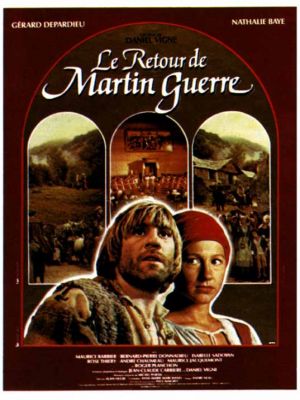
The Return of Martin Guerre (1984).

Classical Destinations (Sky Arts, 2006), YouTube clip of Versailles, Louis XIV, and Paris.

Versailles (2004), YouTube, multiple sections.

Vatel (2000), see trailer.

Girl with the Pearl Earring (2004).

John Adams (HBO, 2008).

The French Revolution (History Channel, 2005), entire film can be watched in sections on YouTube.

Egalité for All: Toussaint Louverture and the Haitian Revolution (PBS, 2009).

The Lost Kingdoms of Africa (2010).

Slavery and the Making of America (PBS, 2004).

Amazing Grace (2007).


Charles Dickens (Biography, 1995), watch instantly on Netflix, if you have an account.

A History of Britain (BBC, 2000), I use sections from episodes on Industrialization. See YouTube clips.

Guns, Germs, and Steel (National Geographic, 2005), I use part of the last episode, which can be watched instantly on Netflix.

The Young Victoria (2009), watch instantly on Netflix.

China's Boxer Rebellion (History Channel, 1997).

The Last Emperor (1987), watch instantly on Netflix.

East Wind, West Wind: Pearl Buck, the Woman Who Embraced the World (1993).

The Great War (PBS, 1996).

Influenza 1918 (PBS, 1998).

Matisse Picasso (2008).

Sigmund Freud: Analysis of a Mind (Biography, 1997).

The People's Century: Red Flag, 1917 (PBS, 1997),

The War of the World: A New History of the 20th Century (PBS, 2008).

The Crash of 1929 (PBS, 2009).

Nanking (2008).

Europa Europa (1990), watch instantly on Netflix.

Downfall (2005).

Frontline: Memory of the Camps (PBS, 2005).

CNN: Cold War (1998), I use an episode on the iron curtain and the red scare.

1968 with Tom Brokaw (History Channel, 2008).

About the United Nations: Decolonization (1999), not an easy one to track down.

The Road to 9/11: A Brief History of Conflict in the Middle East (PBS, 2006).

See also, "Some Films I Use for My Colonial History Course"; "Dancing about Historiography: At the Movies with a Methods Course"; and the March 2008 issue of Perspectives Online, which was devoted to film.

Thursday, October 28, 2010

History Films Roundup

.
Detlef Siebert, "Historical Accuracy in Drama Documentaries," BBC, 15 October 2010

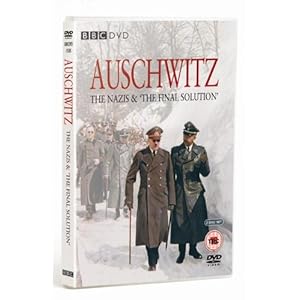
In most factual television programmes, dramatic reconstructions serve as backcloth - or 'wallpaper' in filmmakers' jargon - to illustrate interviews or narration. And some of the drama scenes in the BBC's six-part docu-drama series, 'Auschwitz - The Nazis and the Final Solution', are used in just this way. . . . The drama reconstructions of the BBC, however, had to be as close as possible to the historical reality. Any fictional elements or factual errors in the drama scenes would have compromised the integrity of the entire series. The historical accuracy of set design, cast and dialogue was therefore of greatest importance.>>>

Daniel Person, "New film chronicles history of bison and men," Bozeman Daily, 26 October 2010.

"Facing the Storm," a new documentary about bison being screened tonight at the Emerson Center for Arts and Culture, is nothing if not ambitious. The film sets out to document "the complete history of human relations with the largest land mammal on the continent.">>>

Alex von Tunzelmann, "The Duellists: it takes two to tangle," Guardian, 28 October 2010.

Ridley Scott's film about a pair of French officers who fight 17 head-to-heads in two decades is tense, true and very, very sharp Joseph Conrad's short story The Duel was based on the true story of two French officers, François Louis Fournier and Pierre Dupont. Fournier and Dupont engaged in 17 duels over two decades. In the film, as in Conrad's version, Fournier and Dupont's names are disguised as Feraud and d'Hubert.>>>

Jonathan Melville, "Film Review: Burke and Hare," Edinburgh Evening News, 28 October 2010.

OPENING with the ominous warning that "The events in this film are true, except the bits that are not," director John Landis' take on the story of Edinburgh's most notorious murderers, the eponymous Burke and Hare, arrives in cinemas just in time for Hallowe'en. Determined to assess the film's historical accuracy, I enlisted the help of Burke and Hare Murder Tour guide Stuart Nicoll, the man who took Landis on a trip around Edinburgh's Old Town in late 2009 as he scouted for locations.>>>

Sunday, October 3, 2010

Some Films I Use for My Colonial American History Course

Randall Stephens

I've mentioned on the blog before that I like to use short film clips (10-15 minutes) for many of the classes I teach. I suppose it works better for some courses--America in the 1960s--than others--History Methodology. But thanks to long-running programs like American Experience, Nova, POV, History Detectives, etc, there's much, much out there.

You just have to be willing to do some hunting, inter-library loaning, and some screening. Below are documentaries and features I've found useful for my Colonial America course. Browse the list and I'm sure you'll think of others that could be included. (In the future, I'll post a list from my class on The West in the World since 1500.)

Films for the Colonial American History Course

The Mystery of Chaco Canyon (1999) (Narrated by Robert Redford. Though a more interesting, up-to-date take on Chaco is in the 2010 nat geo adaptation of Jared Diamond's Collapse.)

Native Land: Nomads of the Dawn (1996)

We Shall Remain, Episode 1 (WGBH, 2009) (Contains great material on the first contact between English settlers and Indians. Also includes a good overview of King Philip's War. I combined it with a reading from Jill Lepore's Name of War. Watch the full program on-line.)

The Magnificent Voyage of Christopher Columbus (WGBH, 2007)

Surviving Columbus: The Story of the Pueblo People (KNME, 1992)

Luther (2003) (A good feature film to teach students a bit about the Reformation.)

The New World (2006) (I can think of no other film that more beautifully, graphically presents the Jamestown story. One reviewer called it a visual poem. Good description.)

Nova: Pocahontas Revealed (WGBH, 2007)

Desperate Crossing: The Untold Story of the Mayflower (2006)

The Story of English: Muse of Fire (WGBH, 1986) (One of my favorite documentaries from PBS. Excellent summary of the development of the southern accent [West Country] and the Boston, dropped-r accent [East Anglia].)

American Visions: The Republic of Virtue and The Promised Land (1996) (This is the crusty Aussie art critic Robert Hughes's epic series on American art. Contains a discussion with David Hackett Fischer on Old Ship Church in Hingham and an examination of 17th-century decorative art and architecture. Goes along very well with Fischer's Albion's Seed.)

Colonial House (2004) (How well would the typical college student fare in a 17th-century setting? One word, bathroom.)

God in America, Episodes 1 and 2 (WGBH, 2010) (Will be using this when it comes out. Have seen the pre-release version of the first two episodes. Tremendous. Includes accounts of the Pueblo Revolt, the trial of Anne Hutchinson, George Whitefield and the GA, and more. When this airs on PBS Oct 11-13 the full program will be available on-line.)

500 Nations: Cauldron of War (1994)

Slavery and the Making of America (WNET, 2004) (I use episodes 1 and 2: The Downward Spiral and Liberty in the Air for the colonial course.)

Tom Standage interview on his History of the World in Six Glasses: CBS Sunday Morning (2005)

The War that Made America (WQED, 2006) (French and Indian War series.)

Scientific American Frontiers: Unearthing Secret America (Alan Alda's tour of Jamestown and Jefferson's Monticello. Great perspective on how archeology informs history.)

New York: The Country and the City, Episode 1, 1609-1825 (1999)

Benjamin Franklin (2002)

Thomas Jefferson (1997) (Ken Burns's doc.)

John Adams (HBO, 2008)

Liberty! The American Revolution (KTCA, 2004)

Founding Brothers (2002)

Monday, September 20, 2010

How did They Perceive the World?

Randall Stephens

A recent BBC documentary explores the world of Medieval Europe. Among other things the program asks: How did they live, think, and behave?

Watching it, I wondered why more history documentaries don't explore the day-to-day lives of regular people in the past. It would be terrific to have a film on 17th-century colonial America, which looked at the mindset of Puritans and Native Americans. (The first installment of We Shall Remain was ok on this. PBS's Colonial House had a fun take on daily life in the 1600s.) A similar program on what it was like to live poor and destitute in mid 19th-century New York City would be illuminating. In fact, one could think of a number of eras that could do with a "lived history" documentary.

Of course, the BBC program embedded here, Inside the Medieval Mind, is not without its baroque hyperboles. (New BBC docs make heavy use of lighting effects and deep contrast/saturation tricks.) But, I'd take that over our History Channel's parade of ancient aliens, Nostradamus, and Mayan apocalypse any day. Here's part of the description of Inside the Medieval Mind.

Robert Bartlett of St Andrew's University, investigates the intellectual landscape of the medieval world.

In the first programme, Knowledge, he explores the way medieval man understood the world - as a place of mystery, even enchantment. The world was a book written by God. But as the Middle Ages grew to a close, it became a place to be mastered, even exploited.

Monday, February 15, 2010

Disappearing History, Reappearing History

Randall Stephens

A recent TNR review, NYT essay, and a piece in the Chronicle shed light on the contested nature of history and memory here and across the pond. Mostly dark business. On the bright side, long-lost reels from the dark classic Metropolis are finally being shown. Der Spiegel reports on the recovery of the reels from the 1927 Fritz Lang film. Berliners recently previewed the restored classic. Turns out that this more than 20 minutes of extra material alters the story. (Hat tip to my wife Beth on the latter.)

Mark Mazower, "History's Isle," The New Republic, February 3, 2010

Cosmopolitan Islanders: British Historians and the European Continent
by Richard J. Evans

The effects of a great financial crisis ripple in many directions and last long. After a decade of expansion, for example, austere times lie ahead for British universities, with deep cuts on the horizon. There will be consequences for British scholarship and British culture. Richard Evans’s new study of the historical profession in Britain serves as a timely reminder both of what Britain’s historians have achieved over the past half-century, and what may be lost if their legacy is squandered. In particular, Evans celebrates his colleagues’ outward-looking mindset and their love-affairs with Europe, an engagement that is striking when compared to the introversion of their peers across the Channel, and—though he does not come out and say so—with the parochialism of contemporary British political and cultural life. read on >>>

Russell Shorto, "How Christian Were the Founders?" New York Times, February 11, 2010

The Christian “truth” about America’s founding has long been taught in Christian schools, but not beyond. Recently, however — perhaps out of ire at what they see as an aggressive, secular, liberal agenda in Washington and perhaps also because they sense an opening in the battle, a sudden weakness in the lines of the secularists — some activists decided that the time was right to try to reshape the history that children in public schools study. Succeeding at this would help them toward their ultimate goal of reshaping American society. As Cynthia Dunbar, another Christian activist on the Texas board, put it, “The philosophy of the classroom in one generation will be the philosophy of the government in the next.” read on >>>

John Castellucci, "The Night They Burned Ranum's Papers," Chronicle Review, February 14, 2010

At about 2:30 a.m. on May 22, 1968, as New York City police entered Hamilton Hall, on Columbia University's Morningside Heights campus, to clear it of demonstrators, files belonging to Orest A. Ranum, an associate professor of history, were ransacked, and papers documenting more than 10 years of research were burned. . . .

The papers were irreplaceable. They dated back to Ranum's time as a student at the University of Minnesota, where he got his Ph.D. in history. The notes were going to lay the basis for a textbook on early modern European history that he had been commissioned to write for a series edited by the British historian Sir John Plumb. read on >>>

Siobhán Dowling, "Back to the Future in Berlin: Restored 'Metropolis' Comes Home," Der Spiegel, February 13, 2010

After 83 years, Fritz Lang's Sci-Fi classic "Metropolis" has returned to Berlin in its full glory. On Friday night 2,000 fans braved the snowy weather to watch the restored classic at the Brandenburg Gate. It took restorers a year to repair the damage to the newly discovered scenes. They say the original film was much more complex and interesting than just a sci-fi cult classic. read on >>>

See Roger Ebert on streaming the restored version.

Monday, February 1, 2010

Dancing about Historiography: At the Movies with a Methods Course

Randall Stephens

It's very difficult to find movies to show in a historiography or history methods course. Think about it. Reminds me of the line: "Writing about music is like dancing about architecture." How many major motion pictures deal with historical interpretation or portray scholars "doing" history. (Lord Macaulay reading intently. A Franz Liszt piece wafting in the background. "The Dutch archives and the French archives must be ransacked," shouts the actor playing the Baron. Or, a shot of a tweedy, pipe-smoking C. Vann Woodward delivering his UVA lectures that will become The Strange Career of Jim Crow. Pan out on the audience of white southerners.) Real movies. Unlikely.

Still, I've found some films and interviews that get the conversation going in a methods course I teach. I'm using a selection of clips from the play-adapted-to-screen History Boys (2006). Questions about truth, value in history, and E.H Carr-like "What is History" head scratchers animate several scenes. The film admirably moves the viewer into some epistemological water without any major trouble.

Charlie Rose interviews with historians or on history-related topics can work well enough. Though the average student will slip into a boredom coma. The Roger Mudd American Heritage series Great Minds of History (VHS, 1998) is similar, but not limited to the Charlie Rose spartan set with darkly lit room. UC Berkeley's Conversations with History program, now available on YouTube, features several interviews with prominent historians. I've also tried showing bits from the Matt Damon-hosted Howard Zinn: You Can't Be Neutral on a Moving Train (2004). That's quite good for analyzing the historian as advocate. A similar film, produced by Alabama Public TV, is the Gospel According to Wayne (1993), a bio of the southern historian and Christian activist Wayne Flynt.

Feature films like The Return of Martin Guerre (1982), Name of the Rose (1986), Cold Mountain (2003), or any number of others could get students to think about the use of evidence, narrative arch, and pacing.

For the first time this year I'm going to use episodes from PBS's History Detectives, an ongoing series "devoted to exploring the complexities of historical mysteries, searching out the facts, myths and conundrums that connect local folklore, family legends and interesting objects." I'll be selective in how I use it. Some episodes are better than others, to paraphrase The Smiths.

Students relate to films in ways that they don't to books and articles. (That is doubly true of the reading material in a methods course.) Fifteen to twenty minute clips work best for me and open class discussions up in unexpected ways.

Wednesday, January 13, 2010

In Praise of Worldcat and Recent and Forthcoming History Films

Randall Stephens

What would I do without Worldcat? 1.4 billion searchable items and counting. Sure, that monster library search engine is great for hunting down obscure books, magazines, theses that were read by only five people, and what have you. But I particularly like to use it to find films. I've tracked down loads of documentaries--on everything from serpent-handling West Virginians in the 1980s to Enlightenment philosophes in 18th-century France--and feature films like The Return of Martin Guerre and Andrei Rublev. You can find the most obscure titles on Worldcat. And, if you locate more than a few libraries that have a given movie, there's a good chance you'll be able to get a copy loaned to you.

I'm a firm believer in showing short film clips (15-20 minutes) in class. It breaks things up nicely and provides much needed visuals. (Moving pictures, I hear they call these things.)

I offer up some recent titles, all well worth watching in our out of the classroom. Yet, unfortunately, the BBC Four documentaries are only viewable on-line on the other side of the water.

Influenza 1918
January 18, 2010, 1 hour
It was the worst epidemic in American history, killing over 600,000 people—until it disappeared as mysteriously as it had begun.

American Experience: Wyatt Earp, 2010
Jan 25, 2010 at 9/8 C
Wyatt Earp has been portrayed in countless movies and television shows by some of Hollywood’s greatest actors, including Henry Fonda, Jimmy Stewart, and more recently, Kevin Costner, but these popular fictions often belie the complexities and flaws of a man whose life is a lens on politics, justice and economic opportunity in the American frontier.

Sam Cooke: Crossing Over
PBS, American Masters Series, 2010
American Masters celebrates the wonderful world of music game-changer and definitive soul singer Sam Cooke.

Louisa May Alcott: The Woman Behind ‘Little Women’, 2009
PBS, American Masters
The author of 'Little Women' is an almost universally recognized name whose reputation as a morally upstanding New England spinster masked a literary double life.

The Pacific
HBO Films, coming in 2010
The miniseries tracks the intertwined odysseys of three U.S. Marines - Robert Leckie (played by James Badge Dale), Eugene Sledge (Joe Mazzello) and John Basilone (Jon Seda) - across the vast canvas of the Pacific. The extraordinary experiences of these men and their fellow Marines take them from the first clash with the Japanese in the haunted jungles of Guadalcanal, through the impenetrable rain forests of Cape Gloucester, across the blasted coral strongholds of Peleliu, up the black sand terraces of Iwo Jima, through the killing fields of Okinawa, to the triumphant, yet uneasy, return home after V-J Day.

Killer Subs in Pearl Harbor, 2009
PBS, NOVA
Military and forensics experts investigate the sunken wreck of a Japanese sub and unravel a lingering mystery of WWII.

Lost Kingdoms of Africa: Ethiopia BBC Four
Historian Gus Casely-Hayford explores the history of the old African kingdom of Ethiopia.

Orson Welles over Europe, 2009
BBC Four
Simon Callow looks at the career of Orson Welles after he went into self-exile in Europe.

Friday, July 17, 2009

A Woman in Berlin

From NPR:

"Silence Broken On Red Army Rapes In Germany"
by Eric Westervelt

This week, the American premiere of the German film A Woman in Berlin brings new attention to an issue long considered a taboo in Germany: the mass rape of women by Soviet Red Army soldiers after the fall of Hitler's Third Reich. The movie is based on the real diary of an anonymous Berlin woman. Historians believe some 2 million German women were raped after Soviet and Allied forces defeated Hitler's army in the spring of 1945....

Dr. Phillip Kuwert, a senior physician at the University of Greifswald's department of psychotherapy and psychiatry, estimates that about 200,000 children were conceived by native German women raped by Russian soldiers.
>>>