Search This Blog

Showing posts with label Memoirs. Show all posts

Monday, March 28, 2011

Historians and Their Memoirs

Randall Stephens

What can we learn about the craft of history by reading the autobiographies of historians? A great deal, I think. We get a picture of the context and era that shaped research and writing interests. We see how a historian grew into his or her work. We get an idea of how he or she was trained and mentored . . .

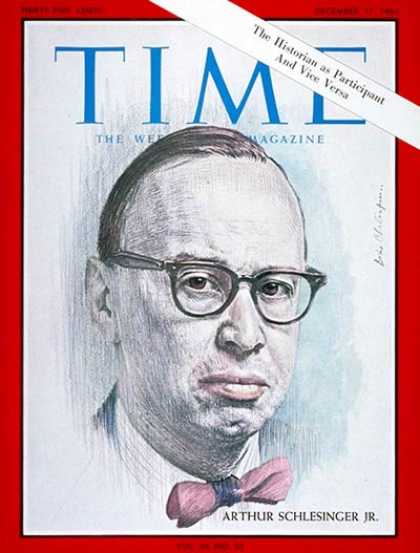
In my Critical Readings in History course I've paired selections from John Hope Franklin's memoir with selections from Arthur Schlesinger, Jr.'s autobiography. Both went to Harvard in the 1930s. Students can see pretty clearly the basic differences in their backgrounds. One grew up in a well-to-do white family with ties to America's intellectual aristocracy. The other came of age in Oklahoma, struggling with poverty and race prejudice. It's not difficult to move from that reading to a discussion of how historians pick the topics they study and how historians are formed by their setting. From there students can reflect on their own interests and how history is, at least in some sense, autobiographical.
I recently dusted off and started rereading C. Vann Woodward's Thinking Back: The Perils of Writing History (Baton Rouge: LSU Press, 1987). Years before he became the tweedy, pipe-smoking Johns Hopkins and then Yale sage of southern history, Woodward was an aspiring historian, not quite sure what the next stage in his life would hold for him. Still, he was ahead of the game. He already had what would be a major book underway while he was still a grad student at UNC in the 1930s:

With a fresh if empty mind and an exciting book of my own underway, I reasoned that perhaps I would now see this unexplored field take on a new glamor and I would rise to the challenge. Much better minds had done so. After all, I was nearly four years older since my first brush with the subject and far riper in wisdomor so I thought. The first thing to do, I was told, was to master the standard "sets"the old American Nation series, the Yale Chronicles, and others guaranteed to bring one up to date. Noting with some puzzlement that most of the many volumes were already a generation old, I nevertheless plunged in. That first plunge was chilling. Plodding through volume after volume, I began to wonder if I had ever encountered prose so pedestrian, pages so dull, chapters so devoid of ideas, whole volumes so wrongheaded or so lacking in point. Was there anything memorable about what one was expected to remember? Was this the best my newly chosen profession could do? Was it what I would be expected to do? A career, a lifetime dedicated to inflicting such reading on innocent youth? Or accepting it as a model for myself? Fleeing the stacks repeatedly, I spent much of that first year pacing Franklin Street by night debating whether I might fare better as a fruit-peddler, panhandler, or hack writer. . . . (21-22)

No Southern youth of any sensitivity could help being excited by the explosion of creativity taking place during the early 1930s—in fiction, in poetry, in drama. Nor could I help seeing that the novelists, poets, and playwrights were in the main writing about the same South historians were writing about and making the whole world of letters at home and abroad read what they wrote and ring with their praise. With this awareness and the expectations it aroused, I arrived as a young apprentice at the doors of the history guild for training—and what a striking contrast, what a letdown, what a falling off! No renaissance here, no surge of innovation and creativity, no rebirth of energy, no compelling new vision. This was a craft devoted primarily at the time, or so it seemed to me, to summing up, confirming, illustrating, and consolidating the received wisdom, the regional consensus that prevailed uniquely in the South of the 1930s and
though I could not then have known it—was to continue through the 1940s. That consensus proclaimed the enduring and fundamentally unbroken unity, solidarity, and continuity of Southern history. (23)

The business about continuity sums up much of Woodward's work as a historian. Indeed, at the beginning of The Strange Career of Jim Crow (1955) he wrote "The people of the South should be the last Americans to expect continuity of their institutions and social arrangements" (3). The bookwhich Martin Luther King, Jr., called the historical bible of the civil rights movement argued forcefully that the South's segregationist turn in the 1890s was something new. Woodward's memoir abounds with similar insights into his life and career.

There are many other memoirs by historians that I'd still like to explore. I include here a handful of those I've read and a great many more that I haven't.

Max Beloff, An Historian in the Twentieth Century: Chapters in Intellectual Autobiography (New Haven: Yale University Press, 1992)

Thomas Dionysius Clark, My Century in History: Memoirs (Lexington: University of Kentucky Press, 2006)

Arthur Schlesinger, Jr., A Life in the Twentieth Century: Innocent Beginnings, 1917-1950 (New York: Houghton Mifflin Harcourt, 2000)

Gerda Lerner, Fireweed: A Political Autobiography (Philadelphia: Temple University Press, 2003)

Forrest McDonald, Recovering the Past: A Historian's Memoir (Lawrence: University Press of Kansas, 2004)

John Hope Franklin, Mirror to America: The Autobiography of John Hope Franklin (New York: FSG, 2005)

Margaret Atwood Judson, Breaking the Barrier: A Professional Autobiography by a Woman Educator and Historian before the Women's Movement (New Brunswick: Rutgers, 1984)

George F. Kennan, Memoirs, 1925-1950 (New York: Pantheon, 1983)

William Hardy McNeill, The Pursuit of Truth: A Historian's Memoir (Lexington: University Press of Kentucky, 2005)

Henry Adams, The Education of Henry Adams: An Autobiography (Boston: Houghton Mifflin, 1918)

Maria Lúcia G. Pallares-Burke, The New History: Confessions and Conversations (Malden, Mass.: Blackwell, 2002)

James M. Banner Jr. Jr. and John R. Gillis, eds., Becoming Historians (Chicago: University of Chicago Press, 2009)

John Lukacs, Confessions of an Original Sinner (New York: Ticknor and Fields, 1990)

John B. Boles, ed., Autobiographical Reflections on Southern Religious History (Athens: University of Georgia Press, 2001)

John B. Boles, ed., Shapers of Southern History: Autobiographical Reflections (Athens: University of Georgia Press, 2004)

Guy Stanton Ford, ed., (New York: Henry Holt and Company, 1910) Essays in American history, Dedicated to Frederick Jackson Turner. Read Carl Becker on Kansas!

Monday, July 12, 2010

Hannah's Child -- A Review

HANNAH’S CHILD: A Theologian’s Memoir. By Stanley Hauerwas. Grand Rapids: Wm. B. Eerdmans Publishing Co., 2010. xii + 288 pages.


In 2001, just one day before the events of 9-11 transpired, Time Magazine announced its selection of Stanley Hauerwas as America’s most important theologian. Although there may be dissent as to whether Hauerwas deserves the honor, the fact that a general news magazine would deem the Duke Divinity School theologian and ethicist worthy of the honor suggests that he has impacted America’s religious and public life. But, who is Stanley Hauerwas? What has he done and said and written that has attracted the attention not just of the religious press but the secular press as well?

Memoirs offer persons of note the opportunity to define themselves, to lay out their own sense of who they are and how they became the person the public thinks they know. The author of this memoir seems to find it difficult to recognize himself in many of these portrayals, for in the very first sentence of the book he writes: “I did not intend to be ‘Stanley Hauerwas’” (p. ix). In making this statement he notes that there is a person out there who goes by this name, a person who is “allegedly famous,” but the question remains, who is Stanley Hauerwas? In this book, Hauerwas, the son of a West Texas bricklayer, tells how his parents married late and thus had a child late in life. The title of the book comes from the fact that his mother borrowed the prayer of Hannah, the mother of Samuel, and prayed that if she were blessed with a child, then she would dedicate this child to God’s ministry. It is the burden of this prayer that served as the guiding principle of his life, for not only did his mother pray this prayer, but she also shared this news with her son. The memoir is essentially Hauerwas’ reflection on how he moved from being Hannah’s child, the one dedicated to God’s service before his birth, to the person he is today, a person who with great difficulty and struggle, came to understand himself to be a Christian, so that his life is now “unintelligible if the God we Christians worship does not exist” (p. x).

As a reviewer, I came to this book having read here and there in Hauerwas’ writings. I know him more by reputation than by any close reading of his works. I have read the critiques of his work and know a number of his students, people who have been influenced not only by his writings but by his teaching and by their interactions with him. From these “encounters” with Hauerwas, all from a distance, I knew he had a reputation for being profane and for being a pacifist. I knew he embraced the call to community but found him – through my “at a distance” reading – to be too quick to abandon the public square. Not all of my preconceptions have been proven wrong, but I have come to have a greater appreciation for the man behind the headlines.

The story begins in Pleasant Grove, Texas, outside Dallas. As noted earlier, his father was a bricklayer, and his father and grandfather had been bricklayers. Early on in his life, Hauerwas took up his father’s trade, and probably would have been a brick layer himself, had his mother not dedicated him to God’s service. The calling came through his mother, but from his father he learned how to work hard. He also learned the words he would become famous for uttering in polite society. As for the prayer and the dedication of his life, Hauerwas wished that his mother had refrained from sharing the news, but he also believes that it was this prayer that made him the person he is today. Had he not known of this calling, which he confesses may have limited his autonomy, but ultimately, that may not have been a bad thing.

Autonomy, given my energy, probably would have meant going into business and making money. There is nothing wrong with making money, but it was just not in my family’s habits to know how to do that. All we knew how to do was work, and we usually liked the work we did. As it turns out, I certainly like the work Mother’s prayer gave me (p. 4).
Before this calling could be fulfilled, Hauerwas would have to be saved. Although baptized at Pleasant Mound Methodist Church, being saved was a long process, one that didn’t truly take until he became a theologian. Carrying the burden of service to God, he knew he had to go to college, something no one in his family had ever done. Encouraged by his teachers and by his ministers, he became an avid reader, so that even before he went to college he was reading history and philosophy. This need to study for ministry took him to Southwestern College, a place at which he discovered he didn’t really fit in. He was of working class stock and yet he has spent his life in academia. It was at Southwestern that he met the first of his mentors, a professor who would guide his studies and helped him navigate both life and faith. It was there that he discovered a love of philosophy, which would undergird his work as a theologian and ethicist. Despite the direction that his life was taking, he still wasn’t sure that he was a Christian. But during this time he discovered that “to be a Christian meant that you could never protect yourself from the truth” (p. 11). This discovery, combined with his working class Texas background helped contribute to another aspect of Hauerwas’s reputation – his straightforwardness and desire to get to the heart of the matter. It was a quality that would get him into trouble on many occasions during his academic career.

One of the traits that he mentions throughout the book is a lack of self awareness, or perhaps better, a lack of knowledge of the rules of etiquette, a trait that has led to misunderstandings. It was also a trait that seems to have led to a disastrous marriage to a woman he met in college. He seemed to fall into the marriage, quite unaware of what it involved, or Anne’s mental stability. The story of his relationship with his late wife, forms a significant part of the book, for he was by his own report left to do much of the child rearing and family duties. There was a fear of her hurting herself, and even him, whom she blamed for all her problems. The marriage lasted nearly a quarter century before she left, driven along by her own mental illness. Later he would meet a woman, one who would become his wife and his intellectual partner. There is a sense of healing that emerges out of this later story, even as he grieves what had come before. All of this helps humanize the well-known theologian. While there is this lack of social self awareness and the problems that developed as a result of his first marriage, we also see the devotion that he has to his son Adam, with whom he spent significant time, as he was functioning essentially as a single parent. Beyond this, we discover the importance of friendships to his life. Especially during the years at Notre Dame and Duke, more and more people came into his life – colleagues, students, church members. In the epilogue, he notes that his ability to write the book is a “testimony to friends,” for he confesses that without these friendships he would never have survived.

If friendships and family form a significant part of the story, so too does his developing theology and his commitment to the church as community. Going to Yale, he discovered Karl Barth whose discomfort with natural theology helped form Hauerwas’s commitment to a revelational theology, one that is Christocentric and rooted in community. Although Hauerwas is Methodist his understandings of church, society, and theology have been formed in conversation with Lutherans at Augustana College and Catholics at Notre Dame. He was influenced by James McClendon and John Howard Yoder, one a Baptist and the other a Mennonite. Yoder would become his colleague at Notre Dame. He seems to have thrived at Notre Dame, becoming more catholic in his perspectives. Later, as things began to change in his department at Notre Dame, he moved to Duke Divinity School, which put him back into the Methodist orbit. Although this was a good fit in many ways, bringing him into contact with new conversation partners, he did have troubles with his dean. One of the partnerships that proved fruitful was with William Willimon. What is interesting is that despite the fact that Hauerwas has a distinctively negative view of church growth perspectives – so much so that he eventually left the UMC church he had long been a member of after it turned in that direction and became an Episcopalian -- he makes no mention of Willimon’s increasingly vocal emphasis on numbers and growth since becoming a Methodist bishop.

What is clear about Hauerwas’ perspective is that he believes strongly that what one believes influences what one does. He believes strongly that God works through the church to bring transformation in the world – not by the church taking public political stands, but by living out the gospel. He’s all for interfaith dialogue and cooperation, but he urges Christians to own their own faith. He doesn’t put a lot of trust in public institutions, and while recognizing the frailty of the church, it is in the church that God is present. Ultimately, he believes that God is a necessary word, but “learning how to say ‘God is hard but good work.”

It is good work because the training necessary to say “God” forces us to be honest with ourselves about the way things. Are. Our lives are but a flicker. We are creatures destined to die. We fear ourselves and one another, sensing that we are more than willing to sacrifice the lives of others to sustain the fantasy that we will not have to die (p. 236).
What is important to understand about Hauerwas and his theology is that he is not easy to categorize. He speaks of himself as a conservative, and yet he is in many ways quite radical. He isn’t an evangelical, nor is he a classic liberal. He is influenced deeply by Barth, and yet isn’t a Barthian. His is a theology that is deeply philosophical, with Aristotle and Wittgenstein both being important influences on his thought. All of this may go a long way to explaining why he is so often misunderstood.

Whether one is a fan of Hauerwas or not, whether one agrees with his theology or not, this book is worth reading closely. It is honest and straightforward. In other words, it names names! It’s challenging in its content and yet graceful in its prose (and no there’s no profanity in the book). You will discover a man who is deeply flawed and yet committed to the God revealed in Jesus Christ. I’ve not jumped into the Hauerwas camp, but I do understand where he is coming from. I also appreciate the story of his faith journey, for it is a reminder that for many of us, salvation comes not in a moment in time, but often as we’re living in the midst of the community. Take and read, you will be enlightened, challenged, and maybe even blessed.

Thursday, July 8, 2010

Publishing Mark Twain's Long-Awaited Autobiography

Randall Stephens

W. D. Howells wrote his long-time friend Mark Twain: "I wonder why we hate the past so?" Twain snapped back "It's so damned humiliating." Mark Twain had a few choice things to say about history.

"I said there was but one solitary thing about the past worth remembering, and that was the fact that it is past-can't be restored."*

Elsewhere he paraphrased Herdotus: "Very few things happen at the right time, and the rest do not happen at all. The conscientious historian will correct these defects."


Twain was a cynic. A very funny one at that. His views on religion were so volatile in his day--and he feared enough for his own reputation and for that of his immediate family--that he chose not to air them. Though a skeptic, he made observations like this: "All that is great and good in our particular civilization came straight from the hand of Jesus Christ." The bloody theology of Christianity along with its particularity, in his view, was repulsive. He confided to his notebook in 1896: "If Christ was God, He is in the attitude of One whose anger against Adam has grown so uncontrollable in the course of . . . If Christ was God, then the crucifixion is without dignity. It is merely ridiculous, for to endure several hours."

In the autobiography he worked on, Twain meditated on religion, writing, the West, his acquaintances, and more. (See the PBS Newshour segment on the autobio embedded here.)

The editors of the Mark Twain Project at Berkeley have their hands full. The projects website explains:

Housed in the midst of the archive is the Mark Twain Project, a major editorial and publishing program of The Bancroft Library. Its six resident editors are at work on a comprehensive scholarly edition of all of Mark Twain's private papers and published works. More than thirty of an estimated seventy volumes in The Works and Papers of Mark Twain are currently available, all published by the University of California Press.

Twain stipulated that the autobiography could be published one-hundred years after his death. "He used the autobiography as a chance to disburden himself of a lot of feeling," says Benjamin Griffin in the Newshour piece. "He left this out of the final version of the autobiography." For example, as a staunch anti-imperialist, Twain took aim at Teddy Roosevelt for his role in the massacre of Filipino guerrillas during the Spanish-American War.

"[Roosevelt] knew perfectly well that to pen 600 helpless and weaponless savages in a hole like rats in a trap and massacre them in detail during a stretch of a day-and-a-half from a safe position on the heights above was no brilliant feat of arms. He knew perfectly well that our uniformed assassins had not upheld the honor of the American flag."

I look forward to reading the completed version. (Or at least thumbing through it.) Not a light read, I'm sure.

Sunday, February 21, 2010

Tony Judt Remembers

Randall Stephens

In its last several issues the
New York Review of Books has published excerpts from historian Tony Judt’s fascinating memoirs. Judt, director of the Remarque Institute at NYU, is a keen observer of the human condition and his sharp wit comes through clearly in these pieces. Three have appeared since Judt wrote a wrenching account of his ordeal with Lou Gehrig's disease. "By my present stage of decline, I am thus effectively quadriplegic," he wrote. "My solution has been to scroll through my life, my thoughts, my fantasies, my memories, mis-memories, and the like until I have chanced upon events, people, or narratives that I can employ to divert my mind from the body in which it is encased."

Readers of the memoir excerpts have been treated to stories of growing up Jewish in post-war London, experiments with ethnic cuisine, life on a 1960s kibbutz, and the trials and tribulations of grammar school. The latest installment, "Historian's Progress," ranges over Judt's early fascination with trains, the waning of the French public intellectual, and includes his account of an odd midlife crisis. In the grip of 40-something doldrums, some purchase flashy cars, others try to reclaim the glory of yesterday, 1 in 100 will go out and buy a stunning new toupee. Not Judt. He learned Czech:

Early in the 1980s I was teaching politics at Oxford. I had job security, professional responsibilities, and a nice home. Domestic bliss would have been too much to ask, but I was inured to its absence. I did, though, feel increasingly detached from my academic preoccupations. French history in those days had fallen among thieves: the so-called "cultural turn" and "post"-everything trends in social history had me reading interminable turgid screeds, promoted to academic prominence by newly founded "subdisciplines" whose acolytes were starting to colonize a little too close to home. I was bored. . . .

In a bizarre series of events Judt took Czech classes and learned to read the language well enough. He became an active supporter of dissidents and even taught unauthorized courses in Czechoslovakia.

Without my Czech obsession I would not have found myself in Prague in November 1989, watching Havel accept the presidency from a balcony in the town square. I would not have sat in the Gellert Hotel in Budapest listening to Janos Kis explain his plans for a post-Communist but social democratic Hungary-the best hope for the region but forlorn even then. . . .

Above all, I could never have written Postwar, my history of Europe since 1945. Whatever its shortcomings, that book is rare for the determination with which I set out to integrate Europe's two halves into a common story
.

Indeed, critics hailed Postwar: A History of Europe since 1945 as the premier work in the field. "Aside from its sheer brickish heft," remarked one in the Boston Globe, "it is, without a doubt, the most comprehensive, authoritative, and, yes, readable postwar history."

In the January/February 2006 issue of Historically Speaking Donald Yerxa interviewed Judt on his recent work, Europe in the shadow of war, and more. I excerpt here a portion of that interview:

Donald A. Yerxa: I’d like to begin with the title of your book, Postwar. Why did you select that title and what does it imply about the period since 1945?

Tony Judt: The title originated with my eleven-year old son. He was getting frustrated with my inability to come up with a title and asked me what the book was about. I said that it
was about the way in which the Second World War lasted so long in Europe in terms of memory, impact, and consequences so that much of Europe since 1945 was in a postwar shadow. So he said, “Well, call it Postwar.” The title very much reflects the book’s emphasis on the place of the Second World War and everything that happened in that war in the second half of the 20th century.

Yerxa: How did Europeans handle the burden of the war’s shadow?

Judt: If you want a general answer, I would say that they handled the burden by a form of selective forgetting. Although it varied in subject matter from country to country, it had in common the notion that the only way to put back countries which had experienced what amounted to five or six years of civil war as well as the complete destruction of civic, political, and legal institutions was to create agreeable myths about what had happened and forget the rest.

Yerxa: Why did the shadows last so long?


Judt: There are two answers. In the case of Western Europe, ironically the shadows lasted precisely because they were not actually addressed. Issues of memory of collaboration, of the whole question of what was done to the Jews and who was responsible, and of remembering the extent to which many people were quite happy with fascism or affiliated with the local forms of it—all of these couldn’t be comfortably integrated into post-World
War II memory. It was only in the 1970s and 1980s—mainly because of a new generation as much as anything else—that it became possible to look back and ask different questions.

In Eastern Europe it was much more simply a consequence of the imposition of a new regime under the communists which not only made it impossible to look straight at what had happened before the communists, but imposed a whole new level of things for people to remember and feel bad about afterward. The war got conflated with the suffering of the postwar decades.

Yerxa: You maintain that the history of Europe in the second half of the 20th century must include both halves: East and West. What themes or patterns emerge when you include both in your narrative?

Judt: We are all aware that the East and West had very different experiences. But we are not accustomed to reflect on the commonalities. The most obvious one was that in the immediate postwar years, 1945-47, much of the policies pursued in the East were remarkably similar to those in the West: heavy emphasis on reconstruction, investment in infrastructure, economic planning, the direction of the economy, and so on. The Czechoslovak economic plan between 1945 and 1948 was remarkably similar to the first Monnet plan in France. Obviously, it changed once the communists came to power, but there was a common sense that the war taught that you had to plan the economy and control the society from above.

The second theme is the parallel disillusion on the part of the Left. We forget that many people—intellectuals and students, especially in Eastern Europe in places like Hungary and Czechoslovakia—had great hopes for communism if only because they could not go back to the past and there was no alternative. They had great illusions that were in a way comparable to the illusions of Western European progressives and fellow travelers, although they were shattered much earlier. The postwar generation in Western Europe still had hopes for a reformed, improvable, revisionist communism. That dream was shattered in 1968.

I suppose the third thing—though I wouldn’t want to push it—is that the extremely rapid economic and social change in Western Europe has a low-level comparable cousin in Eastern Europe in the shift from country to town, which explains why the towns in Eastern Europe have these God-awful housing blocks to accommodate the huge numbers of ex-peasants. Also there was a degree of underground Americanization, modernization, and youthification in Eastern Europe that was not apparent to the West. This goes a long way to explain what happened in Poland and Czechoslovakia in 1968.

Yerxa: Of all the things that have happened in Europe since 1945, which seemed the most predictable? Most unexpected?

Judt: No one anticipated the scale of economic recovery, demographic explosion, prosperity, stability, depoliticization—all of which we recognize as parts of the economic miracle in parts of Western Europe. Everyone expected more of the same, more of what had happened after the First World War: civil conflict, violence, depression, possibly a retreat once again into political extremes of left and right. This didn’t happen, and that was totally unexpected.

Among the most predictable things that occurred was the Cold War. We forget that the Cold War wasn’t coming out of nowhere in the 1940s. The suspicions that the Soviets, especially Stalin, had of the West and the Western doubts about the reliability and desirability of the Soviet Union as an ally go back to the 1920s and 1930s. The Second World War was the aberration, not what comes afterward. If we look—as we now can—at the archives of the Soviet Union, as well as those of the U.S. and UK, we know, for example, that the British Foreign Office was under no illusion that there was bound to be some sort of division of Europe after the war, and that division would take the form of a freezing of the Russian zone, on the one hand, and a desperate attempt to establish a Western zone, on the other. If anyone was a bit surprised by this, it was the Americans, but that’s because they had the least experience with European politics in the interwar years.

Yerxa: In terms of your own engagement with postwar Europe, did anything surprise you during the course of researching and writing the book?

Judt: Something that wasn’t a real surprise but which struck me powerfully was that you simply cannot write the story of the European Union the way it is conventionally written as though a bunch of well-intentioned men sat down and said: “Never again. We must build a happy, united Europe.” That is simply not the case. I am struck again and again by how often the processes that lead to some new stage in the integration or unity or coming together of Europe—whether it’s in the early 1950s, late 1950s, 1970s, or so on—are always a product of separate national interests. There was until very late in the day no great European project.

There is probably one other thing that did surprise me, although once I got over the surprise, I realized I had seen it coming, and that is just how much of postwar Europe was built unknowingly on the foundation of things that happened in the Second World War, indeed under the Nazis. Many of the economic policies, the idea that there should be a European-wide zone of policy making and so on, were largely the consequence of the experience of World War II itself. Particularly in Western Europe, many young administrators got their first experience of being able to construct economic policies and planning without the annoying interference of democratic politicians when they worked for Vichy or the occupying forces.

Yerxa: Was the Cold War as dangerous as those of us who were children in the U.S. in the 1950s and 1960s remember it?

Judt: That’s a very good question. It struck me while writing the book how very different the Cold War was when seen from Europe than when seen from America. The American memory of my contemporaries was of nuclear alert and of being warned about what to do if the Russians came. I grew up in London, and most of my friends grew up in Europe within a few hundred miles of the Red Army, and we weren’t aware of this most of the time. Until I was about ten years old, I think that most of my conscious sense of “goodies and baddies” was directed more toward the Germans. All British and most European films about the war were still heavily focused on fighting the Germans. There was something of a mixed view of the Red Army. I remember when the Red Army Choir and the Bolshoi Ballet came to London in the mid-1950s. They were welcomed with open arms, cheering, and unambiguous affection, even by people who politically were unquestionably right of center and anti-communist. So I think it was a different experience in Europe as felt and remembered. Now, whether it was objectively just as dangerous—in other words, whether the Europeans were living in an illusory sense of safety—is another matter. I think there was probably only one really dangerous moment in the Cold War, and that was of course Cuba. We now know that pressures particularly on Kennedy and to some extent on Khrushchev to play much harder ball than they wanted to were quite strong. But I do not know of any instance earlier or later when we were really close to nuclear or even non-nuclear war in Europe. The Cold War was extremely dangerous in East Asia, and there were times that it got risky in the Middle East. We know that Nixon came very close to mobilizing American strategic forces over the 1973 war. But I don’t know of any similar occasion in Europe. One of the reasons for this was that Stalin was extraordinarily cautious in Europe. He had no interest in pushing further than he had already got. He discouraged communists in Greece, Yugoslavia, Italy, and France from making trouble because it didn’t suit his strategic purposes. So I think that we Europeans were not totally wrong to remember the Cold War as stabilizing, in an odd kind of way. It certainly was in Western Europe. The Eastern Europeans, of course, remember it not as particularly dangerous, but as horrible. Horrible because there really was a war going on, but it was a war between the state and society.

Yerxa: Who is on your short list of the most influential people in the history of Europe since 1945?

Judt: Charles de Gaulle, no question. Like it or not, Margaret Thatcher, and like it or not intellectually, I suppose Jean-Paul Sartre. His influence was considerable in a gloomy sort of way. Back to politics, I would include Mikhail Gorbachev. Absent Gorbachev it is hard to envisage the events of the 1980s. I would also have to rank the Polish pope, but below Gorbachev. And much though I deeply dislike the man, Konrad Adenauer was crucial in the stabilizing of West Germany. In a different way, I would include Willy Brandt, who was really a political failure, but who played a vital role in shifting the gears of internal European relations from the Cold War to détente. In terms of public figures, those would be the ones whom I would emphasize. I would be less inclined to include other major intellectuals or writers because so many of them went off to America. Tragically, many of the most important people that would otherwise be associated with “the European mind” were in fact living in New York or Chicago as a consequence of the Depression, Nazism, communism, and World War II. . . .

Friday, July 17, 2009

A Woman in Berlin

From NPR:

"Silence Broken On Red Army Rapes In Germany"
by Eric Westervelt

This week, the American premiere of the German film A Woman in Berlin brings new attention to an issue long considered a taboo in Germany: the mass rape of women by Soviet Red Army soldiers after the fall of Hitler's Third Reich. The movie is based on the real diary of an anonymous Berlin woman. Historians believe some 2 million German women were raped after Soviet and Allied forces defeated Hitler's army in the spring of 1945....

Dr. Phillip Kuwert, a senior physician at the University of Greifswald's department of psychotherapy and psychiatry, estimates that about 200,000 children were conceived by native German women raped by Russian soldiers.
>>>

Tuesday, June 30, 2009

Historians to Cheney

Randall Stephens

"Former Vice President Dick Cheney has just signed a deal for his memoirs, reportedly worth around $2 million," write the editors of the New York Times. The Gray Lady asks a number of historians for advice to Cheney. The following weigh in: Joseph J. Ellis, Richard Reeves, Jean Baker, David Levering Lewis, Alonzo L. Hamby, Kathleen Dalton, Mary Stuckey, Robert Dallek, and H.W. Brands. "What advice exists," the NYT asks, "for a political memoirist who wants the work to last, given common pitfalls like self-justification, self-aggrandizement, vagueness and boring inside-baseball detail?"

"I would say that Grant’s presidential memoir is the best of the genre, unparalleled to date," writes David Levering Lewis. "And I’d also single out the Georgia coming-of-age remembrance by Jimmy Carter. As for the historical value of Cheney’s and Rice’s memoirs, I’d not expect much gain for the record of the republic."