Search This Blog

Showing posts with label Historiography. Show all posts

Monday, March 28, 2011

Historians and Their Memoirs

Randall Stephens

What can we learn about the craft of history by reading the autobiographies of historians? A great deal, I think. We get a picture of the context and era that shaped research and writing interests. We see how a historian grew into his or her work. We get an idea of how he or she was trained and mentored . . .

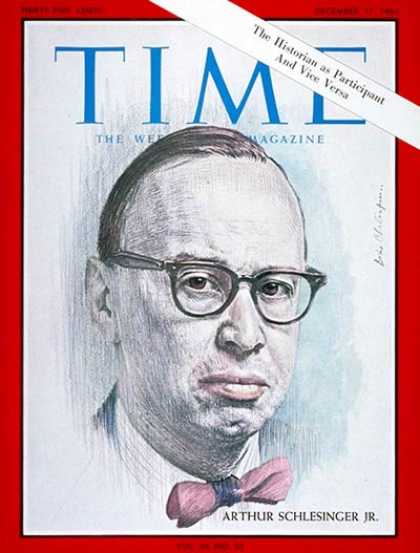
In my Critical Readings in History course I've paired selections from John Hope Franklin's memoir with selections from Arthur Schlesinger, Jr.'s autobiography. Both went to Harvard in the 1930s. Students can see pretty clearly the basic differences in their backgrounds. One grew up in a well-to-do white family with ties to America's intellectual aristocracy. The other came of age in Oklahoma, struggling with poverty and race prejudice. It's not difficult to move from that reading to a discussion of how historians pick the topics they study and how historians are formed by their setting. From there students can reflect on their own interests and how history is, at least in some sense, autobiographical.
I recently dusted off and started rereading C. Vann Woodward's Thinking Back: The Perils of Writing History (Baton Rouge: LSU Press, 1987). Years before he became the tweedy, pipe-smoking Johns Hopkins and then Yale sage of southern history, Woodward was an aspiring historian, not quite sure what the next stage in his life would hold for him. Still, he was ahead of the game. He already had what would be a major book underway while he was still a grad student at UNC in the 1930s:

With a fresh if empty mind and an exciting book of my own underway, I reasoned that perhaps I would now see this unexplored field take on a new glamor and I would rise to the challenge. Much better minds had done so. After all, I was nearly four years older since my first brush with the subject and far riper in wisdomor so I thought. The first thing to do, I was told, was to master the standard "sets"the old American Nation series, the Yale Chronicles, and others guaranteed to bring one up to date. Noting with some puzzlement that most of the many volumes were already a generation old, I nevertheless plunged in. That first plunge was chilling. Plodding through volume after volume, I began to wonder if I had ever encountered prose so pedestrian, pages so dull, chapters so devoid of ideas, whole volumes so wrongheaded or so lacking in point. Was there anything memorable about what one was expected to remember? Was this the best my newly chosen profession could do? Was it what I would be expected to do? A career, a lifetime dedicated to inflicting such reading on innocent youth? Or accepting it as a model for myself? Fleeing the stacks repeatedly, I spent much of that first year pacing Franklin Street by night debating whether I might fare better as a fruit-peddler, panhandler, or hack writer. . . . (21-22)

No Southern youth of any sensitivity could help being excited by the explosion of creativity taking place during the early 1930s—in fiction, in poetry, in drama. Nor could I help seeing that the novelists, poets, and playwrights were in the main writing about the same South historians were writing about and making the whole world of letters at home and abroad read what they wrote and ring with their praise. With this awareness and the expectations it aroused, I arrived as a young apprentice at the doors of the history guild for training—and what a striking contrast, what a letdown, what a falling off! No renaissance here, no surge of innovation and creativity, no rebirth of energy, no compelling new vision. This was a craft devoted primarily at the time, or so it seemed to me, to summing up, confirming, illustrating, and consolidating the received wisdom, the regional consensus that prevailed uniquely in the South of the 1930s and
though I could not then have known it—was to continue through the 1940s. That consensus proclaimed the enduring and fundamentally unbroken unity, solidarity, and continuity of Southern history. (23)

The business about continuity sums up much of Woodward's work as a historian. Indeed, at the beginning of The Strange Career of Jim Crow (1955) he wrote "The people of the South should be the last Americans to expect continuity of their institutions and social arrangements" (3). The bookwhich Martin Luther King, Jr., called the historical bible of the civil rights movement argued forcefully that the South's segregationist turn in the 1890s was something new. Woodward's memoir abounds with similar insights into his life and career.

There are many other memoirs by historians that I'd still like to explore. I include here a handful of those I've read and a great many more that I haven't.

Max Beloff, An Historian in the Twentieth Century: Chapters in Intellectual Autobiography (New Haven: Yale University Press, 1992)

Thomas Dionysius Clark, My Century in History: Memoirs (Lexington: University of Kentucky Press, 2006)

Arthur Schlesinger, Jr., A Life in the Twentieth Century: Innocent Beginnings, 1917-1950 (New York: Houghton Mifflin Harcourt, 2000)

Gerda Lerner, Fireweed: A Political Autobiography (Philadelphia: Temple University Press, 2003)

Forrest McDonald, Recovering the Past: A Historian's Memoir (Lawrence: University Press of Kansas, 2004)

John Hope Franklin, Mirror to America: The Autobiography of John Hope Franklin (New York: FSG, 2005)

Margaret Atwood Judson, Breaking the Barrier: A Professional Autobiography by a Woman Educator and Historian before the Women's Movement (New Brunswick: Rutgers, 1984)

George F. Kennan, Memoirs, 1925-1950 (New York: Pantheon, 1983)

William Hardy McNeill, The Pursuit of Truth: A Historian's Memoir (Lexington: University Press of Kentucky, 2005)

Henry Adams, The Education of Henry Adams: An Autobiography (Boston: Houghton Mifflin, 1918)

Maria Lúcia G. Pallares-Burke, The New History: Confessions and Conversations (Malden, Mass.: Blackwell, 2002)

James M. Banner Jr. Jr. and John R. Gillis, eds., Becoming Historians (Chicago: University of Chicago Press, 2009)

John Lukacs, Confessions of an Original Sinner (New York: Ticknor and Fields, 1990)

John B. Boles, ed., Autobiographical Reflections on Southern Religious History (Athens: University of Georgia Press, 2001)

John B. Boles, ed., Shapers of Southern History: Autobiographical Reflections (Athens: University of Georgia Press, 2004)

Guy Stanton Ford, ed., (New York: Henry Holt and Company, 1910) Essays in American history, Dedicated to Frederick Jackson Turner. Read Carl Becker on Kansas!

Wednesday, December 29, 2010

Amateurs, Professionals, and Popular Histories

Dan Allosso

As I look at the historiographical “tree” I drew, it strikes me that the books on it have all been chosen by historians. I wonder what it would look like, if it included books that were especially important at imparting historical ideas to the general public?

The other day, Lisa responded to Chris’ post with a comment about appreciating older scholarship, and the “parents/grandparents” element of our intellectual lineage. I’ve been thinking about that, as I’ve been reading professional historiographies (John Higham, Peter Novick, Ian Tyrell) this week, along with assessments of the influence and popularity of books: Frank Luther Mott’s Golden Multitudes: The Story of Best Sellers in the United States (1947) and Cowley & Smith’s Books that Changed Our Minds (1939). Malcolm Cowley and Bernard Smith's book, dedicated to Charles Beard, consists of a series of essays on authors or books deemed especially influential by American intellectuals responding to a New Republic inquiry. While it does not provide first-hand information about the books that influenced regular people (or even women, since all the respondents were apparently male), many of the people they polled had written books that did influence large groups of Americans. Carl Becker, for instance, nominated William Graham Sumner's A Study of Mores, Manners, Customs and Morals (1907), “which impressed me with the relativity of custom and ideas,” and Hans Vaihinger's The Philosophy of 'As If ' (1911), which “confirmed me in the notion that social thinking is shaped by certain unexamined preconceptions current at the time.” (quoting Becker’s letter, 6) Beard said “Brooks Adams’s two books are thumping,” which the editors took to mean The Law of Civilization and Decay (1895) and Theory of Social Revolutions (1913). Both Becker and Beard recommended Benedetto Croce, History: Its Theory and Practice (1923).

Beard himself was the second-most widely recommended author, just behind Thorstein Veblen (really!); An Economic Interpretation of the Constitution and The Theory of the Leisure Class got an equal number of votes. Authors popular with the surveyed intellectuals for their body of work rather than a particular title included Sinclair Lewis, H. L. Mencken, George Bernard Shaw, and Ralph Waldo Emerson. Autobiographies included Henry Adams’, Theodore Dreiser’s, Joseph Freeman’s, Robert M. La Follette’s, and The Autobiography of Lincoln Steffens, which is called “the key book of the depression...[that] came at exactly the right moment.” (12)

Several of Cowley and Smith’s picks also appear in the lists of popular, “amateur” history I’m compiling from Higham, Novick, and Tyrell, which focuses more on the question of whether or not an author was academic, and how he (yes, 99% of the time, he) fit in the growth of the profession, but nevertheless offer some guidance regarding popularity. For example, former Senator and amateur historian Albert Beveridge’s Lincoln (1928) earned $51,000 in royalties in its first six months (Higham 75). H.G. Wells’ Outline of History (1920) was “issued by a hesitant publisher at an exorbitant price . . . it sold one and a half million copies--one copy for every twenty homes in the country--within twelve years.” (Higham 74) Although the multi-volume set is global in scope, it deals extensively with American history and perhaps contextualizes it in a way that resonated with readers. Volume Four begins with back-to-back photos of Lincoln at Antietam and Bismarck at Versailles. Novick compares sales of Wells’ Outline with J. Franklin Jameson’s American Revolution Considered as a Social Movement (1926), which sold less than a thousand, and John D. Hicks’ Populist Revolt (1931), which “took seventeen years to sell fifteen hundred copies.” (Novick 193) Allan Nevins, always interested in popular history, said that Mark Sullivan’s Our Times (1926) had “probably done more to interest people in American history than anything else written in our generation.” (Tyrell 49)

Cowley & Smith mention that Robert Lynd responded to their survey on the most influential books, with authors like Alfred Adler, John Dewey, William James, Veblen, Thomas Huxley, and with Samuel Butler’s Erewhon. These suggestions, the editors noted, were much different from the “books taken from the Middletown public library in 1935,” which Lynd described in Middletown (Chapter 17) and Middletown in Transition (Chapter 7). Those chapters probably deserve a closer look, alongside the titles I’ve pulled together on reader response theory and interpretive communities.

See also:

Waldo Frank, Our America

Van Wyck Brooks, America’s Coming of Age

Alfred North Whitehead, Science and the Modern World

Sigmund Freud, Interpretation of Dreams

Herbert Croly, Promise of American Life

Louis Brandeis, Other People’s Money

Joseph Krutch, The Modern Temper (said to be “very influential in the colleges,” 13)

V. I. Lenin, Imperialism

John Reed, Ten Days that Shook the World

Graham Wallas, The Great Society

John Strachey, The Coming Struggle for Power

Gustavus Myers, History of the Great American Fortunes

James Frazer, The Golden Bough

Saturday, December 18, 2010

Visualizing Historiography

Dan Allosso

As a grad student preparing for Oral Exams, I spend a lot of time in a library carrel with piles of books. I’m trying to keep track of the connections between them, and simultaneously wondering how to think about historiography, for my particular project. Does it make more sense to trace the development of sub-disciplines like new social history? Or to group labor historians, regardless of the techniques they used? This question becomes even trickier, since the subject I’m exploring (American rural history) has much fuzzier edges than labor, or even than its own counterpart: urban history.

Nerd that I am, I naturally look to the computer for tools. I love Endnote, but it doesn’t really give me the note-taking and visual elements I want. So I’ve started using Tinderbox. It lets me extend the “post-it note on the plate-glass window” metaphor to extremes. But looking at the historiography visually has advantages.

I thought I’d draw American historiography as a tree (click image below to enlarge), so I’d be able to see how the different topics I’m tracing emerge like branches from a less differentiated body of earlier work. My reading list also includes a lot of iconic authors in the “trunk” area, but more single texts in the “leaves” area at the top. Time will tell, I suppose, which of the historians of the last three decades will emerge as “trunk” material. Or whether some of our current sub-disciplinary divisions will become permanent, leaving us without a single trunk at all.

The inclusion, placement, and arrangement of the authors and titles is completely arbitrary, of course, and represents my evolving ideas not only about how this material fits together, but about how it becomes meaningful to me. One of the interesting things I noticed, as I began building this list, was how much historiographies reflect the interests of their makers. The crowd of red on the left, for example, represents labor historians discussed in Francis G. Couvares, et. al., Interpretations of American History, which was one of my initial sources. I assume that, as I look at each of these authors, some will fall out of my tree. Similarly, as I continue reading environmental histories, I’ll be able to add more blue leaves to the tree, and make the appropriate connections between them.

The hidden advantage of Tinderbox is that all the content is XML, which means that it’s live and searchable. That means I can create agents that will sift all the pages behind these leaves, where I’ve attached my abstracts and reviews of these titles, ideas for my own writing, and even random notes. So it will be easy to see all the historians who’ve responded to Charles Beard or Frederick Jackson Turner, or all the books that discuss free banking or the agrarian myth.

The output side of this process is still a little sketchy in my mind. In the long run, I’d like to post something that would allow readers to navigate through the tree, and explore some of the material behind the leaves. But that’s several steps farther than I’ve gotten in exploring the software and refining my ideas. Thinking about output helps me grapple with the differences between learning this material myself, and communicating it to others--with taking what I’ve picked up on a personal journey through this material, and finding what’s relevant and interesting to other people.

Friday, December 17, 2010

50 Years of Counter-Counter-Subversion

Chris Beneke
.

Before the year ends, it may be worth noting that 2010 marks the fiftieth anniversary of a classic work in American history. In September 1960, a full tenure-cycle before the appearance of his classic tomes on slavery and abolitionism, David Brion Davis, published a modestly titled article in The Mississippi Valley Historical Review (today, The Journal of American History) called “Some Themes of Counter-Subversion: An Analysis of Anti-Masonic, Anti-Catholic, and Anti-Mormon Literature.” Perhaps overshadowed by the subsequent publication of Richard Hofstadter’s monumental The Paranoid Style in American Politics (1964), Davis’ little gem has been, and continues to be, profitably invoked by historians and non-historians alike.

A half century is a long-time for a publication with heavy interpretive implications to stay afloat in the roiling waters of American historiography. Most significant arguments from that long ago now rest under an ocean of dissertations and monographs. Occasionally they resurface—only to be unceremoniously dunked under again by a desperate graduate student. But “Some Themes” has remained buoyant even amid massive shifts of interpretive currents over the last five decades. Google Scholar alone counts 118 citations, many of them fairly recent.

Davis’ topic was antebellum hostility toward three outlier groups: Masons, Catholics, and Mormons, and he discovered conspicuous parallels in the structure of prejudice against them:

What distinguished the stereotypes of Mason, Catholic, and Mormon was the way in which they were seen to embody those traits that were precise antitheses of American ideals. The subversive group was essentially an inverted image of Jacksonian democracy and the cult of the common man; as such it not only challenged the dominant values but stimulated those suppressed needs and yearnings that are unfulfilled in a mobile, rootless, and individualistic society. It was therefore both frightening and fascinating. (208)

.

The themes of nativist literature suggest that its authors simplified problems of personal insecurity and adjustments to bewildering social change by trying to unite Americans of diverse political, religious, and economic interests against a common enemy. Just as revivalists sought to stimulate Christian fellowship by awakening men to the horrors of sin, so nativists used apocalyptic images to ignite human passions, destroy selfish indifference, and join patriots in a cohesive brotherhood. Such themes were only faintly secularized. (214)


My hunch is that Davis’ argument has avoided the twin perils of irrelevance and infamy because it presaged a discernible shift in the historiographical current. In particular, “Some Themes” provided early American historians with a handy, empirical point of access to the theory of The Other—the ubiquitous scholarly assumption that our understanding of self and community is always developed against imagined understandings of another (usually benighted and/or marginal) culture or people. In the five decades since, few ideas have exercised a more profound influence on historical interpretation. Davis’ article also captured the ideological spirit of the post-Red Scare academy, which has embraced the subversive and the counter-counter-subversive.

“Some Themes” had the additional virtue of not being overly burdened with clinical baggage. While Davis gestured toward mid-century concerns about identity formation and social anxiety, he was clearly more concerned with the cultural and political causes and manifestations of what is nowadays sometimes called “othering.” That too aligned his argument with late twentieth-century (at least post-1970s) historical study, which has never been comfortable with the essentialism of the psychological and philosophical foundations on which so much of it rests.

Thursday, May 27, 2010

Limits of History, Limits of Historians

Randall Stephens

Timothy Chester has an interesting review of Sarah Blackwell's life of Montaigne--How to Live--in the TLS (May 7, 2010). Reading Chester's appraisal, I came across one of Montaigne's signature critiques. He took aim at historians, who, he thought, often made things up or misread evidence. It got me thinking about other judgments. Book reviews in history journals often point out the logical inconsistencies, over generalizations, silences, or glaring absences in a historian's work. "Historian X should really have looked at evidence Y." Here are a few such critiques, starting with that of the French Renaissance man of letters.

Michel de Montaigne, "Of the Inconsistency of Our Actions," in The Complete Works of Montaigne, ed., Donald M. Frame (Stanford University Press, 1958.), 239.

They choose one general characteristic, and go and arrange and interpret all a man's actions to fit their picture; and if they cannot twist them enough, they go and set them down to dissimulation. Augustus has escaped them; for there is in this man throughout the course of his life such an obvious, abrupt, continual variety of actions that even the boldest judges have had to let him go, intact and unsolved. Nothing is harder for me than to believe in men's consistency, nothing easier than to believe in their inconsistency.

Dipesh Chakrabarty, "Provincializing Europe: Postcoloniality and the Critique of History," Cultural Studies 6:3 (October 1992): 337.

In the academic discourse of history--that is, "history" as a discourse produced at the institutional site of the university "Europe" remains the sovereign, theoretical subject of all histories, including the ones we call "Indian," "Chinese," "Kenyan," etc. There is a peculiar way in which all these other histories tend to become variations on a master narrative that could be called "the history of Europe." In this sense, "Indian" history itself is in a position of subalternity; one can only articulate subaltern subject-positions in the name of history. That Europe works as a silent referent in historical knowledge itself becomes obvious in a highly ordinary way.

Jesse Lemisch, Jack Tar vs. John Bull: The Role of New York's Seamen in Precipitating the Revolution (Garland, 1997), 159.

If maritime history, amateur and professional, has largely ignored the seaman, this is only part of a larger pattern in the writing of American history: neglect of the lower classes. We live, it is said, in an affluent, mobile society, we are all middle class, and it has always been so, more or less: thus the biases with which we view the contemporary scene have been reflected in our view of the past, and the existence of a lower class has been denied, or, when its actions forced some recognition, it has been contended that it acted as the tool of more prominent citizens.

See also this previous post: "I am almost coming to the conclusion that all histories are bad"

Sunday, April 25, 2010

Irving Kristol on Reinhold Niebuhr, 1949

Randall Stephens

We're talking about philosophies of history this week in my course on historiography and method. (Everyone's favorite class and subject, I know.) Rather than have students tweet their #1 philosopher of history to each others' phones, I thought of something else. I'd like to give the students some scenarios from history and have them explain why one or another philosophy of history makes the best sense of the historical record. Progressive, cyclical, Marxian, Freudian, Niebuhrian . . . ? They'll have something to draw from, I hope. We're using Mark T. Gilderhus's historiography text and we're working through--as lightly as possible--Voltaire, Kant, Hegel, Marx, Spengler, Toynbee, Freud, and . . . Niebuhr.

I came across a 1949 Irving Kristol review of Niebuhr's Faith and History. (Props to Commentary magazine for the open archive.) The review might add something to our discussion in class. And, I thought the readers of the blog would like to see it. (Some harsh criticism below: "each of his successive books" is "progressively less interesting." Yikes.)

Irving Kristol, "Faith and History, by Reinhold Niebuhr; and Meaning in History, by Karl Lowith," Commentary (July 1949).

Judaism is tormented by the fact that the Messiah has not come, while the gas chambers have. Christianity is tormented by the fact that the Messiah did come, almost two thousand years ago, and what difference did it make? Hegel spoke of the “slaughter-bench of history” to which mankind was delivered as part of the “cunning of reason,” that is, as part of the larger scheme of historical providence; thus did he nobly synthesize, as only an academic sage could, radical suffering with radical optimism. But the majority of men are too undisciplined to submit to such a theodicy, and they persist in asking with Job: why, why? It is with the stubborn endurance of unredeemed history that these two books by Protestant theologians are concerned.

Reinhold Niebuhr has earned an enviable reputation both as man and thinker; but that does not prevent each of his successive books from being progressively less interesting. He is not saying anything he has not said before, and he seems to be less concerned with thinking problems through than with convincing others of truths with which he is well satisfied. So earnest is he in his persuasion, so American in his need to convince his countrymen, that his theology, often accused of being pessimistic, actually has a pervasive “uplifting” tone: he has been enticed by the democratic ethos into representing ideas in their public relations, rather than in their important, private ones.

The themes, then, of Faith and History are not unfamiliar. The modern secular notion of progress is shown to have substituted a faith in history for a faith in Christ, or to have even identified history, as being itself redemptive, with the Christ. Evil is rooted in man's liberty, which tends to self-centeredness and which introduces “provisional meaninglessness” into history; “ultimately this rebellion of man against God is overcome by divine power.” (But this crucial term, “ultimately,” is never explicated.) . . . >>>>

Friday, April 16, 2010

Economic History: State of the Field in Historically Speaking

~
"But with the slow menace of a glacier, depression came on," Frances Perkins lamented in 1934. "No one had any measure of its progress; no one had any plan for stopping it. Everyone tried to get out of its way.
" How did this thing happen and when will it end? Common questions back in the Dirty Thirties.

Today, journalists, historians, policymakers, and so many others are grasping for some handle on the current economic slump. What's the historical context of economic trouble? What went wrong? Could it have been avoided? "Some brilliant scholar has to write a comprehensive history of modern economics," says David Brooks in the NYT, "because the evolution of this field is clearly one of the most consequential things happening in the world today." Brooks' speculates: "One gets the sense, at least from the outside, that the intellectual energy is no longer with the economists who construct abstract and elaborate models. Instead, the field seems to be moving in a humanist direction."*

Others disagree. Over a month ago Diane Coyle penned an essay for the Chronicle on how "Economics Is on the Verge of a Golden Age." "An astonishing explosion of creativity and intellectual progress has been under way for years in a number of areas," observes Coyle. "Consider competition economics (should the Department of Justice challenge the Google Books settlement on antitrust grounds?), the application of game theory or the use of market design (what's the best system for matching newly qualified doctors or Ph.D.'s to jobs?), development economics, the economics of technological change and network markets (what prices should mobile-phone companies charge for access to one another's networks?), and the study of long-term growth."*

The latest issue of Historically Speaking (April 2010) features a forum on "The Neglected Field of Economic History?" Senior editor Donald Yerxa organized the forum with a generous grant from the Earhart Foundation. I paste below Yerxa's intro to the forum and short excerpts from each essay. (Read the full forum and other material from the new issue of HS at Project Muse.)

No graduate student in history in the 1970s could escape economic history. One of the major professional debates of that era—about the cliometrics of Robert Fogel and Stanley Engerman’s Time on the Cross—went well beyond historiographical interpretation to encompass seemingly fundamental differences over the nature of historical methodology. But where does economic history stand now? In this our third in a series of four forums we asked several leading economic historians to assess the state of their field. Robert Whaples gets our conversation started with the forum’s lead essay. Philip Hoffman, Deirdre McCloskey, Joel Mokyr, and Werner Troesken respond, followed by a rejoinder from Whaples.

"Is Economic History a Neglected Field of Study?"
Robert Whaples

In the fall of 2008 and early 2009 it looked to many weary and wary workers, investors, policy makers, and analysts as though the U.S. economy was about to fall off a cliff into an abyss as bottomless as the Great Depression. What on Earth was going on? Everyone wanted to know, and many turned to history—economic history—for answers. The press burgeoned with interviews and insights from economic historians who were called to Washington and New York to offer advice. Indeed, Christina Romer, an economic historian from University of California, Berkeley, whose pioneering early research examined historical trends in economic volatility and who has done influential research on the causes of the Great Depression and the recovery from it, was tapped by President Barack Obama to be chair of the Council of Economic Ad- visors. And Ben Bernanke, a former Princeton University economist and author of Essays on the Great Depression (2000), held—and still holds—the most powerful economic policy making position in the world as chair of the Federal Reserve.

In these turbulent times, it became obvious to almost everyone that understanding economic his- tory is useful, indeed essential, and economic historians are indispensible. And yet many economic historians have the sense that their discipline is a neglected field, a field on the margins, caught in a no man’s land between two disciplines: ignored and underappreciated by economists and misunderstood, feared, and perhaps even despised by historians. Most economic historians sense that the discipline has almost always been on the margins and that this marginalization has increased appreciably since the end of a brief golden age that glimmered during the 1960s and into the 1970s.

To understand this situation, I’ll begin—as economic historians almost always begin—by doing some counting. . . . read on>>>

"Response to Robert Whaples"
Philip T. Hoffman

To make the picture even more depressing, Whaples (being the good economic historian that he is) backs up his assertions with solid evidence. One could easily add to it. To judge by the titles of articles in mainstream history journals (the American Historical Review, the Journal of American History, the Journal of Modern History, Past and Present), interest in economic history is vanishing.1 Dissertations in economic history in history departments are rare.2 And citations suggest that major works of economic history can pass unnoticed by the history profession even when they address issues that once fascinated many non-economic historians.3

My personal experience, if it is worth anything, suggests much the same. Older historians I know who were trained in the 1970s may not write economic history, but they do seem willing to pay attention to it. They also seem open to borrowing from the social sciences and to the possibility of generalization—in other words, to the notion that what they have unearthed in the archives is not necessarily a special case. . . . read on>>>

"One More Step: An Agreeable Reply to Whaples"
Deirdre N. McCloskey

I agree with every word of Robert Whaples’s elegant and well-grounded essay.1 Whaples doesn’t say things until he has the goods—and as he says, we people from the economic side tend to think of the goods as numbers. It’s very true, as he also says, that our numerical habits have repelled the history-historians, especially since they have in turn drifted further into non-quantitative studies of race, class, and gender (it is amusing that the young economic historian Whaples quotes gets the holy trinity slightly wrong, substituting “ethnicity,” a very old historical interest, for “class,” a reasonably new one; it is less amusing that historians believe they can adequately study race, class, and gender without ever using numbers, beyond pages 1, 2, 3).

But it’s also true, as is shown by the fierce and ignorant quotations he reports from other economists and economic historians, that quantitative social scientists don’t get the point of the humanities. “Whenever I read historians,” said a young economic historian to Whaples, “my response is: How can you say that without a number? Do you have a number?” Many social scientists, and especially those trained as economists, believe adamantly that, as Lord Kelvin put it in 1883, “when you cannot express it in numbers, your knowledge is of a meager and unsatisfactory kind; it may be the beginning of knowledge, but you have scarcely in your thoughts advanced to the state of Science.” The young economists nowadays believe this so fervently that rather than deviating ever from their faith they insist on collecting sometimes quite meaningless numbers (such as what is known as “statistical significance,” or what they are pleased to call “calibrations” of a hypothetical model unbelievable on its face). . . . read on>>>

"On the Supposed Decline and Fall of Economic History"
Joel Mokyr

Much like the West, the field of economic history has experienced endless lamentations of its imminent decline and fall. Whaples’s basic argument that economic historians as a group are disrespected by economists and feared and despised by historians is typical of this kind of premature eulogy. The Cliometric Revolution had all been so promising back in the 1970s, and now all we are good for is telling a few stories about past economic crises to entertain our fellow economists or supply them with a telling historical anecdote to decorate the first paragraph of some technical paper. How bad are things, really?

It has never been easy to be an economic historian. Much like Jews in their diaspora, they belong simultaneously in many places and nowhere at all. They are perennial minorities, often persecuted, exiled, accustomed to niche existences, surviving by their wits and by (usually) showing solidarity to one another. They must work harder, and know more. . . . read on>>>

"Toward a Richer, More Diverse Intellectual Marketplace? A Response to Whaples"
Werner Troesken

Mostly I agree with Robert Whaples. Economic history is a neglected field in both economics and history. I have only two concerns. First, Whaples quotes a historian who characterizes cliometrics as generating “trivial” and “unreliable” results. I spent nearly fifteen years in a history department producing work in cliometrics. While I often felt isolated, which is the reason I left, my experience was nothing at all like that implied by the quotation. With a few unimportant exceptions, I always felt that my colleagues in history respected my work. I realize that my experience might not be representative, but I want to offer that qualification up front. Second, I think Whaples overstates the degree to which economists reject historical evidence and the broader enterprise that cliometricians call economic history. Although economic history could be held in higher esteem by economists than it currently is, there is evidence to suggest that economic history still has its place in economics departments.

But, whatever my quibbles, Whaples raises an important question: What is it about the field of economic history that undermines its position among both economists and historians? What follows is a crude and preliminary attempt to answer this question. . . . read on>>>

"Is Economic History a Neglected Field of Study? Final Thoughts"
Robert Whaples

There is considerable good sense in the comments of my four colleagues. I certainly didn’t mean to suggest that economic history is “ready for hospice care” and “doomed to extinction,” or to deliver a “eulogy.” Rather, my fundamental point, which all seem to agree on, is that, despite manifest evidence that economic historians continue to produce a high-quality product that more historians and economists should go out and read, the current amount of output in the economic history industry is below the social optimum. The demand is too low.

I don’t blame economic historians for this. Collectively, we are not as haughty as some of my quotes may suggest. And although we may not have all the breadth, polish, and ability to marshal evidence suggested by my commentators, economic historians are immensely practical. . . . read on>>>

Sunday, February 21, 2010

Tony Judt Remembers

Randall Stephens

In its last several issues the
New York Review of Books has published excerpts from historian Tony Judt’s fascinating memoirs. Judt, director of the Remarque Institute at NYU, is a keen observer of the human condition and his sharp wit comes through clearly in these pieces. Three have appeared since Judt wrote a wrenching account of his ordeal with Lou Gehrig's disease. "By my present stage of decline, I am thus effectively quadriplegic," he wrote. "My solution has been to scroll through my life, my thoughts, my fantasies, my memories, mis-memories, and the like until I have chanced upon events, people, or narratives that I can employ to divert my mind from the body in which it is encased."

Readers of the memoir excerpts have been treated to stories of growing up Jewish in post-war London, experiments with ethnic cuisine, life on a 1960s kibbutz, and the trials and tribulations of grammar school. The latest installment, "Historian's Progress," ranges over Judt's early fascination with trains, the waning of the French public intellectual, and includes his account of an odd midlife crisis. In the grip of 40-something doldrums, some purchase flashy cars, others try to reclaim the glory of yesterday, 1 in 100 will go out and buy a stunning new toupee. Not Judt. He learned Czech:

Early in the 1980s I was teaching politics at Oxford. I had job security, professional responsibilities, and a nice home. Domestic bliss would have been too much to ask, but I was inured to its absence. I did, though, feel increasingly detached from my academic preoccupations. French history in those days had fallen among thieves: the so-called "cultural turn" and "post"-everything trends in social history had me reading interminable turgid screeds, promoted to academic prominence by newly founded "subdisciplines" whose acolytes were starting to colonize a little too close to home. I was bored. . . .

In a bizarre series of events Judt took Czech classes and learned to read the language well enough. He became an active supporter of dissidents and even taught unauthorized courses in Czechoslovakia.

Without my Czech obsession I would not have found myself in Prague in November 1989, watching Havel accept the presidency from a balcony in the town square. I would not have sat in the Gellert Hotel in Budapest listening to Janos Kis explain his plans for a post-Communist but social democratic Hungary-the best hope for the region but forlorn even then. . . .

Above all, I could never have written Postwar, my history of Europe since 1945. Whatever its shortcomings, that book is rare for the determination with which I set out to integrate Europe's two halves into a common story
.

Indeed, critics hailed Postwar: A History of Europe since 1945 as the premier work in the field. "Aside from its sheer brickish heft," remarked one in the Boston Globe, "it is, without a doubt, the most comprehensive, authoritative, and, yes, readable postwar history."

In the January/February 2006 issue of Historically Speaking Donald Yerxa interviewed Judt on his recent work, Europe in the shadow of war, and more. I excerpt here a portion of that interview:

Donald A. Yerxa: I’d like to begin with the title of your book, Postwar. Why did you select that title and what does it imply about the period since 1945?

Tony Judt: The title originated with my eleven-year old son. He was getting frustrated with my inability to come up with a title and asked me what the book was about. I said that it
was about the way in which the Second World War lasted so long in Europe in terms of memory, impact, and consequences so that much of Europe since 1945 was in a postwar shadow. So he said, “Well, call it Postwar.” The title very much reflects the book’s emphasis on the place of the Second World War and everything that happened in that war in the second half of the 20th century.

Yerxa: How did Europeans handle the burden of the war’s shadow?

Judt: If you want a general answer, I would say that they handled the burden by a form of selective forgetting. Although it varied in subject matter from country to country, it had in common the notion that the only way to put back countries which had experienced what amounted to five or six years of civil war as well as the complete destruction of civic, political, and legal institutions was to create agreeable myths about what had happened and forget the rest.

Yerxa: Why did the shadows last so long?


Judt: There are two answers. In the case of Western Europe, ironically the shadows lasted precisely because they were not actually addressed. Issues of memory of collaboration, of the whole question of what was done to the Jews and who was responsible, and of remembering the extent to which many people were quite happy with fascism or affiliated with the local forms of it—all of these couldn’t be comfortably integrated into post-World
War II memory. It was only in the 1970s and 1980s—mainly because of a new generation as much as anything else—that it became possible to look back and ask different questions.

In Eastern Europe it was much more simply a consequence of the imposition of a new regime under the communists which not only made it impossible to look straight at what had happened before the communists, but imposed a whole new level of things for people to remember and feel bad about afterward. The war got conflated with the suffering of the postwar decades.

Yerxa: You maintain that the history of Europe in the second half of the 20th century must include both halves: East and West. What themes or patterns emerge when you include both in your narrative?

Judt: We are all aware that the East and West had very different experiences. But we are not accustomed to reflect on the commonalities. The most obvious one was that in the immediate postwar years, 1945-47, much of the policies pursued in the East were remarkably similar to those in the West: heavy emphasis on reconstruction, investment in infrastructure, economic planning, the direction of the economy, and so on. The Czechoslovak economic plan between 1945 and 1948 was remarkably similar to the first Monnet plan in France. Obviously, it changed once the communists came to power, but there was a common sense that the war taught that you had to plan the economy and control the society from above.

The second theme is the parallel disillusion on the part of the Left. We forget that many people—intellectuals and students, especially in Eastern Europe in places like Hungary and Czechoslovakia—had great hopes for communism if only because they could not go back to the past and there was no alternative. They had great illusions that were in a way comparable to the illusions of Western European progressives and fellow travelers, although they were shattered much earlier. The postwar generation in Western Europe still had hopes for a reformed, improvable, revisionist communism. That dream was shattered in 1968.

I suppose the third thing—though I wouldn’t want to push it—is that the extremely rapid economic and social change in Western Europe has a low-level comparable cousin in Eastern Europe in the shift from country to town, which explains why the towns in Eastern Europe have these God-awful housing blocks to accommodate the huge numbers of ex-peasants. Also there was a degree of underground Americanization, modernization, and youthification in Eastern Europe that was not apparent to the West. This goes a long way to explain what happened in Poland and Czechoslovakia in 1968.

Yerxa: Of all the things that have happened in Europe since 1945, which seemed the most predictable? Most unexpected?

Judt: No one anticipated the scale of economic recovery, demographic explosion, prosperity, stability, depoliticization—all of which we recognize as parts of the economic miracle in parts of Western Europe. Everyone expected more of the same, more of what had happened after the First World War: civil conflict, violence, depression, possibly a retreat once again into political extremes of left and right. This didn’t happen, and that was totally unexpected.

Among the most predictable things that occurred was the Cold War. We forget that the Cold War wasn’t coming out of nowhere in the 1940s. The suspicions that the Soviets, especially Stalin, had of the West and the Western doubts about the reliability and desirability of the Soviet Union as an ally go back to the 1920s and 1930s. The Second World War was the aberration, not what comes afterward. If we look—as we now can—at the archives of the Soviet Union, as well as those of the U.S. and UK, we know, for example, that the British Foreign Office was under no illusion that there was bound to be some sort of division of Europe after the war, and that division would take the form of a freezing of the Russian zone, on the one hand, and a desperate attempt to establish a Western zone, on the other. If anyone was a bit surprised by this, it was the Americans, but that’s because they had the least experience with European politics in the interwar years.

Yerxa: In terms of your own engagement with postwar Europe, did anything surprise you during the course of researching and writing the book?

Judt: Something that wasn’t a real surprise but which struck me powerfully was that you simply cannot write the story of the European Union the way it is conventionally written as though a bunch of well-intentioned men sat down and said: “Never again. We must build a happy, united Europe.” That is simply not the case. I am struck again and again by how often the processes that lead to some new stage in the integration or unity or coming together of Europe—whether it’s in the early 1950s, late 1950s, 1970s, or so on—are always a product of separate national interests. There was until very late in the day no great European project.

There is probably one other thing that did surprise me, although once I got over the surprise, I realized I had seen it coming, and that is just how much of postwar Europe was built unknowingly on the foundation of things that happened in the Second World War, indeed under the Nazis. Many of the economic policies, the idea that there should be a European-wide zone of policy making and so on, were largely the consequence of the experience of World War II itself. Particularly in Western Europe, many young administrators got their first experience of being able to construct economic policies and planning without the annoying interference of democratic politicians when they worked for Vichy or the occupying forces.

Yerxa: Was the Cold War as dangerous as those of us who were children in the U.S. in the 1950s and 1960s remember it?

Judt: That’s a very good question. It struck me while writing the book how very different the Cold War was when seen from Europe than when seen from America. The American memory of my contemporaries was of nuclear alert and of being warned about what to do if the Russians came. I grew up in London, and most of my friends grew up in Europe within a few hundred miles of the Red Army, and we weren’t aware of this most of the time. Until I was about ten years old, I think that most of my conscious sense of “goodies and baddies” was directed more toward the Germans. All British and most European films about the war were still heavily focused on fighting the Germans. There was something of a mixed view of the Red Army. I remember when the Red Army Choir and the Bolshoi Ballet came to London in the mid-1950s. They were welcomed with open arms, cheering, and unambiguous affection, even by people who politically were unquestionably right of center and anti-communist. So I think it was a different experience in Europe as felt and remembered. Now, whether it was objectively just as dangerous—in other words, whether the Europeans were living in an illusory sense of safety—is another matter. I think there was probably only one really dangerous moment in the Cold War, and that was of course Cuba. We now know that pressures particularly on Kennedy and to some extent on Khrushchev to play much harder ball than they wanted to were quite strong. But I do not know of any instance earlier or later when we were really close to nuclear or even non-nuclear war in Europe. The Cold War was extremely dangerous in East Asia, and there were times that it got risky in the Middle East. We know that Nixon came very close to mobilizing American strategic forces over the 1973 war. But I don’t know of any similar occasion in Europe. One of the reasons for this was that Stalin was extraordinarily cautious in Europe. He had no interest in pushing further than he had already got. He discouraged communists in Greece, Yugoslavia, Italy, and France from making trouble because it didn’t suit his strategic purposes. So I think that we Europeans were not totally wrong to remember the Cold War as stabilizing, in an odd kind of way. It certainly was in Western Europe. The Eastern Europeans, of course, remember it not as particularly dangerous, but as horrible. Horrible because there really was a war going on, but it was a war between the state and society.

Yerxa: Who is on your short list of the most influential people in the history of Europe since 1945?

Judt: Charles de Gaulle, no question. Like it or not, Margaret Thatcher, and like it or not intellectually, I suppose Jean-Paul Sartre. His influence was considerable in a gloomy sort of way. Back to politics, I would include Mikhail Gorbachev. Absent Gorbachev it is hard to envisage the events of the 1980s. I would also have to rank the Polish pope, but below Gorbachev. And much though I deeply dislike the man, Konrad Adenauer was crucial in the stabilizing of West Germany. In a different way, I would include Willy Brandt, who was really a political failure, but who played a vital role in shifting the gears of internal European relations from the Cold War to détente. In terms of public figures, those would be the ones whom I would emphasize. I would be less inclined to include other major intellectuals or writers because so many of them went off to America. Tragically, many of the most important people that would otherwise be associated with “the European mind” were in fact living in New York or Chicago as a consequence of the Depression, Nazism, communism, and World War II. . . .

Thursday, February 11, 2010

Judge Ye Not?

Randall Stephens

I assigned John Lewis Gaddis’s The Landscape of History: How Historians Map the Past for my history methods course. It did not go swimmingly. Students were perplexed and overwhelmed by the technical terms, bewildered by Gaddis’s one-man crusade against the social sciences, and distracted by the deluge of citations and the flurry of references to everything from cubism to chaos theory to postmodern nominalism. Rough going.

Still we managed to glean something from the book, which I find to be a fascinating work, as insightful as it is provocative. (That gap between what students like and what profs like.) Students got into his map analogies even if their eyes glazed over as they read of "a preference for parsimony in consequences" (105).

We spent some time delving into a theme from Gaddis’s last chapter. Historians, he writes, without being too grandiose, have some role in liberating the past. "To the extent that we place our subjects in context, we also rescue the world that surrounded them," he notes (140). Earlier he observes that "History happens to historians as well as everyone else. The idea that the historian can and should stand aloof from moral judgment unrealistically denies that fact" (128).

It got me thinking. How and why do historians make judgments about the past? Is it even possible to withhold judgment or bracket it? Selection of material in itself is a kind of judgment.

Anyhow, my mind went back to historians' wisdom on the matter. I excerpt below bits on judgment/liberation in history:

Lord Acton, "The Study of History," 1895. (To be distinguished from Lord Action, an aristocratic, late-Victorian superhero.)

But the weight of opinion is against me when I exhort you never to debase the moral currency or to lower the standard of rectitude, but to try others by the final maxim that governs your own lives, and to suffer no man and no cause to escape the undying penalty which history has the power to inflict on wrong. The plea in extenuation of guilt and mitigation of punishment is perpetual. At every step we are met by arguments which go to excuse, to palliate, to confound right and wrong, and reduce the just man to the level of the reprobate. The men who plot to baffle and resist us are, first of all, those who made history what it has become. They set up the principle that only a foolish Conservative judges the present time with the ideas of the past; that only a foolish Liberal judges the past with the ideas of the present.

Herbert Butterfield, The Whig Interpretation of History (1931; 1965), 107-108.

It is the natural result of the whig historian’s habits of mind and his attitude to history--though it is not a necessary consequence of his actual method--that he should be interested in the promulgation of moral judgements and should count this as an important part of his office. His preoccupation is not difficult to understand when it is remembered that he regards himself as something more than the inquirer. By the very finality and absoluteness with which he has endowed the present he has heightened his own position. For him the voice of posterity is the voice of God and the historian is the voice of posterity. And it is typical of him that he tends to regard himself as the judge when by his methods and his equipment he is fitted only to be the detective. His concern with the sphere of morality forms in fact the extreme point in his desire to make judgements of value, and to count them as the verdict of history. By a curious example of the transference of ideas he, like many other people, has come to confuse the importance which courts of legal justice must hold, and the finality they must have for practical reasons in society, with the most useless and unproductive of all forms of reflection--the dispensing of moral judgements upon people or upon actions in retrospect.

Marc Bloch, The Historian's Craft (1954; 1992), 115-116.

Are we so sure of ourselves and of our age as to divide the company of our forefathers into the lust and the damned? How absurd it is, by elevating the entirely relative criteria of one individual, one party, or one generation to the absolute, to inflict standards upon the way in which Sulla governed Rome, or Richelieu the States of the Most Christian King! Moreover, since nothing is more variable than such judgments, subject to all the fluctuations of collective opinion or personal caprice, history, by all too frequently preferring the compilation of honor rolls to that of notebooks, has gratuitously given itself the appearance of the most uncertain of disciplines. Hollow indictments are followed by vain rehabilitations. Robespierrists! Anti-Robespierrists! For pity's sake, simply tell us what Robespierre was.

E. P. Thompson, The Making of the English Working Class (1963), 12.

I am seeking to rescue the poor stockinger, the Luddite cropper, the "obsolete" hand-loom weaver, the "utopian" artisan, and even the deluded follower of Joanna Southcott, from the enormous condescension of posterity.

Joyce Appleby, Lynn Hunt, and Margaret Jacob, Telling the Truth about History (1994), 66-67.

Even though nothing could have been further from his intention, Hegel opened the way to relativism, that is, the idea that truth depends on historical circumstances. If truth is revealed over time, then any truth, moral, scientific, or political, also changes over time and is never permanent. What seems to be true today may not be true in the conditions of tomorrow; what is true for some people is not true for others. Thus, even as Hegel's views lent great prestige to history, now conceived as an essential framework for philosophy, they also created potential problems for the idea of historical truth itself. Were there no absolute moral standards that transcended the particularities of time and place? Was the role of historians simply limited to explaining how previous people had thought and acted without passing judgment on those thoughts and actions?

Stephen Prothero "Belief Unbracketed: A Case for the Religion Scholar to Reveal More of Where He or She Is Coming From," Harvard Divinity Bulletin (Winter/Spring 2004).

Since Jonestown, religion has shown its dark side repeatedly—with Heaven's Gate, at Waco, and on 9/11. In each case, we Religious Studies scholars have been largely irrelevant to the public debates. True, we drew out the parallels between the Heaven's Gate website and medieval Daoist immortality texts. But we could not explain what produced the worst mass suicide on American soil. No surprise, then, that radio and television producers turned instead to self-styled "cult experts" to explain what happened when Heaven's Gate swung shut. And to experts on the Middle East rather than Islamicists when it came to parsing Islam as "a religion of peace."

Robert Orsi, "A 'Bit of Judgment,'" Harvard Divinity Bulletin (Winter/Spring 2004).

Predictable judgments occlude their implication in power, but this becomes clearer if we think about what a "little bit of judgment" looks like in relation to religious practices that subvert normative modernity or that are simply uncomfortable to the good hearted. It's one thing to come out boldly "for" ecological responsibility. What about "for" speaking in tongues and creating a religious environment in which one's children are expected to speak in tongues as a sign of their religious status? But apart from the boldness and deliciousness of judgment, how exactly does a scholar's being "for" or "against" the practices, say, of rural Pentecostals help us understand the nature of relationships in this world, the press of authority, the meanings of gender and class, the experience of kinship? Wouldn't battering, sneering, and castigating keep us from approaching ways of loving and being that are unfamiliar to us, ways of being and loving which we cannot imagine ourselves being and loving?

Sunday, February 7, 2010

Now and Zinn: Drake Bennet on New Directions in History

Randall Stephens

In Sunday's
Boston Globe, Drake Bennet calls the late Howard Zinn "an unabashed political radical." The appeal of Zinn's People's History of the United States "stemmed from something conceptual: He took a story that generations of American schoolchildren had had drilled into them and he turned it on its head." ("Changing History: Four new ways to write the story of the world," Boston Globe, February 7, 2010.) Others had written history from the bottom up long before Zinn's People's History. But, Zinn's populist history for the masses won an enormous audience.

Bennet uses that hook to look at new approaches to the study of the past. Such essays are not without pitfalls. What looked so "new" in one era can lose some luster in another. Praise for psycho history, prosopography, the linguistic turn, now looks a little overwrought. More than thirty years ago Laurence Veysey summarized the "new" social history, with a healthy dose of
skepticism, in the pages of Reviews in American History:

What, then, finally of social history-the aggressor-itself? The "new" social history emerged in the 1960s quite separately from Marxist history, though riding the climate of engaged interest in the nonelite population. Its canons might be summarized as follows: that history should be viewed in terms of the processes affecting the great majority of people alive at any given time, with special attention to the anonymously downtrodden, those whose standard of living and prestige are the lowest (this corollary helped build a specious bridge toward Marxism), and that the historian should be intensely skeptical of literary sources of evidence, always the product of a small elite, instead making use of whatever bare quantitative data exist to assure that one's conclusions are truly representative of the social aggregate being discussed. To be sure, most social historians continued to milk conventional evidence as well, to help dramatize realities, but only with the sternest reminders that one could not accept it apart from the backdrop of careful attention to the problem of typicality.

Vesey also covered some of the trends of the previous decades--intellectual history in the 1950s then Marxist interpretations. In like manner Bennet zeroes in on recent developments: "Pacific History," "Archeoscience," "Environmental History," and "Neurohistory":

Environmental historians, for example, are looking not just at society but its interaction with the natural world, exploring the ways that man has altered and been altered by it. Proponents of so-called neurohistory are looking at the human brain, arguing that it is not solely the product of evolution, but of culture and technological advances - of history, in other words, rather than just biology. Other historians are rearranging the boundaries their colleagues use to partition the past into useful categories, creating fields like “Pacific history” that focus on the ways that navigable bodies of water have linked and shaped societies as much as national borders have. Still others are using the tools of science to answer longstanding historical questions - melding history, archeology, and sciences ranging from genetics to computer programming to climatology into a sprawling new field called “archeoscience.” read on >>>

[Bennet's observations nicely parallel the overall theme of the Historical Society's 2010 conference: "Historical Inquiry in the New Century,"
June 3-5, 2010, George Washington University, Washington, DC. Early registration forms and hotel info are now on-line.]

Monday, February 1, 2010

Dancing about Historiography: At the Movies with a Methods Course

Randall Stephens

It's very difficult to find movies to show in a historiography or history methods course. Think about it. Reminds me of the line: "Writing about music is like dancing about architecture." How many major motion pictures deal with historical interpretation or portray scholars "doing" history. (Lord Macaulay reading intently. A Franz Liszt piece wafting in the background. "The Dutch archives and the French archives must be ransacked," shouts the actor playing the Baron. Or, a shot of a tweedy, pipe-smoking C. Vann Woodward delivering his UVA lectures that will become The Strange Career of Jim Crow. Pan out on the audience of white southerners.) Real movies. Unlikely.

Still, I've found some films and interviews that get the conversation going in a methods course I teach. I'm using a selection of clips from the play-adapted-to-screen History Boys (2006). Questions about truth, value in history, and E.H Carr-like "What is History" head scratchers animate several scenes. The film admirably moves the viewer into some epistemological water without any major trouble.

Charlie Rose interviews with historians or on history-related topics can work well enough. Though the average student will slip into a boredom coma. The Roger Mudd American Heritage series Great Minds of History (VHS, 1998) is similar, but not limited to the Charlie Rose spartan set with darkly lit room. UC Berkeley's Conversations with History program, now available on YouTube, features several interviews with prominent historians. I've also tried showing bits from the Matt Damon-hosted Howard Zinn: You Can't Be Neutral on a Moving Train (2004). That's quite good for analyzing the historian as advocate. A similar film, produced by Alabama Public TV, is the Gospel According to Wayne (1993), a bio of the southern historian and Christian activist Wayne Flynt.

Feature films like The Return of Martin Guerre (1982), Name of the Rose (1986), Cold Mountain (2003), or any number of others could get students to think about the use of evidence, narrative arch, and pacing.

For the first time this year I'm going to use episodes from PBS's History Detectives, an ongoing series "devoted to exploring the complexities of historical mysteries, searching out the facts, myths and conundrums that connect local folklore, family legends and interesting objects." I'll be selective in how I use it. Some episodes are better than others, to paraphrase The Smiths.

Students relate to films in ways that they don't to books and articles. (That is doubly true of the reading material in a methods course.) Fifteen to twenty minute clips work best for me and open class discussions up in unexpected ways.

Monday, November 16, 2009

Mea Culpa

Lisa Clark Diller

While attending the North American Conference on British Studies last weekend, I was pretty sure I heard one of the most unexpected phrases to be uttered in such settings: “I was wrong about that.” In this case, the historian in question appeared to be attempting to end a long-term feud regarding the importance of religion in the Glorious Revolution. He explained that he had changed his mind about his characterization of the events of 1688/9 as a continuation of the Protestant Reformation.

This got me thinking: To what extent do we make it possible for historians to say they were wrong? Part of the pain of publishing is setting ideas down in print with something one might later change one’s mind about. We all know that with more research we might have to revise our ideas. But sometimes we build our reputations by making very strong claims—even creating a binary within the field, which allows scholars to join one “side” or another. Young scholars decide which side of the historiographical debate they want to be part of. These binaries make it especially hard to admit when one has been wrong.

Nuance and carefully hedged assertions don’t sell books or recruit graduate students. They also don’t play as well in the classroom. But they are often more honest. In order to build our standing within our sub-fields, do we unnecessarily go further than we should? And where and how do we admit we are wrong? Later work may demonstrate that an author has changed her mind, but in few places can she admit it in black and white. Is this just part of the temperament of those who become scholars or do the structures of the academy prevent us from undermining the edifices of our academic status?

I found Tony Claydon’s words to be the most interesting part of the NACBS last week. On the “other side” of his earlier position I, of course, welcome him to what I might humbly call the more “enlightened” view of the role of religion in 1688. But I began to think about what it might take to change my own mind in the face of the evidence. My beginning assumptions, the respect for other scholars’ whose work is similar to my own, and my ideological commitments, may often keep me from admitting that my framework for a particular problem is mistaken or slightly distorted.

What does it take to change one’s mind on that scale? How much evidence is required? I’m curious about the experience of readers. Have you had to change your mind regarding the fundamental framework of the problems in your field? Would you have to look at all the primary evidence yourself or would a compelling piece of scholarship push you in another direction? Does the personality or reputation of scholars on either side of a debate affect you at all? What are the most “famous” examples of scholars changing their minds? Do we have space for those of us who are not superstars to admit our mistakes and still be taken seriously as scholars? What should we do in these situations?