Search This Blog

Showing posts with label Beauty. Show all posts

Tuesday, February 8, 2011

Process and Parenting: Beauty and Breathing (Bruce Epperly)

Bruce Epperly returns with a new series of guest posts.  As a new grandfather, Bruce brings his theological foundations to the practice of parenting.  This is the first of four essays.  Enjoy!


****************


Process and Parenting:
Beauty and Breathing
Bruce G. Epperly


My recent adventures in grandparenting have inspired me to reflect on the role of parents as agents of creative transformation and growth in the lives of our children. While there are many pathways to creative and healthy parenting, I believe that the process-relational vision of life can provide parents with both practices and insights. These insights provide a context for the array of good materials on parenting, spiritual development, relationships, and healthy diet penned by psychologists, pediatricians, theologians, and holistic nutritionists.

Alfred North Whitehead once asserted that the aim of the universe is to bring forth beauty. John’s gospel captures this same insight in terms of Jesus’ affirmation that the goal of his ministry was abundant life. God wants us to live beautiful and abundant lives. That’s good counsel for parents – bring beauty into the lives of your children – and claim beauty for yourselves!

Perhaps, no human act shares in God’s activity as much as parenting. Just as God seeks the greatest good in every moment of experience, working with the many factors of life, so we humans in our role as parents are challenged to work within the many events of life – DNA, environment, and gifts and talents – both ours and our child’s. The question for parents is: how do we nurture beauty and abundant life in our role as parents? This is as much about us as our children!

Over the next few weeks, I will be reflecting on parenting from a process perspective, focusing on abundance, beauty, creativity and innovation, relationship, and character and courage. Children born in the twenty-first century, like my own grandson, will face a world of unprecedented change; indeed, they will face changes in planetary climate, the distribution of power, communication and medicine, and economics. The quest for beauty and abundant life will involve, in such circumstances, agility of spirit, the ability to initiate novelty – to make innovations – in response to the constant novelty of 21st century life. This will be, as Whitehead suggests, not just a matter of living – of sustaining life – but living well and living better. Today’s children will need to balance the global and local as they discover that individual well-being must include the well-being of the whole planet and the communities of which they are a part.

Today, I just begin with a simple affirmation: As a parent, I seek to nurture beauty of experience for my child, myself and significant others, and for other children. Beauty has many definitions, but it involves a dynamic interplay of unity and diversity, contrast rather polarization, plurality rather than monotony. As a parent, I seek to create from which our ability to experience beauty emerges – and that is simply trust in the goodness of life. Process theology affirms that God is present in every encounter, seeking the highest good in every situation. As parents, we seek to embody the same values: providing enough vision, support, and safety for a child’s exploration. Just as God provides spiritual nurture and overall consistency to the universe, we parents seek to join order and novelty as the basis for beauty of experience.

Order involves providing a basic safety net, a sense of security that enables a child to feel comfortable with her or his explorations. With infants this means an immediacy of love, care, and nurture. It involves parents cultivating patience as well as endurance to respond to midnight feedings, tears and fears, and the constant need for attention, especially in the first months of life. In many ways, parents and caregivers need to be omnipresent at life’s beginnings, responding immediately to every need, and only later cultivating a creative distance which allows the infant to grow in her or his own patience and ability to wait for gratification and others’ responses. The quest for beauty and personal growth involves nurturing freedom and creativity in the context of safety and every expanding circles of order.

As parents, we are challenged to see the world with eyes of wonder – to have the beginner’s mind just as an infant does, seeing the world and our child as if for the first time. With infants, every moment is a “thin place” – a place of holiness – as they encounter the world and parents are invited to share in this moment by moment novelty. This isn’t an easy task, because we have already established our own ways of orienting the world. But, the coming of an infant calls us to spiritual growth in which we learn to live moment by moment - in this now, considering the lilies as well as our child’s next breath.

Parenting truly is a spiritual discipline – it involves vision, patience, and self-care. Self-care almost seems impossible to new parents; but parents who realize that “it takes a village” will call upon grandparents, close friends, and occasionally paid companions in the first weeks of a baby’s life just to get a moment of self-nurture, rest, and prayer. Parenting involves an expansion of care – of altruism – such that the well-being of my child is as important as my own. I suspect that this is both a matter of nature – of the deeply-rooted desire to preserve the species – as nurture – the cultivation of practices of love, patience, and wholeness. We can’t control a child’s crying initially, but – as Viktor Frankl suggests – we have freedom in our response.

A Spiritual Practice for Parenting: The easiest spiritual practice for mothers and fathers is simply breathing. We can breathe intentionally, opening to the calming resources of the universe. We can see our breath as a way of connecting with our highest wisdom and calm, our insights. Breath inspires and connects with greater wisdom and peace. Breath enables us to be more patient and awakens our own energy when we are fatigued. It centers us so that we can provide a healthy center for our child. So, begin the day with conscious breathing and take a deep holy breath whenever you become stressed or impatient with your child.

Beauty and breathing are today’s words for process parenting along with opening to the resources of your community for your self-care and the care of your child.


Bruce Epperly is a theologian, spiritual guide, healing companion, retreat leader and lecturer, and author of nineteen books, including Holy Adventure: 41 Days of Audacious Living; God’s Touch: Faith, Wholeness, and the Healing Miracles of Jesus; Reiki Healing Touch and the Way of Jesus; and Tending to the Holy: The Practice of the Presence of God in Ministry. He may be reached for questions and engagements at bruceepperly@gmail.com.


Saturday, January 22, 2011

Eros -- the "Because of" Love

When we see the word Eros I expect what comes to mind is the "erotic" and thus the sexual.  But is it possible that there is more to this word than meets the eye?

In laying out his theology of love, Thomas Oord has defined love as "promoting the over-all well-being of others.  With this basic definition of love in mind, he defined agape, which is often believed by many Christians to be the "distinctly" Christian form of love, but Oord makes it clear that this is too restrictive.  What he does, however, is define agape as "in spite of love."  That is, agape is that type of love that seeks the well-being of the other, in spite of how they may feel about me or what they may intend for me.  Thus, the basis of Jesus' call to love one's enemies. 

If agape is "in spite of love," then we can understand eros as "because of" love.  I like this definition, because as Oord makes clear, if eros is love, then we needn't add any qualifiers, as if there are proper and improper forms.  Note his definition, which comes in the context of his reflections on Augustine's definition of love as desire.  Although Augustine's understanding of love is deficient, this idea that love is desire has its place -- and that is in the idea of eros:

I define eros as acting intentionally, in response to God and others, to promote overall well-being by affirming and/or seeking to enhance value.  To put it another way, eros affirms what is good, beautiful, and valuable and seeks to enhance it.  The value may be present in other creatures, in the lover, or in God.  Because eros promotes overall well-being, the absence of eros results in covetousness (Ex. 20:17).  To covet is to desire what is valuable but not promote overall well-being in that desiring.  (p. 83).
So, the point here is that when we see something of value, and seek to "enhance it, improve upon it, or enjoy it," we are expressing the eros form of love.   And, not only do we express eros but God does as well. 

And here is the good news -- God doesn't just love the world "in spite of" what it is, but also "because of" what it is.  What this means is that even though there is darkness and sin in the world, the created order, including humanity, is not without value and beauty.  And, God seeks to enhance this value.  Yes, this is good news!

Sunday, September 26, 2010

God, Beauty, and Music

This morning we dedicated our organ for the service of God's praise and for the creation of beauty in the world.  This afternoon, we will share in the dedicatory concert of this same organ.  It is the opinion of many that the organ is an instrument whose time has come and gone, much like the lute and the lyre (though guitars are their successors). 

This new organ, about which I've opined before, is an instrument that is able to support every musical form from Bach to Gospel.  It has the sound of a German Bach organ and it can also make available the sound of the Hammond B3, which is so prominent in gospel and rock music.  But that's not the point I'd like to make -- that's the technical side.  What I want to lift up is the gift of music to the healing of the world.  Beauty is something that the church has to offer the world, and music and the arts both contribute to this beauty.

The questions then are -- What is beauty?  What role does beauty have in the mission of God and the mission of the church?  What role does beauty play in the kingdom of God?  These are not easy questions to answer.  Some will raise the question of how resources are used.  This is a proper question.  What kind of good could have been accomplished with the money spent for the organ -- or for that matter the sound system or video system in other churches.  What about buildings themselves?  And yet . . .

So, as you ponder the question of beauty and music as a gift of God, let me share a litany written by Sharlande Sledge, a Baptist Pastor and writer.  It is entitled:  "Music"

Hymngiver God,

A psalm of praise we write for you,
O God of New Life,
who creates music in us we cannot contain.

A psalm of delight we write for you,
O God of Welcoming Presence,
whose hospitality invites us to linger at the table.

A psalm of gratitude we write for you,
O God of Transforming Promise,
who shapes miracles from words of hope.

A psalm of rejoicing we write for you,
O God of Eternal Love,
who embraces us in the circle
of creation, redemption, and resurrection.

Composer of Wonder,
make us living psalms of praise.*

*Sharlande Sledge, Prayers and Litanies for the Christian Seasons, (Macon, GA:  Smyth & Helwys, 1999), p. 78.

Sunday, May 30, 2010

Give God the Glory -- Sermon

Psalm 96

Music has the power to stir our souls and enliven our hearts and minds. Whenever Handel’s Hallelujah Chorus is played or sung, nearly everyone stands. They may even join in singing the chorus. It happened just the other day, when Pat concluded his recital with this very piece.

Why do we do this? Is it just habit or expectation? Or is it because this piece of music is so inspiring that we cannot take it in sitting down? What is important to point out is that the Hallelujah Chorus, like Psalm 96, calls forth from us, a declaration that God is sovereign, not just over our personal lives, but as the Psalmist declares, over “all the earth.” And so we sing:

“Hallelujah For the Lord God omnipotent reigneth, hallelujah”
And then, we proclaim:

The kingdom of this world is become the kingdom of our Lord,
And of His Christ, and of His Christ;
And He shall reign for ever and ever . . .
“Hallelujah For the Lord God omnipotent reigneth, hallelujah”

In this song of praise, we hear echoes of the biblical declarations of God’s reign, declarations like the one found in another ancient hymn, one that Paul included in his letter to the Philippians. This hymn declares that the one who emptied himself of glory has been raised up by God,

So that at the name of Jesus every knee should bend, in heaven and on earth and under the earth, and every tongue confess that Jesus Christ is Lord, to the glory of God the Father (Philippians 2:9-11).
 I don’t know what instrumentation Paul imagined for his hymn, but I expect it carried a sense similar to that of the Hallelujah Chorus and the 96th Psalm. Ultimately, it doesn’t matter if our songs are accompanied by mighty organs, simple guitars, or even no accompaniment at all. What matters is what comes forth from the heart as a declaration of allegiance, thanksgiving, and praise.

The 96th Psalm calls for us to sing to God a new song. The Psalmist invites us to join with the whole of creation in singing the praises of God, who is our creator. It is by classification an enthronement psalm, which acknowledges the reign of God, and in this case also declares the good news that God is at work bringing salvation, healing, wholeness, and hope to a world that is fragmented and broken. It evokes from us visions of God’s splendor, which is reflected in the beauty of God’s creation. And then, it closes by offering us promises of stability and justice.

1. Affirming God’s Glory and Greatness

And so, at the invitation of the Psalmist, we come before the throne of God, singing a new song that declares before all the creation God’s glory and greatness. In doing this we affirm that God transcends our boundaries and our lives. God is present with us and among us and even within us through the Spirit, but we are not God. Karl Barth speaks of God as being “wholly Other.” That may or may not be sufficient definition of God’s being, but it is a reminder that when approach God, we stand upon holy ground.

When Moses went to the mountain to receive instructions for God’s people, God reminded him that he stood on sacred ground and that he should take off his shoes. Here in this Psalm, we’re directed to:

Ascribe to the Lord, O families of the peoples,
Ascribe to the Lord glory and strength.
Ascribe to the Lord the glory due his name;
bring an offering, and come into his courts. (Vs. 7-8).
Come into God’s presence, bringing with you both words of praise that affirm God’s greatness, and bring signs of your devotion, offerings that affirm your allegiance to the one who sitteth on the throne of heaven.

2. Enjoying God’s Beauty and Splendor

Even as the Psalmist invites us to kneel before the Lord our Maker, the writer declares that “honor and majesty are before him; strength and beauty are in his sanctuary,” and then invites us to worship God “in holy splendor.” This is an invitation to enjoy the beauty and splendor that is reflected in God’s creation.

Consider the wondrous beauty of God’s creation, whether it’s the dunes along Lake Michigan, the deep blue waters of Crater Lake, or the majesty that is Mount Shasta. Each of us can name a place that is so beautiful that we can’t do anything except stand or kneel in awe. There are other expressions of God’s splendor that come from within us, as we are invited to co-create with God things of beauty and grace. This invitation is written into our very being, for as Genesis reminds us, we have been created in the image of God. And so, it is our calling to bring forth beauty and splendor in the world. It might be music, such as we see displayed by the choir or the organ. It might be a piece of art or a poem.

N.T. Wright speaks of humankind being the reflection of God’s “wise, creative, loving presence and power.” God is enlisting us, in our very creation, “to act as his stewards in the project of creation.” Therefore, Wright states that:

Every act of love, gratitude, and kindness; every work of art or music inspired by the love of God and delight in the beauty of his creation; every minute spent teaching a severely handicapped child to read or to walk; every act of care and nurture, of comfort and support, for one’s fellow human beings and for that matter one’s fellow nonhuman creatures; and of course every prayer, all Spirit-led teaching, every deed that spreads the gospel, builds up the church, embraces and embodies holiness rather than corruption, and makes the name of Jesus honored in this world – all of this will find its way, through the resurrecting power of God, into the new creation that God will one day make. That is the logic of the mission of God. (Surprised by Hope, Harper One, 2008, pp. 207-208).
We speak of ourselves as being a missional church. Therefore, as we create beauty we express God’s mission by helping create a better world, a world in which God’s name is honored and praised because there is joy and there is hope.

3. Experiencing Stability and Judgment

As we reach the closing stanzas of this great Psalm, a Psalm that directs us to proclaim the good news of God’s salvation, we hear words about judgment and stability. As we’ve been learning in the Wednesday studies, salvation isn’t about being whisked away from this world by God. Instead, God’s work of salvation is about making the world whole, and as we experience this wholeness – not perfectly of course – we have the opportunity to participate in God’s work of healing that which is broken. It is, to quote Paul, our participation as ambassadors of reconciliation, even as God, in Christ, is reconciling us to God’s self, so that we might experience the new creation (2 Cor. 5:16-21). Salvation has a partner, and that partner is judgment. Now, in our study, we’ve also been learning that God’s judgment and justice aren’t about punishment and condemnation. Although, God separates that which is good and honorable from that which is evil and dishonorable, God is not doing this in order to punish or condemn. God’s judgment is designed to make things right so that there might be peace and good will on earth as in heaven. The Psalmist declares that God will come to judge the earth in righteousness and truth. If we trust that God is not just fair, but gracious and merciful and loving, then we need not fear God’s justice. Instead, we can find in this message a word of hope, for God is not abandoning us or this world, but God instead is seeking to make things new.

Even as God promises to come and judge with righteousness and truth, we also hear a promise of stability. The Psalmist declares that the “World is firmly established and shall never be moved.” Now, that doesn’t mean that the earth won’t experience quakes or other cataclysms. I suppose it’s even possible that California could break off and fall into the sea, making Las Vegas a beach town. Rather than hearing this in a geological sense, perhaps we should hear it in the context of living in a mobile culture. It is an invitation to put our roots down into God’s presence and entrusting our lives to the care of God. Jonathan Wilson-Hartgrove writes of “the wisdom of stability,” and speaks of stability as being “a commitment to trust God not in an ideal world, but in the battered and bruised world we know. If real life with God can happen anywhere at all, then it can happen here among the people whose troubles are already evident to us.” (The Wisdom of Stability, Paraclete, 2010, p. 24).

With this promise of stability as our anchor in this world, may we join together with the seas and the fields and the forests, and sing for joy before the Lord, declaring that God is glorious and great. Yes, let us sing: “To God be the glory, great things he hath done!”

Preached by:
Dr. Robert D. Cornwall
Pastor, Central Woodward Christian Church (Disciples of Christ)
Troy, Michigan
Trinity Sunday
May 30, 2010

Thursday, May 27, 2010

The New Religion of Body Improvement -- Sightings

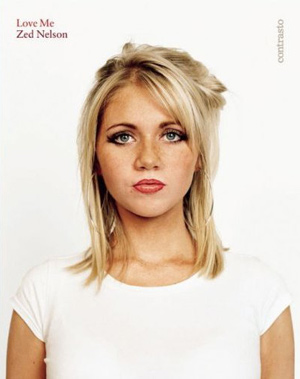
Cover for Zed Nelson's Love Me
Being that we've been talking resurrection and what it has to say about embodiment in this life and the next, I found it interesting that today's Sightings piece deals with the issue of religion and body improvement -- or more specifically, body improvement as a religion in and of itself.  There has been in recent decades a fascination within evangelical Protestantism with dieting, exercise, and make up, all in the effort, especially among women, to improve one's looks.  Now, it seems we're taking it to the next level with attempts to improve one's looks through surgery.  Now, I don't begrudge someone wanting to make use of cosmetic surgery, but as we've seen it can become addictive, for once you start down the path of improvement, where do you stop?  When will you be satisfied?  With these questions in mind, let us check out Jeremy Bile's essay.

**************************************

Sightings 5/27/10


The New Religion of Body Improvement

-- Jeremy Biles


“The worldwide pursuit of body improvement has become like a new religion,” says photographer Zed Nelson in the introduction to his latest book, Love Me. His photos therein depict in loving, lurid detail evidences of bodily fanaticism around the globe – a preposterously muscled bodybuilder in Las Vegas, prosthetic nose implants in Beijing, the winner of a maximum-security-prison beauty pageant in Rio. But do these photos really point toward a “new religion”?

There’s reason to think so. In fact, though the pursuit of bodily perfection is a global phenomenon, its roots may lie partly in American religion. R. Marie Griffith argues that religion, specifically Protestant forms of Christianity, has been a key influence on the conception and creation of American bodies. Protestant ascetic expressions of Christianity are invested in bodily “indicators of faith, each steadfastly promoting corporeal acts of devotion…while affirming that signs of authentic spiritual renewal [are] essentially grounded in the body.” According to Griffith, the ideal of bodily perfection – present throughout American history – rose to general prominence toward the close of the twentieth century, emerging from the evangelical devotional diet movements that first cropped up in the late 1950s. Promoting the belief that inner goodness was apparent in one’s outer aspect, this vein of devotion was built on the doctrine that “fat was sin.” A thin, firm, beautiful body, it was believed, was the visible reflection of goodness and godliness. Contemporary body disciplines “draw their source and momentum from specific Protestant patterns,” which presume that “fit bodies…signify fitter souls.”

The sundry forms that such disciplines take – exercise, dieting, and the like – have infiltrated the wider culture, permeating the American consciousness with anxiety about the body while shaping beliefs about beauty. Today the forces of globalization have propelled the American conception of the perfect body into the world at large, where it has inflected traditional Western ideals of beauty. Nelson notes an “increasingly prescriptive” standard of beauty that has given rise to ever more anxious attitudes toward the body, and thus to increasingly fanatical practices of bodily improvement.

Anxiety and devotional attention to the body are nothing new in religious life. Caroline Walker Bynum claims, for example, that “eating in late medieval Europe…was at the core of religious world-denial…. [R]enunciation of ordinary food prepared the way for consuming Christ in eucharist and mystical union.” But today’s body disciplines extend well beyond attention to diet. Rebecca Mead compares the modern obsession with cosmetic surgery to Christian asceticism. The surgery addicts she discusses describe their fixation in “the language of religious experience, with its wretchedness and its sublimity and its consciousness of transgression.” They display all the “self-scourging rigor” of medieval ascetics. Like Christian asceticism, Mead points out, cosmetic surgery is predicated on the possibility of human perfectibility – although she notes, “If for St. Teresa perfection required transcending the allures of the material and the sensual, adherents of the cult of plastic surgery undergo surgical mortification of the flesh in order to embrace the sensual life more fully.”

The new religion of body improvement shifts the aims of asceticism; the body is no longer a means to spiritual illumination but an end in itself. For today’s ascetics, transcendence lies within a form of bodily redemption; they seek to make of the mortal, corruptible body a perfect, youthful body. The bodily modifications Nelson and Mead document are motivated by anxiety about death and a corresponding longing for eternal youth – a desire for immortality – but the location of eternal life has moved from the heavens to the material world.

As the anxious desire for eternal youth increases, technologies and techniques for restoring youth become more commonplace. Plastic surgery procedures become rites of passage in the new religion of body improvement. The surgical breakdown and reconstruction of the body correspond to the symbolic dismemberment and reintegration of the body found in initiation rites across many religions. Today’s surgical rituals usher initiates from the imperfect to the more perfect, from the humanly mortal to the deifically immortal. There is something undeniably miraculous about such momentous transformations. Plastic surgery heralds a transformation of the very stuff of humanity. It portends a forfeiture of the “natural” body – a wish to transcend the mortal, aging body and a corresponding desire to be resurrected as immortal, like a god.

David Chidester acknowledges the increasing plasticization of the human body, noting that plasticity upsets the distinction between human and God. Treating the body as malleable, transformable, and perhaps even imperishable is a form of “plastic religion” that gestures toward immortality. In some sense, maybe this is just what it means to be human, and religious: to be ceaselessly engaged in experimentation with the possibilities of existence. “Whatever else religion might be about,” Chidester writes, “it is about limits.” If so, then today’s global obsession with exceeding the boundaries of the possible – achieving perfect, immortal bodies – is a religious phenomenon. Exalting and demeaning, liberating and lethal, godly and infernal, the pursuit of perfection still and always remains part of the religious project of testing human limits.


References:

The introduction to Nelson's book can be found at his website:
http://www.zednelson.com/?LoveMe

Read Rebecca Mead's New Yorker article, "Proud Flesh":
http://www.newyorker.com/archive/2006/11/13/061113crbo_books

R. Marie Griffith, Born Again Bodies: Flesh and Spirit in American Christianity, (University of California Press, 2004).


Caroline Walker Bynum, Holy Feast and Holy Fast: The Religious Significance of Food to Medieval Women, (University of California Press, 1987).

David Chidester, Authentic Fakes: Religion and American Popular Culture, (University of California Press, 2005).

Jeremy Biles teaches courses on religion, philosophy, art, and popular culture at various institutions in Chicago. He is the author of Ecce Monstrum: Georges Bataille and the Sacrifice of Form (Fordham University Press, 2007).

----------


On April 6, 2010 Richard Land, president of the Southern Baptist Convention’s Ethics and Religious Liberty Commission, spoke at the University of Chicago Divinity School in an event sponsored by the university’s Theology Workshop. This month’s Religion and Culture Web Forum brings audio from Land’s discussion, titled “Christians, Public Policy, and Church and State Separation,” and offers reflections on the event in an introduction by David Newheiser, Ph.D. student and coordinator of the Theology Workshop at the University of Chicago. http://divinity.uchicago.edu/martycenter/publications/webforum/index.shtml

----------

Sightings comes from the Martin Marty Center at the University of Chicago Divinity School.