Search This Blog

Showing posts with label Documentaries. Show all posts

Monday, February 28, 2011

Screening the Past: On History Docs, 1960s Counterculture Films, and Online Abundance

Randall Stephens

Werner Herzog once quipped: "It's all movies for me. And besides, when you say documentaries, in my case, in most of these cases, means 'feature film' in disguise."* Perhaps that's a post-mod nod to relativism. It is true that there are documentaries and there are "documentaries," just as there are feature films and "feature films." Be wary about which ones you use in a history class. The History Channel's series of films on ancient aliens stand in contrast to episodes of PBS's American Experience. (Do history students know the difference?)

I've seen a few history-related documentaries in the last few months that are as enchanting as many feature films. I've also seen some feature films that view like weird documentaries, or period pieces, trapped in the amber of time.

While The Unseen Alistair Cooke: A Masterpiece Special first first aired on PBS in 2008, I hadn't seen it until a couple of weeks ago. The film, "chronicles Cooke's decades in America, friendships with Hollywood icons, celebrated journalism career and years as host of Masterpiece Theatre. Marking the November 2008 centennial of his birth, The Unseen Alistair Cooke: A Masterpiece Special turns an admiring eye on the master observer." It's a captivating story of an endlessly fascinating character. For anyone interested in exploring how Brits view Americans and vice versa, this is a fun one.

The latest installments of American Experience include some films that tie in to anniversaries. On the Civil War front, the Robert E. Lee bio aired in January. On February 28 Triangle Fire will run on PBS, marking
the 100th anniversary of that tragedy. HBO will be showing a similar documentary. "The PBS special is affecting," writes Aaron Barnhart at the Kansas City Star, "much more so than the overly talky HBO documentary on the fire airing next month. PBS also takes more liberties with the facts. In 1909, about a year earlier, the Triangle ladies had led a walkout that quickly spread to other Garment District shops. Crucially, some of New York’s leading aristocratic women, such as Anne Morgan (daughter of J.P.), joined them."

Moving forward in time and genre . . . I watched the 1970 film Getting Straight, which seems strangely proud of its relevance and counter cultural bona fides. (In full here.) The film stars that ubiquitous actor of the Me Decade, the hirsute Elliott Gould as a a former campus radical who returns to school with a single-minded purpose: He wants his degree and his fun, with no political strings attached. Complete with chamber-pop hippie soundtrack, Getting Straight features a young Candice Bergen, an even younger Harrison Ford, and an array of stock characters playing Baby Boomer roles. There's the Dionysian stoner, the African-American radical (who demands a black studies department), and various libertines and longhair sign carriers. It almost has the feel of a clunky play, with the youngsters squaring off against the hopeless, old squares in the admin. (Watching it, I was reminded of Christopher Lasch's line about the era: "Even the radicalism of the sixties served, for many of those who embraced it for personal rather than political reasons, not as a substitute religion but as a form of therapy" [Culture of Narcissism, 33].) Getting Straight's cinematography borrows heavily from pop art in some visually appealing ways. The filming is playful, even silly at times. A great period piece, which can, at times, be grating.

I'm always on the look out for 60s films that can be used, in bits, in class. Maybe next time I teach America in the 1960s I'll use a clip or two from the Monkees colossal psychedelic bomb, Head (1968), or Roger Corman's The Trip (1967). The Graduate (1967), or the Strawberry Statement (1970) (watch the latter in full here) might work as a generational flick in ways that Getting Straight would not.

Much, much, much can be tracked down on YouTube or on the "watch instantly" feature on Netflix. Selections from two well made Rock docs, both on Netflix, come to mind: Who Is Harry Nilsson (And Why Is Everybody Talkin' About Him?) (2010); and Rolling Stones: Stones in Exile (2010).

On accessibility/access to film clips, performances, historical movies Don Chiasson observes in his review of "Keif's" new biography ("High on the Stones," March 10 NYRB):

Anyone reading this review can go to YouTube now and experience Muddy Waters, or Chuck Berry, or Buddy Holly, or the first Stones recordings, or anything else they want to see, instantly: ads for Freshen-up gum from the Eighties; a spot George Plimpton did for Intellivision, an early video game. Anything. I am not making an original point, but it cannot be reiterated enough: the experience of making and taking in culture is now, for the first time in human history, a condition of almost paralyzing overabundance. For millennia it was a condition of scarcity; and all the ways we regard things we want but cannot have, in those faraway days, stood between people and the art or music they needed to have: yearning, craving, imagining the absent object so fully that when the real thing appears in your hands, it almost doesn’t match up.

It all makes screening the past in the history classroom much easier. More choices than ever, though.

Tuesday, February 15, 2011

Ronald Reagan vs College Students, 1967

Randall Stephens

"NEW HAVEN, Dec. 4 [1967]--Gov. Ronald Reagan of California, who said he had never taught anything before except swimming and Sunday school, sat on a desk at Yale University today and conducted a class in American history." So reported the New York Times on the Gipper's visit to the ivy, where he was met with student protests and plenty of probing questions (December 6, 1967).

"Should homosexuals be barred from holding public office?" a senior from LA asked. The governor was surprised by the question. Rumors had been swirling that his administration had fired two staff members after their sexual preferences came to light. "It's a tragic
illness," said Reagan, after a pause. And, yes, he did think that homosexuality should remain illegal. Some students earlier had demanded that the school rescind its invitation to Reagan. The governor, who visited Yale as a Chubb fellow, gave his $500 honorarium to charity.

The confrontation between the 56-year-old governor and Yale students in 1967 speaks to the culture wars that roiled the decade and continue to reverberate to this day. In the video embedded here the students, with haircuts that make them look like clones of Rob from My Three Sons, square off with Reagan on poverty, race, and Vietnam.

The commemoration of the one-hundredth birthday of the 40th president brought with it the usual fanfare of radio specials, documentaries, guest editorials, and the like. The new HBO doc
Reagan, like PBS's American experience bio, spans the actor-turned-politician's career. (Watch the latter in full here.)

Lost in the telling, sometimes, is the scrappy, intensely ideological cold and cultural warrior from the 1960s and early 1970s. To correct that a bit, see the governor go at it with the somewhat nervous Yalies. Or, observe him lashing out against that "mess in Berkeley." (A clip from the HBO doc showing the governor dress down Berkeley administrators shows that pretty well.) The public memory version--rosy-cheeked, avuncular, sunny--overshadows that more fiery aspect of his personality and politics.

Americans remember their leaders as they choose. (The myths and legends are as stubborn as a Missouri mule.) But it is good to remind ourselves that the politicians and public figures we revere and/or study are rarely as one-dimensional as we'd sometimes think they are.

Saturday, January 1, 2011

Chinese History: Roundup

.
Ken Johnson, "To See a Universe in the Tiny Details of Chinese Artifacts, Boxes to Birds," New York Times, December 31, 2010

Organized by Denise Leidy and Joyce Denney, curators in the Met’s Asian art department, the show presents about 160 mostly desktop-scale works from the museum’s collections, including ornate boxes; carvings in wood, jade, amber, ivory and other semi-precious materials; ceramic vases; and lavishly embroidered silk kimonos used in royal theatrical performances. To pore over these objects is to be repeatedly astounded by the level of design and technical achievement.>>>

Pankaj Mishra, "Staying Power: Mao and the Maoists," New Yorker, December 20, 2010

This persistence of Mao in official discourse and popular imagination may seem an instance of ideological pathology—the same kind that makes some Russian nationalists get misty-eyed about Stalin. Indeed, the Communist state’s vast propaganda apparatus first exalted Mao to divine status. But then a non-ideological view of Mao has rarely been available in the West, even as he has gone from being a largely benign revolutionary and Third Worldist icon to, more recently, sadistic monster. This is largely due to China’s ever shifting place in the Western imagination.>>>

Perry Link, "China: From Famine to Oslo," New York Review of Books, January 13, 2011
The main reason why the Great Famine continues to haunt China fifty years after it happened is that people are obliged—forcibly, if necessary—to continue to accord the famine’s primary perpetrator, Mao Zedong, a position of honor. Mao’s portrait still hangs at the center of Tiananmen, where it overlooks his embalmed body, which lies supine in his mausoleum within the giant square. And Mao remains the spiritual godfather of today’s regime.>>>

Laura Allsop, "The hidden history of China in photos," CNN, December 23, 2010

Daguerreotypes and photographs from the period between 1840 and 1911, which up till recently have not been widely collected or displayed, show a country undergoing vast change, caught between its ancient traditions and modernization. But they are not only historical documents of a changing land: the delicate, sepia-toned images that exist are now being assessed for their art historical value as well and show Chinese photographers of the time interpreting the medium according to centuries-old artistic traditions.>>>

Roger Ebert, Review of Last Train Home, October 13, 2010

The film opens like a big-picture documentary, showing us a huge crowd being directed by police as it grinds its way forward. We are informed that these are some of the 130 million Chinese citizens who make an annual train journey from urban centers to their provincial villages — “the largest human migration in the world.” . . .

There is so much to say about this great film. You sense the dedication of Lixin Fan and his team. (He did much of the
cinematography and editing himself.) You see once again the alchemy by which a constantly present camera eventually becomes almost unnoticed, as people live their lives before it. You know the generations almost better than they know themselves, because the camera can be in two places and they are usually in one or the other.>>>

Wednesday, November 10, 2010

Screening the Past: Films for the Second Half of the Western/World Civ Course

Randall Stephens

I've compiled a list below of films that I use for a course I'm teaching this semester, The West in the World since 1500. I usually use short selections from these. Roughly 15 minutes of film for a 1 hour and 15 minute class seems to work well.

Most of the documentaries and features included below use historians as commentators. Many contain archival photos, paintings, and prints; artful dramatizations; and vintage film footage.

A DVD search on the WorldCat site can usually yield movies on a wide range of subjects. (Though I've been surprised that there are not enough good ones on 17th-century topics: European wars, absolutism, colonial encounters, advances in science . . . I'd also like to find more history docs on Africa, Asia, and the Middle East . . .)

In the past I have included embedded video segments in the PowerPoint presentations I use for lectures. (The free software Handbrake is the best I've found for ripping DVDs onto my MacBook. It's easy from there to put them into a presentation. See also this tutorial on how to download and embed YouTube videos into a PowerPoint slide. I have not tried this, so I'm not sure how well it works.) I've not been entirely happy with the quality of ripped videos, and the size of the files makes them a little impractical. YouTube or a simple cued-up DVD works much better for me.

In the list below I've thrown in a number of DVDs that I've not been able to use in class. (Far more feature films could be added to this, too.) In chronological order:

Luther (2004).

Martin Luther (PBS, 2003).

Empires: Islam: Empire of Faith (PBS, 2001).

Conquistadors (PBS, 2001).

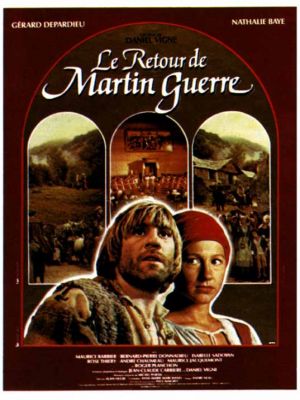
The Return of Martin Guerre (1984).

Classical Destinations (Sky Arts, 2006), YouTube clip of Versailles, Louis XIV, and Paris.

Versailles (2004), YouTube, multiple sections.

Vatel (2000), see trailer.

Girl with the Pearl Earring (2004).

John Adams (HBO, 2008).

The French Revolution (History Channel, 2005), entire film can be watched in sections on YouTube.

Egalité for All: Toussaint Louverture and the Haitian Revolution (PBS, 2009).

The Lost Kingdoms of Africa (2010).

Slavery and the Making of America (PBS, 2004).

Amazing Grace (2007).


Charles Dickens (Biography, 1995), watch instantly on Netflix, if you have an account.

A History of Britain (BBC, 2000), I use sections from episodes on Industrialization. See YouTube clips.

Guns, Germs, and Steel (National Geographic, 2005), I use part of the last episode, which can be watched instantly on Netflix.

The Young Victoria (2009), watch instantly on Netflix.

China's Boxer Rebellion (History Channel, 1997).

The Last Emperor (1987), watch instantly on Netflix.

East Wind, West Wind: Pearl Buck, the Woman Who Embraced the World (1993).

The Great War (PBS, 1996).

Influenza 1918 (PBS, 1998).

Matisse Picasso (2008).

Sigmund Freud: Analysis of a Mind (Biography, 1997).

The People's Century: Red Flag, 1917 (PBS, 1997),

The War of the World: A New History of the 20th Century (PBS, 2008).

The Crash of 1929 (PBS, 2009).

Nanking (2008).

Europa Europa (1990), watch instantly on Netflix.

Downfall (2005).

Frontline: Memory of the Camps (PBS, 2005).

CNN: Cold War (1998), I use an episode on the iron curtain and the red scare.

1968 with Tom Brokaw (History Channel, 2008).

About the United Nations: Decolonization (1999), not an easy one to track down.

The Road to 9/11: A Brief History of Conflict in the Middle East (PBS, 2006).

See also, "Some Films I Use for My Colonial History Course"; "Dancing about Historiography: At the Movies with a Methods Course"; and the March 2008 issue of Perspectives Online, which was devoted to film.

Thursday, October 28, 2010

History Films Roundup

.
Detlef Siebert, "Historical Accuracy in Drama Documentaries," BBC, 15 October 2010

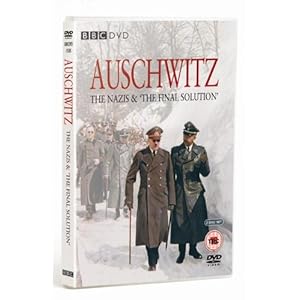
In most factual television programmes, dramatic reconstructions serve as backcloth - or 'wallpaper' in filmmakers' jargon - to illustrate interviews or narration. And some of the drama scenes in the BBC's six-part docu-drama series, 'Auschwitz - The Nazis and the Final Solution', are used in just this way. . . . The drama reconstructions of the BBC, however, had to be as close as possible to the historical reality. Any fictional elements or factual errors in the drama scenes would have compromised the integrity of the entire series. The historical accuracy of set design, cast and dialogue was therefore of greatest importance.>>>

Daniel Person, "New film chronicles history of bison and men," Bozeman Daily, 26 October 2010.

"Facing the Storm," a new documentary about bison being screened tonight at the Emerson Center for Arts and Culture, is nothing if not ambitious. The film sets out to document "the complete history of human relations with the largest land mammal on the continent.">>>

Alex von Tunzelmann, "The Duellists: it takes two to tangle," Guardian, 28 October 2010.

Ridley Scott's film about a pair of French officers who fight 17 head-to-heads in two decades is tense, true and very, very sharp Joseph Conrad's short story The Duel was based on the true story of two French officers, François Louis Fournier and Pierre Dupont. Fournier and Dupont engaged in 17 duels over two decades. In the film, as in Conrad's version, Fournier and Dupont's names are disguised as Feraud and d'Hubert.>>>

Jonathan Melville, "Film Review: Burke and Hare," Edinburgh Evening News, 28 October 2010.

OPENING with the ominous warning that "The events in this film are true, except the bits that are not," director John Landis' take on the story of Edinburgh's most notorious murderers, the eponymous Burke and Hare, arrives in cinemas just in time for Hallowe'en. Determined to assess the film's historical accuracy, I enlisted the help of Burke and Hare Murder Tour guide Stuart Nicoll, the man who took Landis on a trip around Edinburgh's Old Town in late 2009 as he scouted for locations.>>>

Sunday, October 3, 2010

Some Films I Use for My Colonial American History Course

Randall Stephens

I've mentioned on the blog before that I like to use short film clips (10-15 minutes) for many of the classes I teach. I suppose it works better for some courses--America in the 1960s--than others--History Methodology. But thanks to long-running programs like American Experience, Nova, POV, History Detectives, etc, there's much, much out there.

You just have to be willing to do some hunting, inter-library loaning, and some screening. Below are documentaries and features I've found useful for my Colonial America course. Browse the list and I'm sure you'll think of others that could be included. (In the future, I'll post a list from my class on The West in the World since 1500.)

Films for the Colonial American History Course

The Mystery of Chaco Canyon (1999) (Narrated by Robert Redford. Though a more interesting, up-to-date take on Chaco is in the 2010 nat geo adaptation of Jared Diamond's Collapse.)

Native Land: Nomads of the Dawn (1996)

We Shall Remain, Episode 1 (WGBH, 2009) (Contains great material on the first contact between English settlers and Indians. Also includes a good overview of King Philip's War. I combined it with a reading from Jill Lepore's Name of War. Watch the full program on-line.)

The Magnificent Voyage of Christopher Columbus (WGBH, 2007)

Surviving Columbus: The Story of the Pueblo People (KNME, 1992)

Luther (2003) (A good feature film to teach students a bit about the Reformation.)

The New World (2006) (I can think of no other film that more beautifully, graphically presents the Jamestown story. One reviewer called it a visual poem. Good description.)

Nova: Pocahontas Revealed (WGBH, 2007)

Desperate Crossing: The Untold Story of the Mayflower (2006)

The Story of English: Muse of Fire (WGBH, 1986) (One of my favorite documentaries from PBS. Excellent summary of the development of the southern accent [West Country] and the Boston, dropped-r accent [East Anglia].)

American Visions: The Republic of Virtue and The Promised Land (1996) (This is the crusty Aussie art critic Robert Hughes's epic series on American art. Contains a discussion with David Hackett Fischer on Old Ship Church in Hingham and an examination of 17th-century decorative art and architecture. Goes along very well with Fischer's Albion's Seed.)

Colonial House (2004) (How well would the typical college student fare in a 17th-century setting? One word, bathroom.)

God in America, Episodes 1 and 2 (WGBH, 2010) (Will be using this when it comes out. Have seen the pre-release version of the first two episodes. Tremendous. Includes accounts of the Pueblo Revolt, the trial of Anne Hutchinson, George Whitefield and the GA, and more. When this airs on PBS Oct 11-13 the full program will be available on-line.)

500 Nations: Cauldron of War (1994)

Slavery and the Making of America (WNET, 2004) (I use episodes 1 and 2: The Downward Spiral and Liberty in the Air for the colonial course.)

Tom Standage interview on his History of the World in Six Glasses: CBS Sunday Morning (2005)

The War that Made America (WQED, 2006) (French and Indian War series.)

Scientific American Frontiers: Unearthing Secret America (Alan Alda's tour of Jamestown and Jefferson's Monticello. Great perspective on how archeology informs history.)

New York: The Country and the City, Episode 1, 1609-1825 (1999)

Benjamin Franklin (2002)

Thomas Jefferson (1997) (Ken Burns's doc.)

John Adams (HBO, 2008)

Liberty! The American Revolution (KTCA, 2004)

Founding Brothers (2002)

Monday, September 20, 2010

How did They Perceive the World?

Randall Stephens

A recent BBC documentary explores the world of Medieval Europe. Among other things the program asks: How did they live, think, and behave?

Watching it, I wondered why more history documentaries don't explore the day-to-day lives of regular people in the past. It would be terrific to have a film on 17th-century colonial America, which looked at the mindset of Puritans and Native Americans. (The first installment of We Shall Remain was ok on this. PBS's Colonial House had a fun take on daily life in the 1600s.) A similar program on what it was like to live poor and destitute in mid 19th-century New York City would be illuminating. In fact, one could think of a number of eras that could do with a "lived history" documentary.

Of course, the BBC program embedded here, Inside the Medieval Mind, is not without its baroque hyperboles. (New BBC docs make heavy use of lighting effects and deep contrast/saturation tricks.) But, I'd take that over our History Channel's parade of ancient aliens, Nostradamus, and Mayan apocalypse any day. Here's part of the description of Inside the Medieval Mind.

Robert Bartlett of St Andrew's University, investigates the intellectual landscape of the medieval world.

In the first programme, Knowledge, he explores the way medieval man understood the world - as a place of mystery, even enchantment. The world was a book written by God. But as the Middle Ages grew to a close, it became a place to be mastered, even exploited.

Monday, March 1, 2010

Ye Very Olde English

Randall Stephens

Ammon Shea's enlightening piece on a comprehensive Old English Dictionary has been making the rounds from Humanities magazine, to Arts and Letters, to the Chronicle, and beyond. ("Violent but Charming: The Dictionary of Old English Explores the Brutality and Elegance of Our Ancestral Tongue," Humanities (Jan/Feb 2010.) Rightly so. Shea's essay is a fun romp through the twisty, turny (er, higgledy piggledy) story of Old English and its fastidious scholars. Why devote so much time and energy to a moribund tongue, some might ask. Is there an extensive dictionary of Nesili?

"The [Dictionary of Old English] corpus is comprehensive," observes Shea, "and contains about four million words, which makes it almost five times the size of the collected works of Shakespeare. It represents at least one copy of every piece of surviving Anglo-Saxon writing, although in some cases the corpus has more than a single copy of a work if it is in a different dialect or from a different date."

The essay made me further appreciate the importance of the evolution of language to history. Where's the Society for More Philological Studies in History when you need it? Trapped in the 1890s, maybe? Anyhow, historical and comparative linguistics, along with etymology, shed much light on the peoples and cultures of the past. Will it make the average history student fall asleep sitting upright? Not sure about that.

Take Shea's musings on the meaning and context of OE for example:

Browsing through a small section of the alphabet, I happened across gederednes, derian, gederian, gederod, deriendlic, deriendnes, derung, gedeþed, and gedigan, all of which are words that have to do with injuring, harming, or killing (with the exception of the last word, which means ‘to survive’). But lest you come away with the idea that
the speakers of this language were linguistically brutish, I would draw your attention to a word that appears shortly after all of these bruising terms: digollice.

Digollice is one of those words of which any language should be proud. It is elegant yet robust, clear yet multi-faceted—a description that perhaps sounds like that of an overpriced wine, but which is apt nonetheless. Among the meanings of this single word are the following: in a manner intended to avoid public attention, stealthily or furtively, in a manner that is unnoticed, with a lack of ostentation, in hiding, secluded in monastic life, spoken in a low or soft voice, spoken with circumspection or restraint, whispering slander, relating to secret thoughts of inward affliction, obscure or requiring interpretation, and a handful of others that I’ll let you find on your own.

Robert MacNeil's unsurpassed 9-part 1986 PBS series The Story of English is perfect for premodern and early modern history courses. (I've used it in my colonial America class to explore the divide between southern and northern accents, West Country vs. East Anglia. Watch selections from many of the episodes here.)

Monday, February 1, 2010

Dancing about Historiography: At the Movies with a Methods Course

Randall Stephens

It's very difficult to find movies to show in a historiography or history methods course. Think about it. Reminds me of the line: "Writing about music is like dancing about architecture." How many major motion pictures deal with historical interpretation or portray scholars "doing" history. (Lord Macaulay reading intently. A Franz Liszt piece wafting in the background. "The Dutch archives and the French archives must be ransacked," shouts the actor playing the Baron. Or, a shot of a tweedy, pipe-smoking C. Vann Woodward delivering his UVA lectures that will become The Strange Career of Jim Crow. Pan out on the audience of white southerners.) Real movies. Unlikely.

Still, I've found some films and interviews that get the conversation going in a methods course I teach. I'm using a selection of clips from the play-adapted-to-screen History Boys (2006). Questions about truth, value in history, and E.H Carr-like "What is History" head scratchers animate several scenes. The film admirably moves the viewer into some epistemological water without any major trouble.

Charlie Rose interviews with historians or on history-related topics can work well enough. Though the average student will slip into a boredom coma. The Roger Mudd American Heritage series Great Minds of History (VHS, 1998) is similar, but not limited to the Charlie Rose spartan set with darkly lit room. UC Berkeley's Conversations with History program, now available on YouTube, features several interviews with prominent historians. I've also tried showing bits from the Matt Damon-hosted Howard Zinn: You Can't Be Neutral on a Moving Train (2004). That's quite good for analyzing the historian as advocate. A similar film, produced by Alabama Public TV, is the Gospel According to Wayne (1993), a bio of the southern historian and Christian activist Wayne Flynt.

Feature films like The Return of Martin Guerre (1982), Name of the Rose (1986), Cold Mountain (2003), or any number of others could get students to think about the use of evidence, narrative arch, and pacing.

For the first time this year I'm going to use episodes from PBS's History Detectives, an ongoing series "devoted to exploring the complexities of historical mysteries, searching out the facts, myths and conundrums that connect local folklore, family legends and interesting objects." I'll be selective in how I use it. Some episodes are better than others, to paraphrase The Smiths.

Students relate to films in ways that they don't to books and articles. (That is doubly true of the reading material in a methods course.) Fifteen to twenty minute clips work best for me and open class discussions up in unexpected ways.

Wednesday, January 13, 2010

In Praise of Worldcat and Recent and Forthcoming History Films

Randall Stephens

What would I do without Worldcat? 1.4 billion searchable items and counting. Sure, that monster library search engine is great for hunting down obscure books, magazines, theses that were read by only five people, and what have you. But I particularly like to use it to find films. I've tracked down loads of documentaries--on everything from serpent-handling West Virginians in the 1980s to Enlightenment philosophes in 18th-century France--and feature films like The Return of Martin Guerre and Andrei Rublev. You can find the most obscure titles on Worldcat. And, if you locate more than a few libraries that have a given movie, there's a good chance you'll be able to get a copy loaned to you.

I'm a firm believer in showing short film clips (15-20 minutes) in class. It breaks things up nicely and provides much needed visuals. (Moving pictures, I hear they call these things.)

I offer up some recent titles, all well worth watching in our out of the classroom. Yet, unfortunately, the BBC Four documentaries are only viewable on-line on the other side of the water.

Influenza 1918
January 18, 2010, 1 hour
It was the worst epidemic in American history, killing over 600,000 people—until it disappeared as mysteriously as it had begun.

American Experience: Wyatt Earp, 2010
Jan 25, 2010 at 9/8 C
Wyatt Earp has been portrayed in countless movies and television shows by some of Hollywood’s greatest actors, including Henry Fonda, Jimmy Stewart, and more recently, Kevin Costner, but these popular fictions often belie the complexities and flaws of a man whose life is a lens on politics, justice and economic opportunity in the American frontier.

Sam Cooke: Crossing Over
PBS, American Masters Series, 2010
American Masters celebrates the wonderful world of music game-changer and definitive soul singer Sam Cooke.

Louisa May Alcott: The Woman Behind ‘Little Women’, 2009
PBS, American Masters
The author of 'Little Women' is an almost universally recognized name whose reputation as a morally upstanding New England spinster masked a literary double life.

The Pacific
HBO Films, coming in 2010
The miniseries tracks the intertwined odysseys of three U.S. Marines - Robert Leckie (played by James Badge Dale), Eugene Sledge (Joe Mazzello) and John Basilone (Jon Seda) - across the vast canvas of the Pacific. The extraordinary experiences of these men and their fellow Marines take them from the first clash with the Japanese in the haunted jungles of Guadalcanal, through the impenetrable rain forests of Cape Gloucester, across the blasted coral strongholds of Peleliu, up the black sand terraces of Iwo Jima, through the killing fields of Okinawa, to the triumphant, yet uneasy, return home after V-J Day.

Killer Subs in Pearl Harbor, 2009
PBS, NOVA
Military and forensics experts investigate the sunken wreck of a Japanese sub and unravel a lingering mystery of WWII.

Lost Kingdoms of Africa: Ethiopia BBC Four
Historian Gus Casely-Hayford explores the history of the old African kingdom of Ethiopia.

Orson Welles over Europe, 2009
BBC Four
Simon Callow looks at the career of Orson Welles after he went into self-exile in Europe.

Monday, September 28, 2009

Ken Burns's National Parks and John Muir

Randall Stephens

Ken Burns's new, epic documentary The National Parks runs a whopping 12 hours. Reviews have been largely positive. Hank Stuever weighs in at the Washington Post:

As usual, Burns is best with history and certain feeling for the past. Segments on the creation of the "park ranger" are suffused with nostalgic stoutheartedness -- the invention of a magnetic, enduring icon. Also as usual, Burns is worst at relating the then to the now. "The National Parks" lets its story peter out in the late 20th century, relying on home movies to get across what it's like for tens of millions of present-day visitors. Underneath its wonder, 'The National Parks' is really about how Americans learned (or failed to learn) proper stewardship of nature. Here, the acoustic guitar is really cranked up. Burns does that when he wants to indicate despair, guilt, importance.

John Muir features heavily in the first installment, which aired on Sunday. Muir's eccentric, novel life, and his significant impact on later environmentalists gets the full Burns treatment.

Donald Worster's essay "John Muir and the Religion of Nature" appeared in the the April 2009 issue of Historically Speaking (available on Project Muse here). "Muir did more than find a home in the mountains," writes Worster. "He also found there a new religion: the religion of nature. If he didn’t single-handedly invent it, he, more than anyone else, was responsible for propagating its message far and wide. Like Moses or Buddha, Martin Luther or Mary Baker Eddy, he was a prophet, a creative spiritual leader responding to his times with a vision of ultimate meaning and purpose."

In the same issue Donald Yerxa interviewed Worster on his Muir biography and spoke to Worster about some of the broader historical themes related to this fascinating American naturalist.

Donald A. Yerxa: What drew you to write a biography of John Muir? Donald

Worster:
There was a mix of reasons, some personal, some scholarly. The scholarly side is that there has not been a full-blown comprehensive study of the man’s life since the 1940s. There have been a number of books on Muir, but their authors didn’t draw extensively on archives and letters, or they haven’t told the full scope of Muir’s life or tried to put it into the context of his times. For all of us in environmental history, John Muir is such a crucial figure. To know him and understand him better seemed to be an important contribution to that part of our history. On the personal side—and this does get personal—I suppose as one gets older, you start looking back on your life and thinking about where you’ve been and the turns in the road your life has taken and how you got to where you are, for good or bad. In other words, you get into a biographical mood. I had been drawn to a couple of people in recent years, John Wesley Powell and John Muir. Both of them grew up, as I did, in evangelical, Protestant, midwestern American families. Muir was even closer to my roots. I had a Scottish grandmother who was a Campbellite, part of the same religious tradition Muir grew up in. So I’ve always felt an affinity for him, and I wanted to understand his life along with my own life a little better.

Wednesday, May 13, 2009

History on TV

Randall Stephens

Worth noting are a couple of history documentaries and dramatic features that are airing, or will soon air, on TV. Since John Adams premiered last year on HBO the bar has been set quite high. Corny CGI and bad acting no longer suffice. (I've finally ditched showing the rather primitive Mary Silliman's War in an American history course.) The current crop of history-related TV offerings does not disappoint.

Episodes of the PBS American Experience series on Indian history, We Shall Remain, have been beautifully presented and look well suited for the history classroom. PBS describes the series as a "multi-media project that establishes Native history as an essential part of American history. Five 90-minute documentaries spanning three hundred years tell the story of pivotal moments in U.S. history from the Native American perspective." My favorite episode so far has been Wounded Knee. Questions that this installment raises are particularly interesting and don't lend themselves to easy answers. As a bonus, full episodes can be watched here on the PBS site.

Also currently playing on PBS is WWII: Behind Closed Doors, a three-part docudrama directed by Laurence Rees. According to the PBS site, the "award-winning historian and filmmaker Laurence Rees (Auschwitz: Inside the Nazi State, Nazis – A Warning from History) uses documents to tell the story of the backroom deals that cost many lives but were seen as necessary evils to keep the Soviet Union in the war." "At six hours, playing out over three nights," comments a reviewer in the LA Times "'Behind Closed Doors' requires a commitment from viewers, but for anyone interested in the complexities of WWII and, indeed, the moral impossibilities of war itself, it is a commitment worth making." Attention to detail will draw in viewers. The actors are spot on. A portly, jut-jawed Paul Humpoletz plays Churchill to great effect.

There's more Churchill over at HBO. Into the Storm will premier on that channel on May 31, 9pm. The production site indicates that the movie will pick up the "story of Churchill told in HBO's award-winning film, The Gathering Storm." Into the Storm "is set against the backdrop of World War II, and offers an intimate look at the making of a nation's hero, whose prowess as a great wartime leader ultimately undermined his political career and threatened his marriage to his lifelong supporter, Clemmie."