Search This Blog

Showing posts with label Roundup. Show all posts

Friday, March 4, 2011

Digital Humanities Roundup

.
David H. Rothman, "It's Time for a National Digital-Library System:
But it can't serve only elites,"
Chronicle of Higher Education, February 24, 2011
President Obama did not use the word "library" in his State of the Union Address, but wittingly or not, he helped the cause by citing digital textbooks as one justification for American business to expand high-speed broadband coverage. The topic is finally gaining attention in the national news media as well. Peter Svensson, an Associated Press writer, recently delved into the problems of e-books in public libraries today and complained that they are divided among thousands of libraries. "Some branch out there might have a spare copy of The Black Swan," he wrote, "yet I'm stuck in the long line of the local library. One national e-book library would be better." The New York Times ran a feature in January headlined "Playing Catch-Up in a Digital Library Race," describing how other countries have already begun: The National Library of Norway is digitizing its entire collection. The National Library of the Netherlands has started an ambitious digitizing project.>>>

Richard J. Alley, "Digital history: New online archive displays vast collections of library's Memphis Room," Commercial Appeal (Memphis), March 3, 2011
If you are interested in a sepia-toned photo of the 1932 graduating class of Central High School or an 1836 letter from William Andusentte of New Orleans to Britton Duke of Germantown regarding cotton prices, you can put on your shoes and button up your coat before heading to the fourth floor of the Benjamin L. Hooks Central Library to see them.>>>

"National Digital Newspaper Program: A partnership between the Library & the National Endowment for the Humanities," Library of Congress
The National Digital Newspaper Program (NDNP), a partnership between the National Endowment for the Humanities (NEH) and the Library of Congress (LC), is a long-term effort to develop an Internet-based, searchable database of U.S. newspapers with descriptive information and select digitization of historic pages. Supported by NEH, this rich digital resource will be developed and permanently maintained at the Library of Congress. An NEH award program will fund the contribution of content from, eventually, all U.S. states and territories.>>>

Josh Hadro, "TRLN Digitization Strategy Advocates Flexible Approach to Intellectual Property Rights of Large Collections," Library Journal, February 24, 2011
Go forth and digitize: so says a recent report from the Triangle Research Libraries Network (TRLN), which urges libraries to make large-scale special collections available online, even if some question about the copyright status of certain elements remains. The TRLN group—which includes Duke University, North Carolina Central University (NCCU), North Carolina State University (NCSU), and the University of North Carolina at Chapel Hill (UNC)—described this strategy in a recently released document, "The Triangle Research Libraries Network's Intellectual Property Rights Strategy for Digitization of Modern Manuscript Collections and Archival Records Groups" [PDF]. The title may be unwieldy, but the underlying idea is simple and appealing: don't let potentially legitimate but vague copyright concerns overwhelm digitization projects of significant scholarly value.>>>

Olivia Parker, "Print books hold their own over digital media," Telegraph, March 3, 2011
. . . . Print books still look unlikely to go out of fashion in the immediate future however, with both adults and teenagers ranking them ahead of news, comics, e-books and magazines as their preferred media.>>>

Thursday, February 24, 2011

Middle East History Roundup

.
Ishaan Tharoor, "A History of Middle East Mercenaries," Time, February 23, 2011
. . . . Foreign warriors were valued by monarchs wary of their own restive populations and the rivalries and jealousies of local nobles. The great empires of the Middle East all boasted a rank of soldiers drawn (or abducted) from abroad. The Ottomans had the janissaries, mostly young Christians from the Caucasus and the Balkans, who converted to Islam and were reared from an early age to be the Sultan's elite household troops, often forming a powerful political class of their own in various parts of the empire. Elsewhere, the Mamluks, slave warriors from Africa to Central Asia forced into service by Arab potentates, managed to rule a large stretch of the modern Middle East from Egypt to Syria for some 300 years, repulsing the invasions of European crusaders as well as the Mongol hordes.>>>

John Melloy, "Middle East Mirrors Great Inflation Revolutions Since 1200 AD," CNBC, February 23, 2011
Inflation has led to political revolutions since Medieval times and we may be witnessing the fifth such great revolution in history unfolding in the Middle East and in our own country right now, said Dr. Ed Yardeni, president and chief investment strategist of Yardeni Research.

Yardeni cites the work of historian David Hackett Fischer, who described civilization’s first four major inflation cycles in his 1999 work The Great Wave: Price Revolutions and the Rhythm of History.>>>

"Different Meanings Of Democracy For West, Middle East," NPR, February 5, 2011
The chants, chaos and cries from the streets of Cairo and other cities in Egypt this week revive questions for historians and political scientists that politicians have to answer with practical policies. Host Scott Simon speaks with Dr. J. Rufus Fears, a historian and Classics scholar at the University of Oklahoma, about western concepts of democracy and the events now sweeping Egypt and the Middle East.>>>

Robert Darnton, "1789—2011?" NYRB blog, February 22, 2011
The question has come to haunt every article and broadcast from Egypt, Tunisia and other countries in the region whose people have revolted: what constitutes a revolution? In the 1970s, we used to chase that question in courses on comparative revolutions; and looking back on my ancient lecture notes, I can’t help but imagine a trajectory: England, 1640; France, 1789; Russia, 1917 … and Egypt, 2011?>>>

Ibrahim Al-Marashi, "The Arab World's Leadership Deficit," History and Policy (February 2011)
The Arabs have few victories to claim, going back a millennium, all the way to 1187 to celebrate a leader, Salah al-Din and his victory in Jerusalem during the Crusades. What remains after that date are only a few de facto victories. Victories defined in terms of survival. In 1956, when the Egyptian President Jamal Abdul Nasser lost a war against Britain, France and Israel, the Arabs claimed it a victory because he stood up to the 'West'. Even then, the highly popular Egyptian leader was feared among the elites in Jordan, Iraq and Saudi Arabia. When Saddam Hussein was soundly defeated by Coalition forces in the 1991 Gulf War, the Iraqi leader claimed it a victory because he stood up to the 'West' and survived.>>>

Monday, February 14, 2011

Medieval History Roundup

.
"Binham Priory discovery of giant medieval graffiti," BBC, January 20, 2011

Thousands of years of history at a remote priory in Norfolk could be unearthed after the discovery of giant medieval graffiti on its walls. The Norfolk Medieval Graffiti Survey (NMGS) group claims to have found 8ft (2.4m) building plans etched into the stonework of Binham Priory, near Wells. . . . "It was difficult to believe what I was seeing," said NMGS's Matthew Champion. "Most graffiti inscriptions tend to be relatively small and modest. This was just so big that it wasn't really possible to see exactly what it was until we had surveyed the whole wall surface.>>>

David Abel, "Below the Western Wall, passage to a cherished history," Boston Globe, February 13, 2011

JERUSALEM — The giant slabs of limestone, which have remained standing for two millennia despite repeated efforts to demolish them, make up the most sacred structure in the world for Jews, the ancient wall that once protected the Temple Mount. . . . The painstaking work of exploring the underworld along the hidden portion of the Western Wall has led to perhaps the most interesting and controversial tour in Jerusalem, one that has to be made by appointment.>>>

Arminta Wallace, "Time travel with an app," Irish Times, February 12, 2011

The iPhone app Dublin City Walls is a virtual tour guide of a kind that could transform our experience of historical sites YOU KNOW the way you sometimes go to visit a historical site and when you find it there’s just a bump in the ground or a pile of stones – and that, pretty much, is that? Those who are trained in matters historical can get their imagination into gear and fill in some of the gaps. But for the rest of us it can be a somewhat underwhelming experience. A new iPhone app promises to revolutionise the way we interact with our heritage sites. Dublin City Walls uses high-resolution graphics, 3D imaging, video and GPS technology to bring the marvels of medieval Dublin right into the palm of your hand.>>>

Helen Castor, "The death-throes of the Wars of the Roses," TLS, January 26, 2011

Historical explanation is a tricky business. The reality of the past is lost to us, and all historical writing is an act of re-creation, in which the historian has a bewildering number of choices to make. One approach – adopted here by Desmond Seward – is to take a single thread and trace its path through the fabric of history. His theme in The Last White Rose is the precariousness of the Tudor title to the throne, and the repeated challenges the fledgling dynasty faced during the reigns of the first two Tudor kings.>>>

Friday, February 11, 2011

History, Gender, and Sexuality Roundup

.
Lisa Hilton, "Mistresses through the ages Prostitute, concubine, mistress, wife: the boundaries are blurred in this study," TLS, February 9, 2011

What is a mistress? Elizabeth Abbott, who has also published A History of Celibacy and held the post of Dean of Women at Trinity College, University of Toronto, offers this definition: “a woman voluntarily or forcibly engaged in a relatively long-term sexual relationship with a man who is usually married to another woman”. Given the persistence of this model across time and cultures, Abbott maintains that “mistressdom”, like celibacy, is therefore an essential means by which to consider sexual relationships outside marriage – “in fact, an institution parallel and complementary to marriage”. Considering the media’s current obsession with love-rat footballers and cheating celebs, “mistressdom” might also be considered a safe bet for a publisher’s list, and Abbott duly provides us with a generally cheerful tumble through adultery down the ages.>>>

Elizabeth Varon, "Women at War," NYT, February 1, 2011

What do women have to do with the origins of the Civil War? Growing up in Virginia in the 1970s, I often heard this answer: nothing.

Much has changed since then. A new generation of scholars has rediscovered the Civil War as a drama in which women, and gender tensions, figure prominently. Thanks to new research into diaries, letters, newspapers and state and local records, we now know that women were on the front lines of the literary and rhetorical war over slavery long before the shooting war began.>>>

Adam Kirsch, "Macho Man: Exodus recast Israel’s founders as swaggering heroes and secured Leon Uris a place on the Jewish bookshelf even though, as a new biography shows, he was a mediocre writer and a troubled person," Tablet, February 1, 2011

Jews take pride in calling themselves “the people of the book,” and while there’s something a little vainglorious about the phrase—all peoples have books, don’t they?—its appeal is easy to understand. For millennia, in the absence of land and power, Jews found a kind of virtual sovereignty in texts, and the history of Judaism from the Babylonian Exile onward could be written as a history of books and writers—the Torah and the Prophets, the Mishna and Gemara, Rashi and Maimonides, down to modern, secular authors like Theodor Herzl and Sholem Aleichem and Primo Levi.

And then there’s Leon Uris.>>>

Carol Tavris, "The new neurosexism," TLS, January 26, 2011

. . . . Today we look back with amusement at the efforts of nineteenth-century scientists to weigh, cut, split or dissect brains in their pursuit of finding the precise anatomical reason for female inferiority. How much more scientific and unbiased we are today, we think, with our PET scans and fMRIs and sophisticated measurements of hormone levels. Today’s scientists would never commit such a methodological faux pas as failing to have a control group or knowing the sex of the brain they are dissecting – would they? Brain scans don’t lie – do they?>>>

Wednesday, February 2, 2011

Revolutionary Road Roundup

.
Dan Gardner, "The Psychology of Revolution," Ottawa Citizen, February 2, 2011

For those struggling to understand what's happening in Egypt, and what will happen, the Iranian revolution of 1978-'79 is an obvious reference point. It's also handy for lazy pundits. The Shah used violent repression? Then violent repression will fail in Egypt. The Iranian revolution ultimately produced an Islamist government? Then Egypt is going Islamist. Pick your parallel and place your bet. These facile equations are useless. Iran is not Egypt, the Shah is not Hosni Mubarak, and 1979 is not 2011. Every event is unique. History is not math.>>>

William Pfaff, "Uprisings: From Tunis to Cairo," New York Review of Books, February 24, 2011

Dictators do not usually die in bed. Successful retirement is always a problem for them, and not all solve it. It is a problem for everybody else when they leave. What’s to be done afterward? The popular uprising that overturned the dictatorial Zine el-Abidine Ben Ali regime in Tunisia in mid-January sent a thrill of hope through Arab populations.>>>

Benjamin Kunkel, "How Much Is Too Much?" London Review of Books, February 3, 2011

The deepest economic crisis in eighty years prompted a shallow revival of Marxism. During the panicky period between the failure of Lehman Brothers in September 2008 and the official end of the American recession in the summer of 2009, several mainstream journals, displaying a less than sincere mixture of broadmindedness and chagrin, hailed Marx as a neglected seer of capitalist crisis. The trendspotting Foreign Policy led the way, with a cover story on Marx for its Next Big Thing issue, enticing readers with a promise of star treatment: ‘Lights. Camera. Action. Das Kapital. Now.’>>>

David Byrd, "Life without Ben Ali," Voice of America, January 25, 2011 (hat tip)

Tunisia scholar Kenneth Perkins, professor of history at the University of South Carolina, says “it is true that Tunisia’s economy appeared to be prosperous, but while some people benefitted, many outside Tunis, in remote areas, did not see the results of Tunisia’s prosperity.” Author of A History of Modern Tunisia, Tunisia: Crossroads of the Islamic and European Worlds and Historical Dictionary of Tunisia, Perkins says one example is students who completed university degrees but often found it difficult to obtain employment commensurate with their skills unless they were willing to go to Europe.>>>

Robert D. Kaplan, "One Small Revolution," New York Times, January 22, 2011

The West stands captivated by Tunisia, where a month of peaceful protests by secular working- and middle-class Arabs has toppled a dictator, raising hopes that this North African country of 10 million will set off democracy movements throughout a region of calcified dictatorships. But before we envision a new Middle East remade in the manner of Europe 1989, it is worth cataloguing the pivotal ways in which Tunisia is unique.>>>

John Simpson, "Pressure mounts on Egypt's Mubarak," BBC, February 1, 2011

In every revolution, popular or otherwise, there comes a critical moment - a tipping point - at which the future is decided. . . . In China's Tiananmen Square in 1989, crowds a million strong gathered - not just students but sometimes judges, senior policemen, politicians as well - but Deng Xiaoping refused to go and eventually found a general who was prepared to shoot the demonstrators down.>>>

Tuesday, January 18, 2011

"A little wine for thy stomach's sake": Wine History Roundup

Randall Stephens

Marc Kaufman, "Ancient Winemaking Operation Unearthed," Washington Post, January 11, 2011

Now actual proof of early vintners comes from a cave near a remote Armenian village, which, perhaps not coincidentally, is within 60 miles of Mount Ararat. Scientists have unearthed a surprisingly advanced winemaking operation, surrounded by storage jars, and say it dates back 6,000 years, making it the earliest known site in the world for wine-making with grapes, by far.>>>

Stephen Meuse, "But Was It Plonk?" Boston Globe, January 13, 2011

The earliest known winery has been discovered in an Armenian cave complex. An international team investigating the site has identified a treading platform for crushing grapes, a vat for storing wine, a drinking cup and bowls believed to be more than 6000 years old.>>>

Wynne Parry, "In Vino Veritas: Wine Cups Tell History of Athenian Life," MSNBC, January 12, 2011

Over centuries, the ancient Athenian cocktail parties went full circle, from a practice reserved for the elite to one open to everyone and then, by the fourth century B.C., back to a luxurious display of consumption most could not afford. The wine cups used during these gatherings, called symposia, reflect this story, according to Kathleen Lynch, a University of Cincinnati professor of classics.>>>

Talia Baiocchi, "Vintage America: A Brief History of Wine in America," eater.com, January 3, 2011

But America's wine history reaches much further back than the 1970s and covers much more ground than the West Coast. In many places, the remnants of 500 years of wine growing and consumption are still evident. Ohio still grows Catawba, the native grape that was the centerpiece of Nicholas Longworth's first commercial winery in the United States in the 1830s; Virginia's Roanoke Island is still home to a 400-year-old Scuppernong vine trained by the Englishmen that washed up there in the late 1500s; and Texas, whose winemaking history dates back to the mid 1600s, may just be the next great American wine producing state.>>>

Jeremy Bowen, "Lebanon's Vines on the Frontline," BBC, January 12, 2011

Compared with the world's wine superpowers, Lebanon's wine production is tiny but its history goes back to the Phoenician civilisation in the ancient world. In Baalbek, in the Bekaa Valley, the Romans left a temple to Bacchus, the god of wine, which still stands.>>>

Thomas Jefferson to M. de Neuville, December 13, 1818, in Memoir, Correspondence, and Miscellanies: From the Papers of Thomas Jefferson, ed. Thomas Jefferson Randolph (Charlottesville, 1829), 312.

I rejoice, as a moralist, at the prospect of a reduction of the duties on wine, by our national legislature. It is an error to view a tax on that liquor as merely a tax on the rich. It is a prohibition of its use to the middling class of our citizens, and a condemnation of them to the poison of whiskey, which is desolating their houses. No nation is drunken where wine is cheap; and none sober, where the dearness of wine substitutes ardent spirits as the common beverage. It is, in truth, the only antidote to the bane of whiskey.>>>

Saturday, January 1, 2011

Chinese History: Roundup

.
Ken Johnson, "To See a Universe in the Tiny Details of Chinese Artifacts, Boxes to Birds," New York Times, December 31, 2010

Organized by Denise Leidy and Joyce Denney, curators in the Met’s Asian art department, the show presents about 160 mostly desktop-scale works from the museum’s collections, including ornate boxes; carvings in wood, jade, amber, ivory and other semi-precious materials; ceramic vases; and lavishly embroidered silk kimonos used in royal theatrical performances. To pore over these objects is to be repeatedly astounded by the level of design and technical achievement.>>>

Pankaj Mishra, "Staying Power: Mao and the Maoists," New Yorker, December 20, 2010

This persistence of Mao in official discourse and popular imagination may seem an instance of ideological pathology—the same kind that makes some Russian nationalists get misty-eyed about Stalin. Indeed, the Communist state’s vast propaganda apparatus first exalted Mao to divine status. But then a non-ideological view of Mao has rarely been available in the West, even as he has gone from being a largely benign revolutionary and Third Worldist icon to, more recently, sadistic monster. This is largely due to China’s ever shifting place in the Western imagination.>>>

Perry Link, "China: From Famine to Oslo," New York Review of Books, January 13, 2011
The main reason why the Great Famine continues to haunt China fifty years after it happened is that people are obliged—forcibly, if necessary—to continue to accord the famine’s primary perpetrator, Mao Zedong, a position of honor. Mao’s portrait still hangs at the center of Tiananmen, where it overlooks his embalmed body, which lies supine in his mausoleum within the giant square. And Mao remains the spiritual godfather of today’s regime.>>>

Laura Allsop, "The hidden history of China in photos," CNN, December 23, 2010

Daguerreotypes and photographs from the period between 1840 and 1911, which up till recently have not been widely collected or displayed, show a country undergoing vast change, caught between its ancient traditions and modernization. But they are not only historical documents of a changing land: the delicate, sepia-toned images that exist are now being assessed for their art historical value as well and show Chinese photographers of the time interpreting the medium according to centuries-old artistic traditions.>>>

Roger Ebert, Review of Last Train Home, October 13, 2010

The film opens like a big-picture documentary, showing us a huge crowd being directed by police as it grinds its way forward. We are informed that these are some of the 130 million Chinese citizens who make an annual train journey from urban centers to their provincial villages — “the largest human migration in the world.” . . .

There is so much to say about this great film. You sense the dedication of Lixin Fan and his team. (He did much of the
cinematography and editing himself.) You see once again the alchemy by which a constantly present camera eventually becomes almost unnoticed, as people live their lives before it. You know the generations almost better than they know themselves, because the camera can be in two places and they are usually in one or the other.>>>

Monday, December 6, 2010

Digital History Roundup

Randall Stephens

Patricia Cohen, "Analyzing Literature by Words and Numbers," New York Times, December 3, 2010

Victorians were enamored of the new science of statistics, so it seems fitting that these pioneering data hounds are now the subject of an unusual experiment in statistical analysis. The titles of every British book published in English in and around the 19th century — 1,681,161, to be exact — are being electronically scoured for key words and phrases that might offer fresh insight into the minds of the Victorians.>>>

Robert Darnton, "The Library: Three Jeremiads," New York Review of Books, December 23, 2010.

When I look back at the plight of American research libraries in 2010, I feel inclined to break into a jeremiad. . . . I hope that the answer to those questions will lead to my happy ending: a National Digital Library—or a Digital Public Library of America (DPLA), as some prefer to call it. Google demonstrated the possibility of transforming the intellectual riches of our libraries, books lying inert and underused on shelves, into an electronic database that could be tapped by anyone anywhere at any time. Why not adapt its formula for success to the public good—a digital library composed of virtually all the books in our greatest research libraries available free of charge to the entire citizenry, in fact, to everyone in the world?>>>

Ann Blair, "Information Overload, Then and Now," Chronicle of Higher Education, November 28, 2010

Feeling overwhelmed by too much information? What else is new? The amount of digital data available on the Web every day reaches records of mind-boggling proportions—now more than a zettabyte (1021 bytes) and presumably accumulating at an ever-increasing rate, estimated at 30-percent growth per year from 1999 to 2002.>>>

Daniela Forte, "In Watertown, History Archive Is on Website," Litchfield County Times, November 18, 2010

WATERTOWN—The past is coming alive once again, as the Watertown Historical Society announced last week the unveiling of the Watertown Digital History Archive, now available on its Web site. The archive features newspapers, yearbooks and scrapbooks from the 19th and 20th centuries. . . . The society encourages residents who have old newspapers, yearbooks and scrapbooks beyond the dates the society already has archived to contact it by calling 860-274-1050, or logging on to the Web site at www.watertownhistoricalsociety.org.>>>

"Google Editions: a history of ebooks," The Telegraph, December 5, 2010

Google has confirmed that its own ebook store, Google Editions, will be up and running by the end of the year, potentially transforming the ebook landscape. Here, we look at some of the key milestones in the digitisation of the printed word. [See the e-book/digital history timeline.]>>>

Saturday, November 13, 2010

Roundup: American Civil War at 150

.
"Into the flames: An ambitious reappraisal of the bloody war between the states," Economist, November 11, 2010.

AMERICANS proudly, and understandably, stress the exceptional character of their history. Yet from the beginning it has been intertwined with larger narratives of European, Atlantic and world history, including themes of migration, trade, ideology and power. The American revolution itself was an episode in the long conflict between Britain and France. Now Amanda Foreman, an Anglo-American historian, has looked at the American civil war “as it was seen by Britons in America, and Americans in Britain”. She points out that it was a defining moment not just in American history but in the relations between the two countries.>>>

Jenny Upchurch, "Civil War history comes to life at Nashville celebration. Re-enactors kick off state's celebration," Tennessean, November 13, 2010.

100 re-enactors . . . return today to the Bicentennial Mall in downtown Nashville to cook, march, fire cannons, make glass photo negatives and pump the bellows of a charcoal fire. The living history event at the state park, setting the scene of the beginning of the Civil War in 1860, kicks off the state's celebration of the war's 150th anniversary.>>>

Fredrick Kunkle, "In Richmond, a Civil War expert seeks to emancipate history's narrative," Washington Post, November 7, 2010.

. . . [Edward Ayers says,] "I am trying to get us to rethink what the war is about, and what we've being doing in Richmond is instead of talking of one sesquicentennial, one anniversary, it's really two: One's the Civil War, and the other's Emancipation," Ayers says, with the faintest drawl. "The main thing that happened, the consequence of the war, was freedom for 4 million people who had been held in bondage for over two centuries in this country.">>>

Ted Widmer, "Lincoln’s Mailbag," New York Times, November 12, 2010.

. . . Most of Lincoln’s correspondence is housed in the Library of Congress, just off the East Portico of the Capitol, where he gave his two great inaugural addresses. (They are there, too.) The Library is a national treasure, both for its holdings and for its robust commitment to make these priceless artifacts available to all. That means putting them online, for free, which the Library has been doing since February 2000, with scholarly support from the Lincoln Studies Center at Knox College.>>>

Bruce Smith, "Black SC Civil War vet honored with grave marker," Washington Post, November 11, 2010.

CHARLESTON, S.C. -- Almost 100 years after his death, a black Union Civil War vet from South Carolina finally has a veterans marker on his grave. The gravestone for Henry Benjamin Noisette was unveiled Thursday in a black Charleston cemetery. Noisette escaped slavery and joined the U.S. Navy in 1862.>>>

Thursday, October 28, 2010

History Films Roundup

.
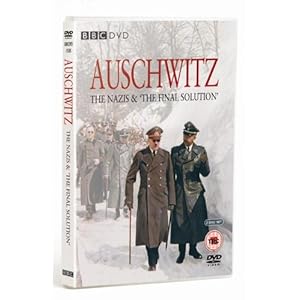
Detlef Siebert, "Historical Accuracy in Drama Documentaries," BBC, 15 October 2010

In most factual television programmes, dramatic reconstructions serve as backcloth - or 'wallpaper' in filmmakers' jargon - to illustrate interviews or narration. And some of the drama scenes in the BBC's six-part docu-drama series, 'Auschwitz - The Nazis and the Final Solution', are used in just this way. . . . The drama reconstructions of the BBC, however, had to be as close as possible to the historical reality. Any fictional elements or factual errors in the drama scenes would have compromised the integrity of the entire series. The historical accuracy of set design, cast and dialogue was therefore of greatest importance.>>>

Daniel Person, "New film chronicles history of bison and men," Bozeman Daily, 26 October 2010.

"Facing the Storm," a new documentary about bison being screened tonight at the Emerson Center for Arts and Culture, is nothing if not ambitious. The film sets out to document "the complete history of human relations with the largest land mammal on the continent.">>>

Alex von Tunzelmann, "The Duellists: it takes two to tangle," Guardian, 28 October 2010.

Ridley Scott's film about a pair of French officers who fight 17 head-to-heads in two decades is tense, true and very, very sharp Joseph Conrad's short story The Duel was based on the true story of two French officers, François Louis Fournier and Pierre Dupont. Fournier and Dupont engaged in 17 duels over two decades. In the film, as in Conrad's version, Fournier and Dupont's names are disguised as Feraud and d'Hubert.>>>

Jonathan Melville, "Film Review: Burke and Hare," Edinburgh Evening News, 28 October 2010.

OPENING with the ominous warning that "The events in this film are true, except the bits that are not," director John Landis' take on the story of Edinburgh's most notorious murderers, the eponymous Burke and Hare, arrives in cinemas just in time for Hallowe'en. Determined to assess the film's historical accuracy, I enlisted the help of Burke and Hare Murder Tour guide Stuart Nicoll, the man who took Landis on a trip around Edinburgh's Old Town in late 2009 as he scouted for locations.>>>

Thursday, August 19, 2010

Roundup: Asian History, Ancient and Modern

History News, Reviews, and the Like from around the World

"N. Korean-Japanese Team Finds Koguryo Tomb in Pyongyang," The Chosun Ilbo, Aug 15, 2010‎.

Academics from North Korea and Japan have unearthed a large tumulus from the Koguryo period in Pyongyang, providing valuable material for studying the history of ancient East Asia, Japan's Kyodo news agency said Saturday. About 4.5 km away from the downtown Pyongyang, the tomb was discovered during construction work in Tongsan-dong, the Lelang District of the Koguryo era and is presumed to have been created around the 5th century. >>>

Jim Eagles, "Silk Road: Tracing the path of ancient footsteps," New Zealand Herald, August 11, 2010.

Jim Eagles travels a well worn path through a historic landscape and finds plenty of remnants from its fascinating past still in place. The old caravanserai stands beside a section of the Silk Road as it has done for over a thousand years. On the other side of the road is an equally ancient cistern built to to provide water for camel caravans plying the hot, dry, dusty path between the timeless cities of Samarkand and Bukhara. >>>

Edward Wong, "China Seizes on a Dark Chapter for Tibet," New York Times, August 9, 2010.

GYANTSE, Tibet — The white fortress loomed above the fields, a crumbling but still imposing redoubt perched on a rock mound above a plain of golden rapeseed shimmering in the morning light. A battle here in 1904 changed the course of Tibetan history. A British expedition led by Sir Francis E. Younghusband, the imperial adventurer, seized the fort and marched to Lhasa, the capital, becoming the first Western force to pry open Tibet and wrest commercial concessions from its senior lamas. >>>

Razib Khan, "Empires of the Word & anti-Babel," Discovery Magazine blog, August 16, 2010.

European nationalism in the 19th and 20th centuries was in large part rooted in the idea that language defined the boundaries of a nation. During the Reformation era some German-speaking Roman Catholic priests declaimed the value of the bond of language against that of religion, praising those non-Germans who adhered to the Catholic cause against German speaking heretics (in the specific case the priest was defending Spanish tercios brought in by the Holy Roman Emperor to put down the rebellion of Protestant German princes). . . . Newer lingua francas, French and later English, lack the deep unifying power of Latin in part because they are also living vernaculars. They may resemble Latin in some particulars of function, but eliding the differences removes far too much from the equation to be of any use. Linguistic diversity is a fact of our universe, but how it plays out matters a great deal, and has mattered a great deal, over the arc of history. >>>

"Pearl Buck in China by Hilary Spurling," New Yorker, August 16, 2010.

Emphasizing the imagination’s power to “make bearable things too ugly to confront directly,” Spurling sensitively traces the biographical background of Buck’s writing. Buck, the daughter of missionaries, spent nearly all of the first forty-two years of her life in China, and her childhood was marked both by grand upheavals such as the Boxer Rebellion and by the stark asperities of everyday poverty. >>>

[I'll be interviewing Spurling about her biography for an upcoming issue of Historically Speaking]

Thursday, August 12, 2010

Roundup: Historians

Neal Ascherson, "Liquidator," London Review of Books, August 19, 2010.

Seven years after his death, Hugh Trevor-Roper’s reputation is still a cauldron of discord. He would have enjoyed that. Steaming in the mix are the resentments of those he expertly wounded, the awe of colleagues at the breadth and depth of his learning, dismay at his serial failures to complete a full-length work of history, delight in the Gibbonian wit and elegance of his writing and – still a major ingredient – Schadenfreude over his awful humiliation in the matter of the Hitler diaries. >>>

"Cambridge University connects communities with Domesday," news.bbc.co.uk, August 10, 2010.

When William the Conqueror wanted to consolidate his power over his new English subjects he created the Domesday Book.

It was a comprehensive list of who owned all property and livestock.

Now Cambridge University historians have digitised the information in an interactive website.

"It's possible for anyone to do in a few seconds what it has taken scholars weeks to achieve," said Dr Stephen Baxter, a co-director of the project.

PASE Domesday was launched on 10 August 2010 and is the result of collaboration between scholars from Cambridge University and King's College, London.

Tax collection?

The Domesday Book was collated between 1085 and 1086.

Most historians believe it is some sort of tax book for raising revenue.

Dr Baxter, a medieval historian from King's College, London, has a different theory.

He argues its real purpose was to confer revolutionary new powers on King William.

"The inquest generated some pretty useful tax schedules," he explained. "But the book gave him something altogether more powerful." >>>

Daniel Hernandez, "Mayas protest monument to Spanish conquistadors," La Plaza, LA Times blogs, August 11, 2010.

The city of Merida on Mexico's Yucatan peninsula is reviewing a petition to remove a recently built public monument to the city's colonial founder, a figure whom some indigenous Mayas regard as a violent conquistador. The municipal government accepted the petition from a coalition of Mayan organizations to reconsider the monument and statues depicting Francisco de Montejo, known as "El Adelantado," and his son, also named Francisco and known as "El Mozo." The younger Montejo established Merida in 1542, on the site of the former Maya city of T'ho. >>>

"Tony Judt, Historian And Author, Dies At 62," NPR, August 8, 2010.

Much to his presumed irritation, historian Tony Judt, who died on Friday, might be remembered for one word: anachronism.

That's what he called the idea of a Jewish state in Israel in a widely read essay in the New York Review of Books. But Tony Judt was, first and foremost, an intellectual historian.

His book Postwar, about the history of Europe after 1945, became an instant classic. And he made it his mission to try to unpack the nuances of 20th-century history. >>>

Faye Fiore, "Guardians of the nation's attic," Los Angeles Times, August 8, 2010.

When Paul Brachfeld took over as inspector general of the National Archives, guardian of the country's most beloved treasures, he discovered the American people were being stolen blind.

The Wright Brothers 1903 Flying Machine patent application? Gone.

A copy of the Dec. 8, 1941 "Day of Infamy" speech autographed by Franklin D. Roosevelt and tied with a purple ribbon? Gone. >>>